Can You Flip Camera While Recording on TikTok: A Practical Guide
Learn how to flip the camera mid-record on TikTok, when to use it, and troubleshooting tips. Best Camera Tips breaks down mid-record toggling, best practices, and common pitfalls for creators.


Yes—you can flip the camera mid-record on TikTok using the on-screen flip camera button. While recording, tap the camera-flip icon to switch between front and rear cameras without stopping. If the option isn’t visible, update the app, restart TikTok, or exit and re-enter the recording screen to reveal the control.
can you flip camera while recording on tiktok
If you’re trying to capture a quick transition on TikTok, you’ll be glad to know that you can flip the camera mid-record in most cases. This capability lets you switch from a front-facing to a rear camera (or vice versa) without stopping the recording, enabling seamless storytelling and creative transitions. According to Best Camera Tips, this mid-record flip is a standard feature in the camera controls of recent TikTok app versions on both iOS and Android. While it’s widely available, you may encounter occasional UI differences between devices or app updates. Familiarity with the flip gesture will help you plan more dynamic cuts and keep your hands free for pose changes or gesture-based storytelling. As you practice, you’ll learn which scenes benefit most from a quick flip and how to time it with music or narration.
- The flip action is designed for quick, natural transitions rather than long, deliberate camera swaps.
- Plan your shot in advance so that the flip appears intentional and smooth.
- If you rely on the flip to reveal a new scene, rehearse the timing to avoid jarring cuts.
Understanding the feature’s evolution and where it fits in creator workflows
TikTok has gradually improved its in-app camera controls to keep pace with creator expectations. The flip camera button is typically located near the record controls and can be used during a live capture, depending on version and device. In practice, the mid-record flip is most reliable when you’re working in stable lighting and with a steady hand. Best Camera Tips’ analysis of 2026 app updates shows that while most devices on current versions support mid-record flipping, older builds may require updating for the control to appear. When in doubt, perform a quick dry-run to confirm the flip button’s presence before you begin your main shoot.
Locating the flip camera control on the TikTok recording screen
To access the flip feature, start a recording on the main capture screen. Look for a camera icon or a small two-camera symbol—often on the upper-right or lower-right corner depending on your device. Tap the icon once to switch from the front camera to the rear camera; tap again to switch back. If you don’t see the option, it may be hidden behind an active filter, effect, or an onboarding prompt from a recent update. Closing and reopening the recording screen can also reveal the control.
When to flip: best practices for timing and storytelling
Flipping is most effective when used as a deliberate transition, not a random switch. Consider a moment of visual change—e.g., a subject turns toward the camera, you flip to show a different angle, or you reveal a second subject in the scene. Align the flip with a beat in your music or a spoken cue to maximize impact. Avoid flipping during high-motion action or when lighting shifts abruptly, as inconsistent exposure can distract viewers. Practicing with a few sample clips helps you identify the right moments to flip and ensures the transition enhances the narrative rather than distracting from it.
Troubleshooting common issues: the flip button won’t appear or stops working
If the flip control is missing or unresponsive, start with a quick checker: ensure your TikTok app is up to date, clear the app cache if your device allows it, and restart the app or device. Some devices disable certain UI elements when energy-saving modes are active. If you still don’t see the flip button, try starting a new recording session, disable any active filters that might obscure controls, and re-enter the capture screen. In rare cases, the feature may be temporarily unavailable due to a bug; checking the official TikTok support page or Best Camera Tips’ troubleshooting guides can confirm known issues and suggested workarounds.
Framing, lighting, and audio: maintaining quality when you flip mid-record
Flipping the camera mid-record alters framing and exposure, so it’s important to maintain consistency. Keep lighting even on both camera views to prevent abrupt changes in brightness after the flip. If you rely on ambient sound, be mindful of mic direction changes; if you’re using an external mic, ensure it continues to capture clearly after the flip. For image quality, pause slightly before flipping and reframe the shot to keep subjects centered and in focus. Remember to review your clip after flipping to confirm that the transition looks intentional and smooth.
Advanced tips: refining mid-record flips for higher production value
Experiment with multiple flips to create a dynamic narrative where each flip reveals a new angle or detail. Use a short, sharp flash or a deliberate movement to mask any minor exposure shifts. Combine flips with cuts or on-screen text overlays to emphasize a change in scene or perspective. If you’re editing afterward, consider splitting the clip at the flip point to apply different color grades or stabilization settings to each segment, preserving a cohesive look while highlighting the shift.
Safety and performance considerations: devices, storage, and app integrity
Mid-record flips rely on real-time processing and device performance. Ensure your phone has adequate storage, enough battery life, and sufficient processing power to handle the transition smoothly. Running too many effects, high-resolution recording, or background apps can cause frame drops or glitches that disrupt the flip. If you plan a complex sequence, test your setup with short dry runs and keep your device plugged in if possible to avoid mid-shot power survival issues.
Getting the most from flips in editing: post-production and captioning
Even if a flip doesn’t land perfectly in-camera, you can refine the result during editing by cutting precisely at the flip point, adding a quick transition, or using a split-screen effect to simulate a flip. Use captions to guide viewers and enhance continuity across angles. When posting, note in the caption that you used a mid-record flip to give your audience a behind-the-scenes sense of how you achieved the effect.
Tools & Materials
- Smartphone with TikTok app installed(Ensure app is updated to the latest version before shooting.)
- Stable mounting (tripod or phone holder)(Helps keep framing steady when you flip.)
- Adequate lighting (ring light or bright ambient light)(Even lighting reduces exposure jumps after the flip.)
- Power source (charger or power bank)(Prevents battery drain during longer shoots.)
- External microphone (optional)(Improves audio if you’re flipping and moving around.)
- Silicone screen protector (optional)(Helps prevent drops and keeps touchscreen responsive.)
Steps
Estimated time: 5-7 minutes
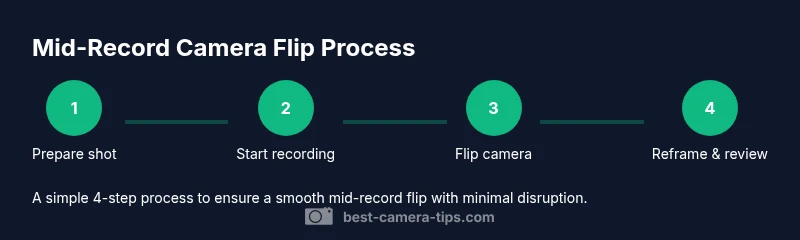
- 1
Prepare your shot and lighting
Set up your scene with stable framing and even lighting. Check that your subject is clearly visible in both camera angles you plan to use. Adjust the camera height so the flip won’t cut off important details.
Tip: Test the lighting from both camera angles to ensure consistent exposure after the flip. - 2
Open TikTok and start a recording
Launch the TikTok app, select + to create, and start recording with the desired initial camera. Confirm that your subject is framed properly and that audio is clear before continuing.
Tip: Do a quick dry run with a short 5-second clip to confirm your baseline framing. - 3
Tap the flip camera icon to switch
During recording, tap the on-screen flip icon to switch between front and rear cameras. Do this smoothly and pause briefly if needed to reframe the shot.
Tip: Count to two before resuming motion to avoid a jerky transition. - 4
Reframe after flipping
After flipping, check your framing and adjust your stance as needed. Keep your movements deliberate to maintain continuity with the first angle.
Tip: Hold still for a fraction of a second to reset the composition. - 5
Review the clip and adjust if necessary
Play back the segment to ensure the flip looks intentional and smooth. If not, consider a quick second take or an edit point during post.
Tip: Note the exact flip point to ease editing later. - 6
Save, edit, and post
Finish recording, save the clip, and apply any finishing edits (trim, color grade, audio). Add captions and tags that reflect the multi-angle approach.
Tip: Preview the final clip on mobile before posting to ensure mobile playback quality.
Common Questions
Can I flip the camera while recording on TikTok in all modes?
In standard recording mode, yes, you can flip between front and rear cameras using the on-screen control. Live mode does not apply to mid-record flipping since it’s a livestream format. Always test the flip in your current mode before a critical shoot.
Yes, you can flip during standard recording, but not during Live sessions; test the flip in your mode first.
Will flipping mid-record affect video quality?
Flipping mid-record does not inherently degrade resolution, but the transition can introduce a brief moment of exposure or framing change. Keep lighting steady and reframe cleanly for a smooth result.
The flip itself doesn’t affect quality, but framing and lighting changes can influence how clean the transition looks.
What should I do if the flip option doesn’t appear?
First, update TikTok to the latest version. If missing, restart the app or device, clear app cache if available, and try again. If the issue persists, it may be a device-specific UI variation or a temporary bug.
Update the app, restart, and try again; if it’s still missing, it might be a device-specific quirk or a bug.
Can I flip the camera while using effects or filters?
Most core flip controls work with or without effects, but some filters may alter UI layout. If the flip control is obscured, disable the effect momentarily and attempt the flip, then re-enable if needed.
Usually yes, but some filters can hide the control; disable briefly if you can’t see it.
Is there a delay when flipping mid-record?
There can be a brief micro-delay as the camera reconfigures. This delay is typically a fraction of a second; plan your motion to accommodate it.
There may be a tiny delay as the camera switches; plan your motion a beat ahead.
Does flipping work the same on Android and iOS?
The core feature is available on both platforms, but UI placement and exact behavior can differ by device and OS version. If one device seems to lack the control, check for updates or try another device to confirm.
Generally yes on both platforms, but UI may vary; check updates if you don’t see the control.
Watch Video
The Essentials
- Master mid-record flips to create engaging multi-angle content.
- Always test and frame before flipping to avoid awkward transitions.
- Update TikTok and keep a simple lighting setup for best results.
- Review and edit the clip to ensure continuity across angles.