How to Choose a Camera to Take Pictures: A Beginner's Guide
A practical, step-by-step guide for beginners on selecting a camera to take pictures, understanding types, core specs, and how to set up for your first shoot—complete with gear lists, workflows, and troubleshooting tips.


This guide helps you pick a camera to take pictures, based on your goals and budget, and walk you through setup and best practices. You’ll learn how to compare types, key specs, and a practical step-by-step plan to start shooting confidently. From selecting between mirrorless and DSLR to understanding lens ecosystems, this quick answer points you to the core decisions and a concrete path to your first successful photos.
Defining your photo goals and why they matter
According to Best Camera Tips, the right camera starts with clear goals. If you want crisp landscapes, warm portraits, or fast action, your priorities will steer every decision from the camera type to the lens you pair with it. Start by listing three scenarios you want to shoot this season and rank them by importance. This framing helps you compare mirrorless versus DSLR options, weigh weight and battery life for travel, and decide how much you want to invest upfront. Remember: a camera to take pictures is just a tool for your creative vision, not a magic wand. With a goal in mind, you’ll avoid overbuying gear you won’t use and you’ll build a workflow that actually produces results.
Understanding what you’ll actually use
Begin with the simplest setup that fits your budget. A compact kit with a primary lens is often enough for learning composition, exposure, and basic lighting. If space and weight are concerns, a mirrorless system can offer compact bodies and excellent autofocus, while a DSLR might give you a trusted controls layout if you prefer kneading tactile feedback. The key is to match the tool to the task, not chase every new tech feature. Best Camera Tips emphasizes starting with a single body and a versatile lens, then expanding based on demonstrated needs.
Types of cameras you’ll encounter
There isn’t a one-size-fits-all answer. Mirrorless cameras are popular for their light weight and quick AF, DSLRs still offer robust hand-feel and reliable battery life, and compact fixed-lens cameras or smartphones are great for travel light. For a camera to take pictures that you’ll be proud of, prioritize sensor size, lens availability, and the handling you enjoy. Consider your comfort with menu systems and how you plan to store and edit files after you shoot. A balanced choice is usually a mid-range mirrorless body with a standard zoom and a secondary prime lens for portraits or detail work.
Core specs that impact image quality
Resolving power comes from more than just megapixels. Sensor size and quality, dynamic range, autofocus performance, and high-ISO behavior matter more for real-world pictures. Look for a setup with good lens options and a robust autofocus system that performs well in your typical scenes (faces in portraits, distant details in landscapes). Don’t confuse spec sheets with real-world results: the ecosystem—lenses, service, and accessories—often determines your success more than any single spec. Best Camera Tips notes that accessible, well-supported systems save you headaches as you learn.
Building a starter kit on a sensible budget
A practical starter kit focuses on three elements: the body, a versatile zoom lens, and a spare power source. Add memory cards of adequate speed and capacity, and a simple tripod if you shoot in low light or require stability. A basic cleaning kit and a sturdy bag round out the essentials. As you gain confidence, you can tailor the kit with specialty lenses (portrait primes, macro, or telephotos). The goal is to minimize decision fatigue while ensuring you can actually shoot in common scenarios.
Hands-on setup for your first photo sessions
Before you shoot, charge batteries fully, format a new memory card, and install any required firmware updates. Set your camera to its most forgiving mode for practice, such as a default Auto or Program mode, so you can focus on composition. Learn where the exposure controls live, and practice adjusting ISO, shutter speed, and aperture as a triangle. If you’re shooting RAW+JPEG, pick RAW for post-processing flexibility and JPEG for quick sharing. The first shoots should prioritize consistent light and stable framing to build your confidence quickly.
Shooting scenarios and adaptive settings
Landscape photography rewards steady composition and careful focus with a smaller aperture and longer exposure when needed. Portraits benefit from a wider aperture to blur backgrounds and emphasize subject detail. Action and sports demand faster shutter speeds and reliable AF tracking, even in moderate lighting. For everyday photography, a basic, repeatable profile with balanced contrast helps maintain consistency across your images. Practice switching modes between scenes and review results to loop in what works best for you.
Maintenance, care, and long-term habits
Keep lenses free of dust and fingerprints, store gear in a dry environment, and perform periodic sensor checks when needed. Regularly back up your photos to a computer or cloud storage to prevent data loss. Keep firmware up to date so you receive the latest performance improvements, especially for autofocus and color science. Routine care reduces downtime and extends your camera’s useful life, letting you focus more on learning and less on repairs.
AUTHORITY SOURCES
For deeper reading, check reputable sources such as National Geographic’s photography tips, the National Park Service guidance on field photography safety and technique, and Britannica’s overview of photography. These sources provide additional context on composition, lighting, and historical development of camera technology, supplementing the practical steps in this guide.
Tools & Materials
- Camera body(Core device you’ll shoot with)
- Kit lens(es)(One versatile zoom is ideal for learning)
- Memory cards(At least one high-speed card; consider two)
- Spare battery(Extra power for longer sessions)
- Battery charger(Keep spares ready to swap in)
- Tripod (optional but recommended)(Stability for low light/sharpness)
- Camera cleaning kit(Lens cloth, blower, microfiber towels)
- User manual / quick-start guide(Reference for settings and menus)
- Carrying bag(Protection during transport)
Steps
Estimated time: 60-90 minutes
- 1
Define your goal
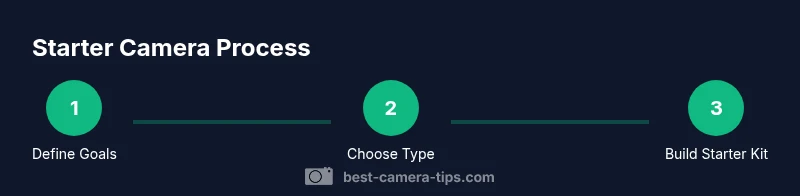
List three scenarios you want to shoot and rank them by importance. This shapes your gear choice and shooting workflow, reducing buyer’s remorse.
Tip: Clarify whether portability or flexibility matters more for your goals. - 2
Choose your camera type
Decide between mirrorless, DSLR, or a compact with fixed lens based on weight, handling, and lens options. The right type should feel intuitive in your hands.
Tip: Try holding models in a store to assess grip and controls. - 3
Check sensor size and lens ecosystem
Sensor size affects dynamic range and low-light performance; lens availability and quality shape long-term results.
Tip: Prioritize systems with a broad range of affordable, reliable lenses. - 4
Assess essential features
Autofocus performance, video capabilities, weather sealing, and battery life influence your day-to-day use more than flashy specs.
Tip: Make a short feature checklist and compare only those items. - 5
Build a starter kit
Select a body with a versatile zoom, a beginner-friendly prime, a spare battery, and a fast memory card.
Tip: Avoid over-investing in lenses you won’t use right away. - 6
Learn core controls
Practice aperture, shutter speed, and ISO in a controlled setting to understand how each affects exposure.
Tip: Use manual mode on a familiar subject to internalize the triangle. - 7
Set up for your first shoot
Format the card, update firmware, set white balance, and choose a simple picture style for consistent results.
Tip: Keep a small notebook of settings that worked well. - 8
Practice and review
Shoot a batch, review critically, and adjust. Repeat with new scenes to build a repeatable workflow.
Tip: Tag images by scene to track what works best where.
Common Questions
What is the best camera for beginners to take pictures?
There isn’t a single best camera. A beginner-friendly mirrorless or DSLR with a kit lens offers a good balance of usability, lens options, and support. Choose a model that feels comfortable and reliable, and upgrade lenses as you practice.
For beginners, start with an entry-level mirrorless or DSLR with a kit lens. Pick one that feels comfortable and reliable, then expand your lens lineup as your skills grow.
Do megapixels matter for everyday photography?
Megapixels are less important than sensor quality and lens performance for most everyday photos. Focus on sensor size, dynamic range, and your ability to compose well. A cleaner image at lower megapixels can outperform a noisy high-megapixel shot.
For everyday shooting, sensor quality and lenses matter more than the total megapixels. Good light and proper technique beat more pixels every time.
Should I shoot in RAW or JPEG?
RAW gives maximum flexibility in post-processing, which is valuable as you learn. JPEG is faster for sharing and requires less editing. Try RAW for practice and use JPEG for quick turnarounds on social media.
Use RAW when you want high editing latitude, and JPEG when you need fast results for sharing.
How often should I upgrade my camera gear?
Upgrade based on your needs, not trends. When you outgrow your current camera’s capabilities or feel limited by features, it’s time to consider an upgrade. Until then, focus on technique and lens options.
Upgrade only when your current gear holds you back on real tasks or you’re chasing a new capability you can’t get with your present setup.
Is full-frame better for beginners?
Full-frame offers better low-light performance and depth of field control, but it also costs more and can be heavier. For most beginners, a good APS-C or micro four thirds system provides ample quality and flexibility.
Full-frame isn’t strictly necessary for beginners. A solid APS-C or micro four thirds setup often delivers excellent results at a lower cost.
What maintenance tasks are essential?
Regularly clean the sensor area with proper tools, wipe lenses, update firmware, and back up your files. Store gear in a dry place and check batteries for wear after heavy use.
Keep lenses clean, update firmware when available, and back up your photos after shoots.
Watch Video
The Essentials
- Define goals before buying gear.
- Lens ecosystem matters more than megapixels.
- Learn exposure basics and review results.
- Start with a simple starter kit and upgrade later.
- Maintain gear and backups for consistency.