How to Buy a Camera for Beginners: A Practical Guide
Learn how to buy a camera for beginners with practical steps, budget tips, and kit recommendations. Compare mirrorless vs DSLR, starter lenses, and how to test gear before you buy.


This guide helps you learn how to buy a camera for beginners by balancing budget, goals, and gear ecosystems. Start with your shooting goals, decide between mirrorless and DSLR, assess a versatile starter kit, and plan for future upgrades. Following these steps minimizes waste and ensures you have a setup that grows with your skills.
Why map goals before buying
For a beginner, the first step isn't which body to buy, but what you actually plan to shoot and where you’ll shoot it. Mapping your goals clarifies what features you truly need and helps you avoid buyer's remorse after a quick online impulse. According to Best Camera Tips, a clear goal framework reduces waste and accelerates learning. Start by listing your three core use cases: travel photography, family portraits, and casual street shooting. Note where you shoot most (low light indoors, bright sun outdoors) and the pace you expect to shoot (daily snatches vs weekend projects). With those notes, translate your goals into practical requirements: sensor size and image quality, autofocus performance, battery life, and an ecosystem of lenses you can grow into. If you already own a smartphone or a compact camera, think about what you’ll gain by stepping up to a dedicated camera—shutter control, RAW flexibility, and faster performance. This goal-driven approach makes your budget meaningful, not a mystery, and sets a path for selecting a body and kit that remains useful over years of learning.
How budget shapes your choice
Budget is the compass that guides every buying decision. When you know how much you can invest, you’ll quickly rule out gear that would be overkill or underperform for your needs. In this section, you’ll learn to allocate funds for the body, lens(es), memory, and essential accessories while leaving room for future growth. Beginners often start with a kit that includes a versatile zoom lens; this keeps costs predictable and reduces the risk of buying a specialty lens too soon. If your goals include learning manual controls and working in varied lighting, prioritize a system with a strong lens selection and good value for money. Best Camera Tips notes that many beginners benefit from a modest starter kit and a clear upgrade path rather than chasing the latest flagship. Remember that cameras lose value as new models arrive, so plan for a responsible trade-in or resale path when upgrading.
Mirrorless vs DSLR vs compact: what's best for you?
The big decision for a beginner is the camera system. Mirrorless cameras are typically lighter, with compact bodies and excellent live-view autofocus, making them friendly for learning and travel. DSLRs often offer robust battery life and a wide selection of older lenses, which can be appealing to fans of traditional handling and budget constraints. Compacts are smallest, cheapest, and simplest, but their image quality and lens flexibility are limited. The right choice depends on your goals and budget. If you want cutting-edge AF, easy video, and future-proof lens options, a mirrorless system is usually the best fit for a learner. If you plan to borrow or reuse older glass, a DSLR can be a sensible stepping stone. For someone who wants a tiny, no-fuss setup, a fixed-lens compact may be enough to start with while you learn composition and exposure. Always hold and test multiple models in-store to feel the grip, button layout, and menu structure before buying. Best Camera Tips analysis shows that beginners benefit from a system with accessible upgrades and a broad lens catalog.
Key specs for beginners to watch
Focus on a few core specs rather than every feature. Sensor size matters for dynamic range and low-light capability – full-frame is premium but not necessary for beginners; APS-C and micro four thirds offer excellent results at lower cost. Autofocus performance, especially in live view and tracking moving subjects, makes learning easier and faster. ISO performance determines how much you can push the camera in dim light without noise. Lens compatibility and the availability of affordable, beginner-friendly zooms and primes should guide your choice. Image stabilization inside the body or lenses helps with handholding and wandering shots. Video features matter if you plan to document travel or create tutorials; check frame rates, autofocus, and microphone input. Finally, check the ergonomics: how your fingers rest on dials and the menu layout, because comfort matters during long learning sessions.
Building a starter kit: lenses, bodies, and accessories
A well-rounded beginner kit often combines a mid-range body with a versatile zoom and a prime lens for brighter, sharper portraits. Start with a kit that includes a standard zoom (roughly 18-55mm or 16-50mm depending on brand) and a basic prime (such as 35mm or 50mm) to explore low-light work and shallow depth of field. Add a spare battery, a fast memory card (Class 10 or UHS), a protective bag, and a microfiber cloth to keep optics clean. If you shoot in low light or want more flexibility, consider a modest upgrade to a brighter lens (e.g., f/2.8 or better) or a zoom with longer reach. For beginners, avoid buying too many lenses at once; instead, define a natural lens progression as your skills grow. Remember that different brands have different lens ecosystems, so decide early whether you want to stay with one system to enjoy cost savings and smoother upgrades.
How to test cameras before buying
Testing is essential to ensure you’re happy with ergonomics, controls, and image rendering. If possible, visit a brick-and-mortar store and hold several models to compare grip, button layout, and menu structure. Take sample shots in-store or with the seller’s demo files to evaluate color, autofocus, and noise performance at higher ISOs. Review the files on a larger screen to simulate real-world viewing. If you’re shopping online, look for hands-on reviews from reputable sources and ask for return policies in case the device doesn’t meet your expectations. Create a short checklist: grip comfort, focusing speed, image quality at base ISO, and how easy it is to access essential features. This disciplined testing helps you avoid buyer’s remorse and ensures you buy a camera that matches your use case.
Future-proofing and buying smart
Future-proofing means choosing a system with a broad range of lenses and accessories that can grow with you. Consider the availability and cost of lenses, external mics, tripods, and memory cards in your chosen ecosystem. If you anticipate switching brands later, check for compatibility with popular third-party lenses or adapters, but be mindful of potential compromises. Always compare warranty options and the seller’s return policy, especially if buying used or refurbishing gear. Budget for essential accessories such as extra batteries, SD cards, and a protective bag. A thoughtful approach to future-proofing helps you invest once and benefit for years, rather than chasing a string of quick upgrades.
Caring for your gear and ongoing learning
Caring for a camera and lenses ensures longevity and sustained learning. Clean lenses with a microfiber cloth, store equipment in a dry place, and use protective cases to prevent moisture and dust. Regularly update firmware and read the manual to master new features. Practice daily, shoot in RAW when learning, and review images critically to improve. Join online communities or local photo clubs for feedback and motivation. Best Camera Tips suggests keeping a learning journal to track what works and what doesn’t, helping you refine your kit over time while staying within budget.
Tools & Materials
- Budget spreadsheet(A simple sheet to allocate funds for body, lens, memory, and accessories.)
- Camera use-case list(A document outlining three core scenarios you’ll shoot in.)
- Camera comparison cheat sheet(One-page sheet with key specs for quick side-by-side comparisons.)
- Notebook or device for test notes(Record impressions during in-store testing or demo sessions.)
Steps
Estimated time: 60-90 minutes
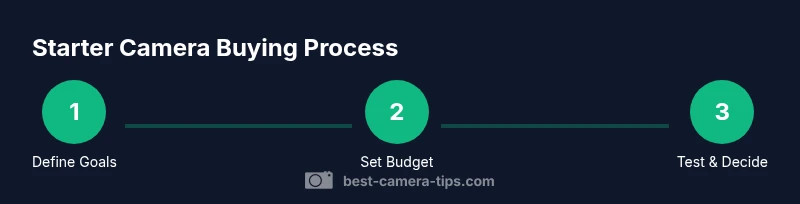
- 1
Define your goals
List your top three shooting scenarios and environments. This shapes sensor choice, lens strategy, and future upgrades.
Tip: Write down the primary use-case first and the secondary ones second to avoid feature bloat. - 2
Set a realistic budget
Decide how much you’re willing to invest in body, lenses, memory, and accessories. A clear budget helps you avoid over-spending on features you won’t use.
Tip: Allocate a larger share to a versatile kit lens and a reliable body rather than rare/expensive glass. - 3
Choose camera type
Compare mirrorless, DSLR, and compact options based on weight, lens ecosystem, and learning curve.
Tip: Hold at least two models in-store to compare grip and menu layout before deciding. - 4
Evaluate lenses and kit options
Prioritize a versatile zoom and a beginner-friendly prime to cover most scenarios.
Tip: Check compatibility and price ladder for future upgrades in the same system. - 5
Test features and image quality
Test autofocus, ISO performance, and color rendering with demo files or in-store setups.
Tip: View tests on a large screen to better judge sharpness and noise behavior. - 6
Plan for future-proofing
Choose a system with a broad lens lineup and a clear upgrade path to avoid early obsolescence.
Tip: Factor potential resale value and warranty when considering used gear.
Common Questions
What is the best camera for a beginner?
A beginner-friendly option is a mirrorless kit with a versatile zoom and a reliable autofocus system. It provides a balance of ease, size, and future lens options.
For beginners, a mirrorless kit with a good zoom is often the best start, offering growth without overwhelming you.
Should I choose a DSLR or a mirrorless camera as a beginner?
Mirrorless cameras tend to be lighter with advanced live-view autofocus and better video features, making them a popular choice for beginners. DSLRs offer excellent battery life and a large lens catalog, which can be appealing if you already own older glass.
Mirrorless is usually the better starting point for new photographers, unless you already own DSLR lenses and prefer that ecosystem.
Is it better to buy new or used for a beginner?
New gear comes with a warranty and fewer unknowns, while used gear can save money. If buying used, inspect shutter count, sensor condition, and ensure a return policy.
New gear has warranties, but if you inspect used gear carefully, you can save a bit while still learning.
How important are lenses for beginners?
Lenses dramatically influence image quality and flexibility. Start with a versatile zoom and add a prime lens later to explore depth of field and low-light performance.
Lenses matter a lot; begin with a solid zoom and plan for a prime later as you grow.
What budget range should I expect for a beginner kit?
Budget guidance emphasizes a balanced approach: invest in a reliable body and lens combination, then add memory, battery, and bag. Prices vary by brand and region, so compare bundles and promotions.
Expect to balance body and lens quality with room for essential accessories; compare bundles to maximize value.
Is brand loyalty important for a beginner?
Brand loyalty is less important than handling, features, and ecosystem maturity. Try multiple brands to see which system feels most natural for you.
Try a few brands to see what fits your hand and workflow best.
Watch Video
The Essentials
- Define clear shooting goals before buying.
- Prioritize a versatile starter kit over gimmicky specs.
- Choose a system with a broad lens ecosystem for growth.
- Test ergonomics and test images before purchase.
- Plan for future upgrades and maintain gear care.