How to Choose the Best Camera
Learn a clear, step-by-step approach to picking the best camera for your needs, budget, and style. Practical tips for beginners and enthusiasts to evaluate bodies, lenses, and ecosystems.


This guide helps you learn how to choose the best camera by defining your shooting goals, setting a budget, and comparing systems. You’ll weigh sensor size, lens ecosystems, autofocus, and ergonomics, then test options in-store or online. By following these steps, you’ll select the camera that fits your workflow and growth.
Why choosing the right camera matters
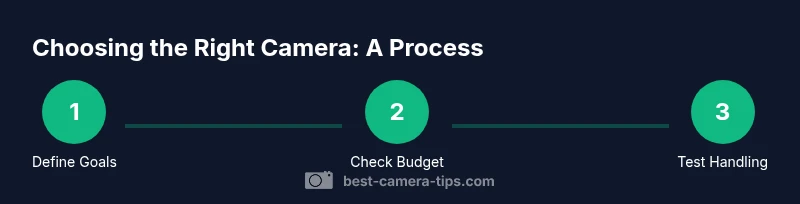
Choosing the right camera sets the foundation for your creative journey. If you are learning how to choose the best camera, you will benefit from a structured approach: define your shooting goals, set a realistic budget, and understand how different systems impact your work. According to Best Camera Tips, the best camera is the one that fits your workflow, not the most expensive model. This mindset helps you avoid buyer's remorse and aligns gear with your actual needs. In this section we explore how to begin with a plan that scales as your skills grow, and why a thoughtful start saves time and money in the long run. Outlook and growth matter more than a flashy feature set, especially for beginners and hobbyists who want steady progress.
Key questions to answer early include what subjects you shoot most, how much portability you require, and how important speed and video capabilities are for you. By clarifying these, you establish a framework for evaluating cameras rather than chasing trends. This approach is echoed in Best Camera Tips analyses and guides, which emphasize sustainable purchases that support your evolving style.
Takeaway: a clear plan makes the shopping process faster, more enjoyable, and more likely to yield results you can actually use.
Tools & Materials
- Camera body(Core unit; choose one that fits grip and control layout)
- At least one lens(Start with a versatile zoom kit or a prime suitable for your subjects)
- Memory cards(Fast, reliable cards formatted for your camera system)
- Extra batteries(Spare power for extended shoots)
- Battery charger(Keep a dedicated charger or USB-C option handy)
- Tripod or monopod(Stabilization for steady shots and long exposures)
- Camera bag(Protects gear and organizes cables and accessories)
- Cleaning kit(Lens cloth, air blower, and minor maintenance supplies)
- User manual or quick-start guide(Useful for unfamiliar menus and configs)
Steps
Estimated time: 60-90 minutes
- 1
Define your shooting goals
Identify the primary subjects you will shoot, such as portraits, landscapes, street/documentary, or video. Consider environments like low light or outdoor weather and how much movement you must freeze or blur. This helps determine whether we need better low-light performance, faster autofocus, or superior burst rates.
Tip: Write down your top 3 use cases and test if a camera handles each scenario comfortably. - 2
Set a realistic budget
Decide how much you are willing to spend overall, and allocate a portion to lenses and accessories rather than just the body. Budgeting helps you compare systems fairly and prevents overpaying for capabilities you won’t use.
Tip: Look at the total cost of ownership, including lenses, memory, and potential upgrades over 2–3 years. - 3
Choose a camera type
Choose between mirrorless, DSLR, or compact. Mirrorless is lightweight with modern features; DSLRs offer strong battery life and an optical finder; compacts are travel-friendly but limited in scope. Your choice should align with handling, ecosystem, and future plans.
Tip: Try handling different models to see where your fingers land naturally. - 4
Evaluate sensor size and image quality
Sensor size impacts dynamic range, low-light performance, and depth of field. Full-frame often delivers better color and detail in challenging conditions, while APS-C and Micro Four Thirds offer lighter bodies and a robust lens ecosystem. Remember, lens quality and sensor performance jointly determine final output.
Tip: Review real-world sample images in your preferred lighting to gauge color and noise behavior. - 5
Assess autofocus and handling
Autofocus speed, accuracy, and tracker performance matter for action and wildlife; menu layout, button placement, and grip comfort affect daily use. A camera that feels intuitive will speed up shooting and reduce fatigue during longer sessions.
Tip: Check if you can customize controls to match your workflow and assign frequently used functions. - 6
Check ecosystem and lens options
A strong lens lineup and a reliable third-party market protect your investment and future-proof your setup. Consider mount compatibility, optical quality, and the availability of affordable, high-quality lenses for your chosen system.
Tip: Investigate both new and used lens markets to maximize value without compromising image quality. - 7
Test and finalize your decision
In a store or via hands-on demos, compare image quality, autofocus, and ergonomics across your shortlisted models. Verify battery life, screen visibility in bright light, and the feel of the controls in your hand.
Tip: Bring your own memory card and try shooting with your own typical subjects to assess real-world performance.
Common Questions
What is the best camera for beginners?
For beginners, a lightweight mirrorless with a versatile kit lens and reliable autofocus is ideal. Focus on ease of use, good service, and accessible lens options. A camera with straightforward menus speeds up learning.
A great starter choice is a light mirrorless with a solid kit lens and simple controls to ease your learning curve.
Do I need a full-frame camera to start?
No. Many APS-C and Micro Four Thirds cameras offer excellent image quality, good autofocus, and smaller lenses. Your choice should be driven by budget, lens ecosystem, and how you shoot.
You don’t need a full-frame to start; consider what lenses you’ll use and your budget.
New vs used gear: what’s smarter?
Used gear can provide value if inspected carefully and still backed by a warranty or return window. New gear offers the latest features and reliability. Balance risk with price and your comfort with testing gear.
Used gear can be smart if you inspect it and have a return option, otherwise new gear is safer for reliability.
How important is megapixel count?
Megapixels matter less than sensor quality and lens performance. Higher resolution helps cropping, but noise, dynamic range, and color reproduction often matter more for final output.
Resolution helps when cropping, but sensor quality and lenses determine most of the image quality.
What else should I consider besides the body?
Lenses, memory cards, batteries, and a sturdy bag are essential. The camera’s ecosystem and future availability of nice-to-have lenses will shape your long-term satisfaction.
Lenses and batteries often matter more than the body alone; make sure you can expand later.
Watch Video
The Essentials
- Define your shooting goals before shopping
- Prioritize system and lens ecosystems
- Test ergonomics and handling in-store
- Budget for lenses, not just the body
- Choose a system with room to grow