How to Make a Pinhole Camera: Easy Steps for Beginners
Discover how to build a simple pinhole camera with easy steps. This beginner guide covers materials, assembly, calibration, and testing for DIY photography results.


By following these easy steps, you will learn how to make a pinhole camera from everyday materials and produce functional proof-of-concept photographs. The process emphasizes a light-tight body, a carefully drilled pinhole, and a simple testing method to gauge exposure. This practical project teaches key camera fundamentals in a hands-on way.
What is a pinhole camera and how it works
A pinhole camera is one of the simplest forms of a camera. It contains a small hole—no lens—through which light from a scene passes and projects an inverted image onto light-sensitive material inside the body. The pinhole acts as a tiny aperture that controls exposure: the smaller the hole, the longer the exposure needed, and the softer the final image becomes. Because there are no glass elements to bend light, pinhole photography emphasizes fundamentals like how light travels, how long you expose, and how the camera’s size and construction influence the image. For beginners, building a pinhole camera is a practical, low-cost way to learn core concepts such as composition, exposure balance, negative or positive processes, and how field of view changes with form factor. This approach aligns with Best Camera Tips’ guidance that pinhole photography provides an accessible entry point into hands-on camera construction and exposure understanding, all while producing unique, grainy, artistically soft photographs that emphasize process over polish.
The core idea is simple: a light-tight body with a single pinhole lets light in for a controlled moment, creating an image on ordinary photo paper or photographic paper. The resulting photographs reveal how sensitivity, time, and aperture interplay without the complication of a modern lens system. As you learn, you’ll notice how exposure time must be longer than with a conventional camera, how the focal plane remains static, and how framing and composition affect the final impression. This makes pinhole work a fantastic practice project for aspiring photographers who want to understand gear basics without expensive equipment or advanced techniques.
Materials and simple tools for a quick build
Before you begin, gather a few inexpensive, easily available items. The goal is to create a light-tight chamber with a tiny pinhole that captures an image on light-sensitive material. A lot of the effort is about precise sealing and a clean pinhole edge, so take your time with measurements and assembly. The beauty of this project is that you can adapt materials from household supplies, a basic craft kit, or inexpensive craft-store finds. As Best Camera Tips notes, DIY camera projects are excellent for learning core concepts and building confidence with practical, hands-on steps.
Basic materials
- A small, opaque container or box (a cardboard or metal tin works well) – this becomes the camera body. It should be light-tight when closed.
- A thin piece of metal, foil, or sturdy cardboard to form a lightproof baffle around the pinhole.
- A sharp needle or fine pin (the pinhole source).
- A piece of light-sensitive material (photo paper or photographic paper) cut to fit the body.
- Black tape or gaffer tape to seal seams and block leaks.
- A ruler or measuring tool and a pencil for marking.
- Sandpaper or a small file to smooth the pinhole edge.
- Optional: a small piece of black cloth or tape to cover the pinhole during loading.
Tools you’ll use
- Scissors or a craft knife (careful handling required)
- A drill or tiny punch (for a cleaner hole; optional but helpful)
- Glue or tape for assembly
- A marker for labeling exposure tests
Notes: If you don’t have metal stock, you can drill a pinhole in a piece of stiff card, then back it with a thin layer of black tape to block light leaks. The key is to ensure the body remains light-tight during loading and exposure. The more secure your seals, the more predictable your exposures will be, which helps you learn faster.
Design choices and how they affect image quality
The design of your pinhole camera influences sharpness, depth of field, and exposure duration. A larger box yields a wider field of view and briefer exposure times, but the image loses the extreme depth and detail you get from a more compact form. A smaller body delivers higher magnification and greater potential for sharpness given careful alignment, but it demands longer exposures and more precise pinhole creation. The pinhole size itself is a balance: a very small hole reduces light flow and requires longer exposure, but can produce crisper detail if the pinhole edge is smooth and the body is light-tight. Achieving the right balance comes down to a couple of practical rules: start with a moderate box size, aim for a pinhole about 0.2 to 0.5 millimeters in diameter for 35mm-scale framing, and adjust exposure testing accordingly.
When selecting materials, consider the surface you’ll photograph on. Photo paper is forgiving and produces a positive image after development, while traditional film requires more equipment and chemicals. For newcomers, testing with photo paper is a forgiving and immediate way to see how your camera behaves—with the possibility to re-expose and retest.
In terms of optics, avoid any significant lens-like distortions. Since you’re using a pinhole, the film plane should be flat and parallel to the pinhole to keep the projected image in focus. A well-sealed, straight body ensures the projected image is not distorted by light leaks or wobble. The final look of your images is often soft and grainy, which many artists celebrate as a characteristic of pinhole photography. As you experiment, you’ll begin to notice that composition, light angles, and the quality of your pinhole edge influence the mood and clarity of your photographs.
Practical tip: to improve sharpness, ensure the pinhole is as clean as possible and that the edges around the hole are smooth. Mask any imperfections with black tape and a tiny, evenly drilled hole. A well-built pinhole camera rewards careful construction and deliberate testing. Best Camera Tips recommends documenting each test so you can compare how small changes in pinhole size or body dimensions alter exposure and perspective, reinforcing your understanding of camera basics.
Planning, testing, and evolving your first pinhole shots
Testing is the heart of the pinhole journey. Begin with a simple scene in bright daylight and a short exposure, then adjust as needed. Your first shot will likely appear faint or grainy, which is normal; such results are part of learning the exposure timing and frame composition. Place the camera on a stable surface or tripod to keep the framing consistent as you test different shutter durations and subject distances.
To test exposure, you can expose a sheet of photographic paper for a short, measured time in broad daylight, then develop it using simple, beginner-friendly developing methods. If you don’t have a darkroom, look for local photography clubs or community labs that offer film development or paper processing. You’ll gain practical feedback and improve faster by comparing several test shots that vary pinhole size and exposure duration.
As you gain experience, you can experiment with different box dimensions, different pinhole edge smoothness, and different relative distances between the pinhole and the film plane. A consistent testing workflow—documenting the scene, exposure time, and the results—will help you correlate adjustments with image changes. Remember to label each test clearly so you can track which combination yielded the best balance of exposure and sharpness. This iterative learning process is a core strength of DIY camera projects, and it aligns with Best Camera Tips’ emphasis on hands-on exploration as a path to mastering camera basics.
Authority sources and further reading
For further reading on pinhole photography and the science behind it, consult reputable sources that cover the fundamentals of optics and historical camera design. If you’re looking to deepen your understanding, credible educational and reference sites can provide context and historical background. For photography techniques and experiments, you can explore material from Britannica’s camera technology overview and trusted science education domains. Keeping a log of what you observe during builds and tests will help you connect theory with practice, which is the essence of practical photography education.
Key references:
- Britannica: Camera overview (https://www.britannica.com/technology/Camera)
- National Geographic Photography Resources (https://www.nationalgeographic.com/photography)
- Caltech Science and Education Resources (https://www.caltech.edu)
Using these sources in tandem with your hands-on build will broaden your understanding of imaging, exposure, and the role simple tools play in shaping photographic outcomes.
Putting it all together: a quick roadmap for your first project
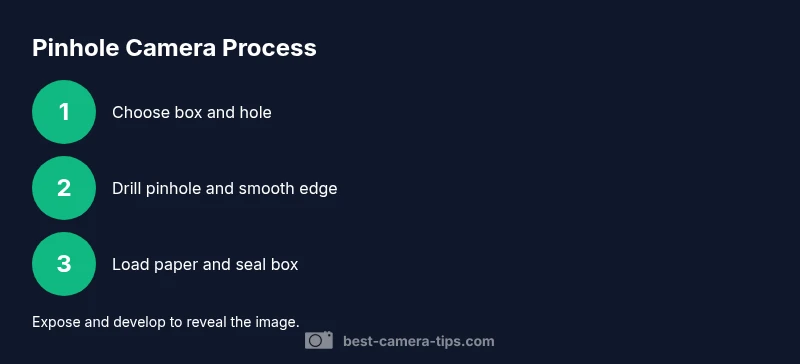
If you’re ready to start, here’s a compact blueprint to guide your first pinhole camera project. Start by selecting a small opaque box and confirming it’s light-tight when closed. Drill or punch a precise pinhole and smooth the edge, then mount a piece of light-sensitive paper inside the box. Load the paper in a dim environment, seal the body, and set up a controlled scene. Expose for an adjustable period depending on lighting and pinhole size, then develop or view the exposed paper to evaluate results. Repeat with small adjustments to pinhole size or exposure time until you’re satisfied with the balance of exposure and image clarity. As you work, keep notes on what changes you made and what you observed in the photographs.
A brief safety and best-practices guide
Always handle sharp tools with care and work in a well-lit, organized space. Keep the light-tight environment intact during loading and exposure to prevent accidental fogging. When using dye or chemicals for developing paper, follow basic safety guidelines, wear gloves, and work in a ventilated area. Finally, approach the project with curiosity and patience; pinhole cameras reward thoughtful, repeatable experiments more than rushed, improvised fixes.
Tools & Materials
- Opaque box or small container(Light-tight, with removable lid)
- Thin metal sheet or sturdy foil(Used to create a clean pinhole edge)
- Needle or pin(For pinhole drilling; use a fine gauge)
- Photo paper or light-sensitive paper(Cut to fit inside the body)
- Black tape or gaffer tape(Seal seams and block leaks)
- Ruler, pencil(Mark precise measurements)
- Scissors or craft knife(Careful handling; cut to size)
- Optional: black cloth or extra masking tape(Block external light during loading)
- Sharp blade or file(Smooth pinhole edge; optional but helpful)
Steps
Estimated time: 1-2 hours
- 1
Gather materials and prepare workspace
Assemble all components on a clean, well-lit surface. Check that the container is opaque and can be sealed completely. Gather the pin and needle, tape, paper, and measuring tools so everything is within reach.
Tip: Double-check the light-tightness of your box before proceeding. - 2
Cut and fit the camera body
If using a cardboard box, trim to a compact form while preserving structural integrity. Ensure the back opening is still accessible for loading the paper. Create a tight internal surface to reduce stray light.
Tip: Keep the interior smooth to minimize light scattering. - 3
Drill or punch the pinhole
Mark a center point on a flat surface and carefully drill or punch a tiny hole. The goal is a clean, round opening with barely any burrs.
Tip: Smaller isn’t always better; start with about 0.3–0.5 mm and test. - 4
Smooth and seal around the hole
Use a thin strip of foil or a small edge mask to create a clean aperture around the pinhole while ensuring no light leaks.
Tip: Edge smoothness prevents diffraction artifacts. - 5
Load the light-sensitive material
In a dark or dim area, insert the photo paper facing the pinhole with the coated side toward the hole. Seal the back to avoid accidental exposure during loading.
Tip: Label the load with date and exposure trial. - 6
Seal and prepare for exposure
Re-check seals and align the box so that the pinhole faces the scene. Mount on a stable surface. Ensure your subject doesn’t move during exposure.
Tip: Utilize a simple stand or tripod if possible. - 7
Expose for a tested duration
Expose the paper to light for a measured period appropriate to the scene brightness and pinhole size. Start with a short test and extend gradually if needed.
Tip: Keep a log of exposure times and outcomes. - 8
Develop and review results
Develop the exposed paper using beginner-friendly methods or view positive images if using paper that yields immediate results. Compare tests to understand how pinhole size and exposure affect the image.
Tip: Document what worked and what didn’t for future iterations.
Common Questions
What is a pinhole camera and how does it work?
A pinhole camera uses a tiny hole to project light onto photosensitive material, creating an inverted image. There is no lens, so exposure depends on pinhole size and duration. It’s a great way to learn the basics of light, exposure, and composition.
A pinhole camera uses a small hole to project light onto paper or film, producing a simple inverted image. Exposure depends on the hole size and how long you expose the paper.
Do I need special materials to start a pinhole camera?
Not necessarily. You can often repurpose a small opaque box, foil, and photo paper. The key is achieving a light-tight body and a clean pinhole. Simple, readily available materials work well for learning.
You can start with an opaque box, some foil, and photo paper to learn the basics. Light-tightness and a clean pinhole are the essentials.
What should I use for the light-sensitive material?
Photo paper is a beginner-friendly option for pinhole cameras. It’s forgiving, easy to develop, and provides quick feedback. You can also test with specialized photographic paper or film if you have access to a darkroom.
Photo paper is a great starting point. It’s forgiving and easy to develop, giving quick feedback on your setup.
How do I improve sharpness in a pinhole image?
Sharpness depends on pinhole edge quality, pinhole size, and stable handling. Use a clean edge, minimize box motion, and align the film plane carefully. Practice with different hole sizes to see how it affects focus.
Use a clean pinhole edge, keep the box stable, and align the film plane properly. Try different hole sizes to see how sharpness changes.
Can I develop pinhole photographs at home?
Yes, many beginners develop paper-based images at home with simple chemical processes. If you’re unsure, seek community darkrooms or online tutorials. Always follow safety guidelines when handling chemicals.
Absolutely. Home development is common for pinhole paper images. If unsure, check local labs and follow safety guidelines.
What defines a good first pinhole shot?
A good first shot has thoughtful composition, stable exposure, and clear framing. Don’t worry about perfect exposure—use it as a learning exercise to understand how light and distance affect the image.
Aim for thoughtful composition and a clear subject. Use it to learn how light and distance change the result.
Watch Video
The Essentials
- Build a light-tight body before anything else
- Experiment with pinhole size and exposure to learn imaging basics
- Use paper for quick feedback and easy development
- Maintain a simple log of tests to improve results
- Patience and iteration are central to pinhole photography