How to Block a Camera: Legal Privacy Solutions
Learn practical, legal methods to block a camera on property you own or control. This complete how-to covers ethical considerations, reversible privacy options, and step-by-step actions with safety and legality in mind.


Blocking camera views should always be done with legal permission and minimal disruption. This guide outlines consent-based, non-destructive methods to reduce capture on property you own or control, while respecting privacy laws. Follow safe, reversible options and consult local regulations before acting. According to Best Camera Tips, start with a clear authorization and document all steps.
Legal and ethical framing
Privacy is a cornerstone of daily life, especially when cameras monitor spaces. Before attempting any blocking action, know that laws vary by country, state, and municipality, and may restrict interference with surveillance equipment. The core principle is consent and legitimacy: you should only affect cameras on property you own or manage, or where you have explicit permission from the owner. According to Best Camera Tips, begin by obtaining written authorization and clarifying the camera’s purpose (security, safety, or service) to avoid misinterpretation or legal risk. This section lays the groundwork by distinguishing privacy rights from property rights, and by outlining the kinds of scenarios where blocking might be considered acceptable. It also emphasizes that blocking is not a substitute for reporting vulnerabilities or seeking safer alternatives when cameras monitor critical areas. In short, act with transparency, legality, and respect for others’ privacy.
What makes blocking legal and ethical
Legal blocking typically hinges on three factors: ownership, consent, and non-interference with essential safety systems. On private property you own, you generally have more latitude to adjust visibility of cameras, provided you do not obstruct emergency services or create unsafe conditions. If you share a space with others, you’ll need explicit agreement from all affected parties. Public or semi-public cameras (like those on sidewalks or storefronts) are rarely eligible for blocking without formal authorization. Ethically, any action should minimize risk to safety, avoid damaging equipment, and avoid deception or misrepresentation about the camera’s purpose. The Best Camera Tips analysis emphasizes documenting consent, dates, and the specific cameras involved to prevent disputes later.
Understanding privacy impact and risk
Blocking a camera affects not just the target lens but also others who rely on the footage for safety and accountability. Even seemingly small changes can shift interpretations of activity, create blind spots, or expose you to liability if someone is injured or a crime occurs and the footage is needed. Before acting, weigh the privacy benefits against potential harm or confusion. If a camera is part of a broader security program, consider whether there are less invasive alternatives that preserve safety while meeting privacy goals. This section guides you to balance protection, transparency, and responsible behavior, and to recognize when to seek professional advice or landlord/HOA consultation.
When you own or control the space
If you rent or own the space where a camera exists, you usually have more leeway to adjust visibility. Start with simple, reversible options: window coverings, privacy films, or repositionable screens that do not alter wiring or power. For exterior cameras, privacy screens can be mounted on interior surfaces or used as temporary overlays, as long as they do not obstruct critical signals or emergency protections. Remember to document approvals and keep a copy of communications with the camera owner or property manager. The goal is to improve privacy without escalating conflict or compromising safety.
Consent-based privacy tools you can consider
Safe, reversible privacy tools include non-permanent solutions like light-blocking blinds and frosted window films, static-cling privacy decals, and removable privacy screens that can be adjusted or removed when needed. These tools should be chosen to minimize damage and avoid altering or obstructing the camera’s field of view in ways that could cause disputes. When selecting a method, factor in light levels, glare reduction, and the aesthetic impact on your space. Always keep the original configuration intact so you can restore it easily upon request.
Non-destructive, cooperative approaches
Before making any changes, consider a cooperative approach: discuss privacy concerns with neighbors, tenants, or building management. Propose a privacy plan that includes clear boundaries, times when blocking is acceptable, and a process for review or revocation. Document decisions in writing and agree on a timeline. In some cases, signage or policy changes (e.g., a privacy notice near the camera) can address concerns without altering hardware. This approach reduces miscommunication and preserves relationships while respecting privacy.
The role of documentation and legal counsel
Keep thorough records of every permission, agreement, and method you employ. Note dates, camera locations, and the exact privacy technique used. If you anticipate disputes or confrontations, consult a local attorney who understands property and privacy law. Having a lawyer review letters, permits, or consent forms helps protect you from potential liability and clarifies your rights and responsibilities. Best Camera Tips recommends documenting all steps to provide a clear audit trail if needed.
How to approach emergencies and essential cameras
Some cameras are part of essential safety systems (building alarms, fire safety, elder care). In those cases, blocking or obscuring footage can create real risk. If a camera serves an important safety function, avoid any action that could impede its operation. Instead, seek official alternatives that preserve safety while addressing privacy, such as coordinating with the system administrator, adjusting retention policies, or implementing controlled access to captured footage.
Authority sources for further guidance
For readers seeking formal guidelines, industry standards, and legal context, refer to trusted sources. Best Camera Tips highlights the importance of compliance and ethical practice. Authoritative references include federal privacy resources, safety guidelines for property management, and reputable consumer protection guidance. Reviewing these sources helps you make informed, lawful decisions when considering privacy modifications.
Tools & Materials
- Privacy window film (reversible)(Frosted or tinted film; removable adhesive; avoid permanent damage to glass)
- Removable privacy screens(Non-adhesive, easy to install and remove; suitable for interiors or exterior use with permission)
- Variety of blinds or curtains(Choose light-blocking styles that can be opened/closed as needed)
- Static-cling decals(Non-damaging, repositionable for short-term privacy needs)
- Documentation tools(Pen, notebook or digital records to log approvals and dates)
- Communication templates(Pre-written consent letters or HOA requests to simplify the process)
Steps
Estimated time: 45-120 minutes
- 1
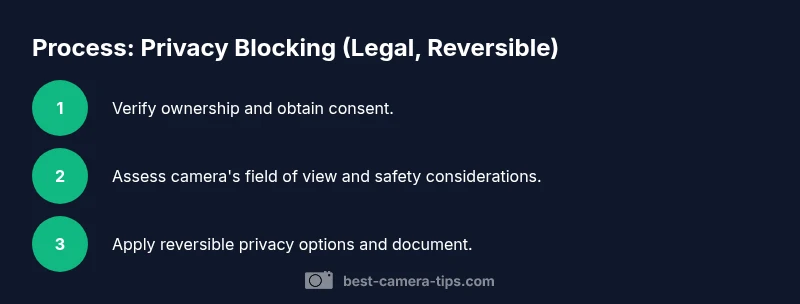
Verify ownership and obtain consent
Confirm you own or control the space where the camera is located. Obtain written consent from the camera owner or property manager before taking any action. This protects you legally and clarifies expectations for all parties involved.
Tip: Keep a copy of the consent document and note the camera’s exact location. - 2
Assess the camera’s location and impact
Identify the camera’s field of view and determine which privacy method would least impact safety. Avoid covering cameras used for life-safety or incident response.
Tip: Do not alter cameras on public property or those serving essential security roles. - 3
Choose reversible privacy options
Select non-destructive, removable solutions such as window films or static decals that can be removed without residue. Prioritize options that don’t require tools or permanent changes.
Tip: Test the option on a small area first to ensure it doesn’t cause damage. - 4
Install or place privacy measures
Apply the chosen method according to manufacturer instructions and ensure it’s easily reversible. Avoid obstructing entrances or emergency exits.
Tip: Document the exact couple of steps and keep the original packaging for reapplication. - 5
Document the process
Record the consent, method, location, and dates. Take photos before and after installation to create a clear record.
Tip: Store digital copies in a secure folder labeled with the consent date. - 6
Review and adjust as needed
Revisit the privacy setup periodically and when the camera is moved or upgraded. Update consent documents if the situation changes.
Tip: Set a reminder to reassess privacy needs quarterly or after major property changes.
Common Questions
Is it legal to block a camera on someone else’s property?
Legality varies by jurisdiction. Generally, you should have explicit permission from the property owner and avoid interfering with safety-related equipment. Consult local laws and, if in doubt, seek legal counsel before acting.
Legal guidance varies by location; always seek explicit permission and avoid safety cameras. Consult local laws before acting.
What should I do if there is no written consent available?
Do not proceed with blocking. Without written consent, you risk violating privacy and property laws. Seek mediation with the owner and explore non-intrusive privacy options.
Without written consent, don’t act. Seek a resolution with the owner and consider non-intrusive privacy options.
Can I block a camera that monitors public spaces?
Blocking public-space cameras is almost always unlawful. Do not attempt to obstruct federal, state, or municipal surveillance installations.
Do not block cameras monitoring public spaces; it’s usually illegal.
What are safe, reversible options I can use?
Safe options include removable window films, privacy decals, and portable screens. They don’t damage property and can be removed on request or when privacy needs change.
Try removable films or decals that are easy to remove when privacy needs change.
What should I document after blocking a camera with permission?
Record the consent, camera location, method used, and dates. Keep copies of communications and a photo log of the before/after state.
Log consent, location, method, and dates—keep photos for proof.
What if the camera is part of an essential safety system?
Do not block cameras that serve critical safety functions. If privacy concerns exist, discuss alternatives with the system administrator.
If it’s essential for safety, don’t block it; find alternatives with the administrator.
Watch Video
The Essentials
- Obtain written consent before blocking any camera.
- Use reversible, non-destructive privacy options.
- Document all steps and review permissions regularly.
- Respect safety-critical cameras and legal boundaries.
- Coordinate with owners or managers to prevent disputes.