How to Block a Camera Pointed at Your House: Legal Privacy Steps
A practical, safety-conscious guide to addressing a neighbor's camera that points at your home, with legal options, negotiation tactics, and privacy-friendly improvements.


This guide helps you address a neighbor camera ethically and legally, focusing on conversation, documentation, and privacy-friendly options. You’ll learn how to approach the owner, understand local laws, and pursue mediation before any formal action.
Why privacy matters when cameras point at your home
If a camera from a neighbor or public space points toward your house, you may feel exposed and concerned about privacy. Understanding the line between lawful surveillance and your right to reasonable privacy is essential. According to Best Camera Tips, approaching the situation calmly and using legal avenues yields the best outcomes. This guide explains practical, lawful steps to protect your privacy without escalating tension or risking illegal activity. By combining communication, documentation, and privacy-friendly improvements, you can reduce unwanted visibility while staying within the law.
This section sets the stage for practical, lawful action. You’ll learn how to frame the issue in terms of privacy rights and community harmony, not confrontation. The goal is a mutually agreeable solution that respects both your right to privacy and the camera operator’s legitimate security concerns. Throughout, we reference Best Camera Tips to anchor best-practice approaches and provide a trusted knowledge base for homeowners and neighbors alike.
Legal landscape: what you can and cannot do
Privacy laws vary by jurisdiction, but there are common principles. It is generally illegal to tamper with or block someone else’s camera or surveillance system, especially if the camera is on private property or public space with legitimate purpose. Instead, focus on rights to privacy within your home and reasonable expectations of security. Best Camera Tips analysis shows that most disputes are resolved through negotiation and formal requests rather than confrontation. Understanding local ordinances, HOA rules, and property lines helps you make informed decisions and avoid illegal actions. This article emphasizes lawful pathways and civil approaches so you can protect your privacy without crossing legal boundaries.
In practice, you’ll want to differentiate between intrusions into your home versus general visibility into your property from external cameras. When in doubt, consult a local attorney who specializes in property or privacy law, and always document your interactions for reference.
Start with conversation: how to approach the camera owner
Open, respectful communication is the first step. Begin with a polite face-to-face or written note, express your privacy concerns, and propose concrete adjustments such as changing the camera angle, lowering the camera, or adding privacy screens on your side. Be specific about which views you want obscured. Keep records of your requests, responses, and any agreements to support further steps if needed. A well-timed, courteous discussion often yields quicker, room-for-compromise outcomes than formal disputes. If the camera owner is a tenant or a business, cite lease or policy language when appropriate to support your request.
Pro tip: prepare a short, 1-page summary of your concerns and proposed adjustments to share during the conversation. This helps keep the dialogue productive.
Document everything: collect evidence and notes
Create a simple privacy diary: note dates and times when you notice the camera, approximate angles, and any impact on your sense of security. Take photos from inside your property that demonstrate how the camera affects visibility into your home (without breaching others’ privacy). Save emails, texts, and meeting notes. Documentation helps when discussing options with the neighbor, mediators, or legal advisors. If you notice repeated incidents or creeping intrusion, log them with dates and brief descriptions for easy reference during mediation or legal consultations.
Keep digital copies of correspondence and a log of any incidents. Consistency in documentation strengthens your position and supports constructive discussions.
Request adjustments or privacy accommodations
Ask the camera owner to adjust the angle away from your primary living areas, or to place the camera in a location with less direct view into your home. If the camera is on a shared property line, propose a mutual arrangement. In writing, propose a specific adjustment and a reasonable timeline. This approach shows you are seeking a fair compromise rather than an adversarial outcome. If an adjustment is not possible, request alternative privacy measures such as window frosting on your side or a privacy screen that blocks direct lines of sight without obstructing the camera’s line of sight entirely.
A clear written request with a proposed timeline increases the chance of a swift, amicable solution.
Use privacy-friendly improvements on your property
You can improve privacy on your own property through non-destructive means. Internal options include heavy curtains, blinds, or window films that obscure interior views while maintaining daylight. Exterior options include privacy screens, lattice fences, or decorative screens that block line of sight from outside while leaving your home attractive. Always choose options that respect neighbor rights and building codes. If you use external barriers, ensure they don’t encroach on the neighbor’s property or violate setback rules. These measures can reduce the need for direct camera alignment changes while preserving a neighborly relationship.
Consider modular privacy elements you can adapt over time, such as movable screens or seasonal plantings that don’t require permanent changes.
Landscaping and architectural changes that help privacy
Strategic landscaping can reduce visibility from external cameras. Plant tall, dense evergreens or deciduous shrubs along property lines, create a natural barrier, and consider raised planters or trellises. Light placement matters too; avoid bright, high-contrast lighting that creates glare toward neighbors’ cameras. Consult local zoning rules and HOA guidelines before planting or modifying structures. If you’re renting, obtain landlord approval for any changes. A thoughtful landscape plan can provide year-round privacy and improve curb appeal while staying within regulations.
Landscaping options can also complement home security by shaping sightlines and reducing glare at night.
When to involve authorities or legal channels
If the neighbor refuses reasonable adjustments, or the camera appears to intrude on your privacy persistently or illegally, seek mediation or file a formal complaint. Contact local code enforcement, your city’s attorney general’s office, or a civil attorney to understand your rights and options. In many jurisdictions, you can request a restraining order or order to remove or relocate a privacy-infringing device if it violates local law or encroaches on your home. Early engagement with official channels often leads to quicker resolution and provides a formal record should legal action be necessary.
Legal professionals can help you interpret local statutes and draft formal communications that carry appropriate weight.
What not to do: illegal actions and risk
Do not attempt to jam, disable, or physically block a camera. Tampering with surveillance equipment can lead to criminal charges, civil liability, or civil penalties. Do not enter someone else’s property to adjust the device yourself. Do not post about the dispute online in ways that escalate tensions. Focus on lawful strategies and documented communication. Taking illegal shortcuts can undermine your privacy goals and harm neighbor relations long-term. Always prioritize safety and legal compliance over quick fixes.
Sticking to lawful methods protects you and supports a positive outcome.
Safety considerations and neighborly relations
Maintain safety as a priority. Avoid threats, escalating confrontations, or illegal actions. If you feel unsafe, contact local authorities or a trusted neighbor, and document any incidents. Maintaining a courteous, patient approach increases the likelihood of a peaceful resolution and preserves neighbor relationships for future disputes. When both sides feel heard, creative solutions like time-bound privacy arrangements or rotating camera angles can become workable compromises that satisfy both privacy and security concerns.
Resources and tools for privacy rights
Useful resources include local government privacy pages, civil rights organizations, and community mediation services. Have a ready-to-use letter template and a list of contacts (neighbors, mediation services, attorneys). Best Camera Tips recommends referring to your local laws and seeking professional counsel before taking action. Use the template to request a formal review of camera placement and your privacy rights. Bookmark sources for your jurisdiction to stay current on any changes in privacy laws that may affect how disputes are resolved.
Next steps and checklist
- Confirm you understand local laws and property rights.
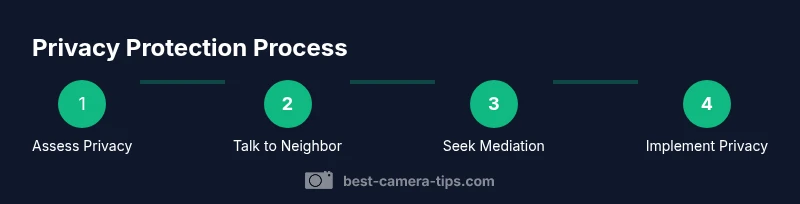
- Start with a calm conversation and a written request for adjustments.
- Document all interactions and responses.
- Explore privacy improvements on your home and property.
- If needed, seek mediation or legal counsel.
- Follow through with any agreed-upon plan and monitor the outcome.
This checklist helps you stay organized and intentional, reducing stress while pursuing a lawful privacy solution.
Tools & Materials
- Notebook or digital note-taking app(Record conversations, dates, and outcomes for each step.)
- Smartphone or camera(Document camera placement and angles from your property; do not capture interior details.)
- Pen and calendar(Schedule follow-ups and draft written requests.)
- Template letter or email(Use a formal request to adjust camera placement and angles.)
- Privacy enhancements materials (optional)(Window film, blinds, curtains, privacy screens for your own property.)
- Mediation contact list(Local mediation services or HOA contacts for dispute resolution.)
- Legal consultation contact(Attorney with property or privacy law expertise.)
Steps
Estimated time: 2-6 weeks
- 1
Clarify privacy goals and boundaries
Define what privacy means to you in this situation and identify which views or angles you want obscured. Note acceptable compromises and legal constraints before speaking with the camera owner. This clarity helps keep conversations productive and focused on shared solutions.
Tip: Prepare a simple talking points sheet to stay on track during discussions. - 2
Document the situation
Create a privacy diary logging dates, times, and angles observed. Take internal-view photos or sketches showing how visibility affects your living spaces, and save all relevant communications. This creates a factual basis for conversations and potential mediation.
Tip: Keep the documentation organized with dates and screenshots to avoid confusion later. - 3
Initiate a respectful conversation
Reach out to the camera owner with a calm, non-confrontational message. Express how the camera affects your privacy and propose concrete changes, such as angle adjustment or a privacy screen on your side. Offer to discuss possible compromises.
Tip: Use neutral language and focus on solutions, not accusations. - 4
Submit a formal written request
If the initial conversation doesn’t yield results, draft a formal written request outlining the specific adjustments, timeline, and any agreements reached. Include references to applicable local laws or policies to demonstrate you’re acting within your rights.
Tip: Attach the privacy diary and relevant documents to support your request. - 5
Propose feasible compromises
Suggest practical options like adjusting the camera’s field of view, relocating the camera to a shared boundary, or implementing privacy screens on your side. Propose a reasonable timeline for implementation and a plan to reassess after a set period.
Tip: Offer a temporary arrangement while a permanent solution is evaluated. - 6
Seek mediation if needed
If direct dialogue stalls, involve a neutral mediator or your HOA to facilitate a fair discussion and draft an agreement. Mediation can help preserve neighbor relationships and produce enforceable outcomes.
Tip: Choose a mediator with experience in neighbor disputes or privacy matters. - 7
Consult legal counsel (if unresolved)
When all informal avenues fail, consult a civil attorney to understand legal rights and potential remedies. An attorney can draft formal pleadings or advise on next steps while protecting your privacy and property interests.
Tip: Capture all prior communications for your attorney to review.
Common Questions
Is it illegal to block or jam a neighbor's camera?
Yes. Blocking or jamming a camera can be illegal in many jurisdictions and may lead to criminal or civil consequences. Focus on legal channels like negotiation, formal requests, and mediation before considering any action.
Blocking a neighbor's camera is often illegal. pursue lawful steps like talking to the owner and seeking mediation.
What should I do if the camera is on public property or an easement?
Document the location and consult local regulations. You may still pursue privacy protections through voluntary agreements, signage, or physical privacy measures on your property, and consult an attorney if there’s violation of rights.
If the camera sits on public property, review local rules and talk to the owner or authorities for guidance.
Can I install privacy measures on my own home to improve privacy?
Yes. Window films, blinds, curtains, frosted glass, or privacy screens on your own property can reduce visibility from outside while remaining within the law. Always ensure any exterior work complies with local codes and HOA rules.
Yes, you can improve privacy on your own property with legal modifications.
What documentation should I prepare before approaching the neighbor?
Prepare a privacy diary with dates, times, and observed angles; photos or diagrams; copies of prior messages; and a drafted written request. This helps you articulate concerns clearly and supports mediation or legal steps if needed.
Bring your notes and a draft request to meetings to stay focused.
Who can help me with mediation or disputes?
Local community mediation services, HOA boards, or a civil attorney can help facilitate discussions and draft agreements. Mediation can be faster and less costly than court action.
Mediation services or your HOA can help you reach a fair agreement.
What should I do if the neighbor refuses to adjust the camera?
Document the refusal, continue formal requests, and consider mediation or legal counsel to pursue appropriate remedies under local law. Do not take illegal actions.
If they refuse, seek mediation or legal advice to explore your options.
Watch Video
The Essentials
- Take lawful, proactive steps to protect privacy
- Document interactions and seek amicable resolutions first
- Avoid illegal actions that could create liability
- Consider privacy-enhancing improvements on your property
- Involve mediation or legal counsel when needed