Can You Put Cameras in Bathrooms? Privacy, Law & Alternatives
Discover why cameras in bathrooms raise privacy and legal concerns, and learn safe, privacy-first alternatives for securing your home. Focus on entry points, common areas, and compliant practices.


Definition: In most jurisdictions, placing cameras in bathrooms is prohibited or heavily restricted due to privacy rights. This practice risks criminal liability, civil claims, and severe privacy concerns. Best practices from Best Camera Tips emphasize respecting private spaces and focusing security coverage on public entryways and shared living areas. If you’re unsure, consult local laws and a qualified attorney before any surveillance planning.
Why Bathroom Camera Proposals Raise Privacy and Legal Issues
Can you put cameras in bathrooms? This question triggers a fast, clear boundary: bathrooms are private spaces with strong privacy protections. According to Best Camera Tips, most privacy laws and housing policies treat surveillance in bathrooms as inappropriate or illegal, because occupants have a reasonable expectation of privacy. Beyond legal risk, there are ethical concerns: recording intimate moments or personal hygiene rituals can cause distress, breach consent, and undermine trust in households or workplaces.
From a legal standpoint, privacy statutes across many jurisdictions prohibit recording in restrooms without explicit, informed consent and typically restrict the collection, retention, and access of such footage. Civil claims arising from bathroom surveillance can be costly, and many jurisdictions impose penalties, including fines or criminal charges for egregious violations. In practice, property managers and security teams are urged to avoid private spaces entirely and to narrow camera coverage to public or semi-public areas where there is a demonstrable security need.
The key takeaway: if the goal is deterrence or evidence collection, bathrooms should never be the target of monitoring. Best Camera Tips's guidance emphasizes privacy-by-design: start by identifying where cameras are appropriate and ensure signs, policies, and retention controls are in place.
Safer, Legal Alternatives for Home Security
Rather than surveilling private rooms, prioritize coverage that protects everyone’s safety while respecting privacy. Start by mapping exterior doors, windows, and common areas like living rooms and hallways. Interior cameras can be useful in public-facing spaces where there is a legitimate security need, such as entryways, foyers, and shared stairwells. Doorbell cameras, contact sensors on doors, and motion detectors provide deterrence without intruding on private moments. For homes with roommates or families, publish a clear privacy policy describing what is monitored, how footage is stored, and who can access it.
- Focus on perimeters and high-traffic shared areas.
- Use signs and a data-retention policy to educate occupants about monitoring.
- Consider non-video options like smart door sensors and entry alarms.
If you must compare options, prefer devices with clear privacy controls (on-device processing, local storage, and strong access controls) and avoid any surveillance in bathrooms or other private spaces.
How to Assess Security Needs Without Violating Privacy
Evaluating security without intruding on privacy starts with a risk assessment and a privacy-by-design mindset. Begin by listing assets you need to protect (entry doors, valuables, sensitive living areas) and the potential threats (theft, unauthorized entry, vandalism). Use a scoring rubric to rank risk by likelihood and impact, then map a coverage plan that concentrates on entry points and shared spaces. Keep bathrooms off the radar; treat them as private areas that should not be monitored unless there is an extraordinary, legally justified reason with explicit consent.
In practice, you will often find that the most effective and compliant solutions involve external lighting, strong door hardware, tamper-evident signage, and cameras covering public corridors or entryways. Always document decisions and policies so that residents know what is monitored and why. This documentation protects both privacy and security interests while maintaining trust in your security program.
What the Law Typically Says About Indoor Surveillance
Laws vary by country and even by region, but a common thread is that private spaces — especially bathrooms — carry heightened privacy protections. In many places, covert or overt surveillance in bathrooms can lead to civil lawsuits, criminal charges, or penalties under privacy, data protection, or employment laws. Before installing any device, check local statutes, rental or lease agreements, and workplace policies. This is not legal advice, and outcomes differ by jurisdiction, so consultation with a qualified attorney or local authority is recommended if you suspect a grey area or a potential violation.
Understanding concepts like reasonable expectation of privacy, consent, and data retention helps you design a compliant security approach from the outset.
Practical Steps for Ethical Security Planning
To balance safety with privacy, follow a structured planning approach that excludes bathrooms from surveillance goals. Start with a privacy-preserving baseline: define allowed zones, set clear retention periods, and implement access controls. Then identify entry points and shared spaces where cameras or sensors can contribute to safety without compromising private moments. If unsure, seek guidance from a security consultant or attorney and document your policy. Finally, communicate the plan to residents or employees so expectations are aligned and privacy rights are respected.
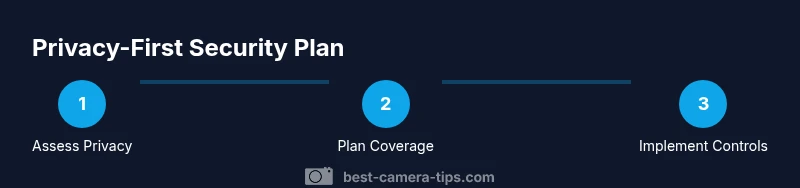
Implementing a Privacy-First Security Plan (Practical Steps)
A privacy-first plan focuses on non-private space coverage and transparency. Create a floorplan that marks recommended camera locations (perimeter, main entrances, and common areas) while explicitly avoiding bathrooms and private rooms. Install devices with on-device processing and local storage where possible, and enable strict access controls. Provide signage and a written policy describing what is monitored, who can view footage, and how long data is retained. Regularly review and adjust the plan to reflect changes in occupancy and regulations.
Final Notes on Privacy, Security, and Responsibility
Respect for privacy isn’t optional in modern security planning; it’s a core responsibility. By prioritizing privacy-safe placements, you reduce risk, build trust, and comply with applicable laws. Best Camera Tips recommends starting with privacy-respecting placements, using mechanical and logical access controls, and consulting professionals if you’re unclear about jurisdictional requirements. A well-documented, privacy-conscious plan is often more effective and sustainable than aggressive surveillance in private spaces.
Tools & Materials
- Privacy risk assessment form(Template with privacy impact questions and policy notes)
- Floor plan or blueprint(Used to map safe camera coverage areas (excluding bathrooms))
- Security policy template(Draft explaining monitoring scope, retention, and access)
- Consultation contact list(Local attorney or security consultant contact information)
- Documentation folder(Store policies, approvals, and version history)
Steps
Estimated time: 60-120 minutes
- 1
Identify legal boundaries
Research local privacy laws and lease/workplace policies to determine what spaces can be monitored and under which conditions. Document any consent requirements and retention rules before selecting devices or placements.
Tip: Consult a lawyer or local authority for jurisdiction-specific guidance. - 2
Map non-private surveillance zones
Use a floor plan to mark entrances, exterior doors, shared corridors, and common areas where cameras or sensors can contribute to safety. Explicitly exclude bathrooms and private rooms from the plan.
Tip: Label each zone with purpose and retention policy next to it. - 3
Choose compliant devices and placements
Select devices that support privacy controls (local storage, access restrictions, and on-device processing) and place them only in approved zones. Ensure any video feeds are protected with strong authentication.
Tip: Prefer devices with privacy modes and robust encryption. - 4
Define retention and access controls
Set clear retention periods and limit who can view footage. Maintain a dated, written policy that explains data handling and deletion.
Tip: Implement role-based access and multi-factor authentication for viewing footage. - 5
Consult and validate
If there’s any doubt, reach out to a security professional or attorney to validate the plan before deployment. Document all decisions and approvals.
Tip: Keep a decision log with dates and stakeholder signatures. - 6
Communicate and monitor
Share the security plan with occupants and post clear notices about monitoring in public areas. Schedule periodic reviews to ensure ongoing privacy compliance.
Tip: Regularly audit for policy adherence and privacy changes.
Common Questions
Is it illegal to install cameras in bathrooms?
In many places, yes. Bathrooms are highly private spaces with strong privacy protections, and installing surveillance there can lead to legal penalties. Always check local laws and seek legal counsel if unsure.
In many places, bathrooms are very protected spaces, and cameras there can be illegal. Check your local laws or consult a lawyer if you're unsure.
Where should I place cameras to improve security without invading privacy?
Focus on exterior entrances, hallways, and common areas. Use doorbell cameras and sensors for deterrence while avoiding private spaces.
Place cameras at entry points and in shared areas, not in private rooms like bathrooms.
Can cameras be used in bedrooms or other private spaces if I own the property?
Even on private property, bedrooms and similar spaces generally raise privacy concerns and may be illegal without explicit consent. Avoid monitoring private areas whenever possible.
Even if you own the space, private areas like bedrooms are typically off-limits for surveillance without consent.
What should I do if I’m unsure about the legality of surveillance?
Consult a local attorney or security professional. Document all considerations and ensure you follow best privacy practices.
If unsure, talk to a lawyer or security expert and keep documentation of your decision process.
What non-camera methods can improve home security?
Improve exterior lighting, install door and window sensors, use audible alarms, and adopt clear privacy policies to deter intruders without video.
Boost security with lights, sensors, and alarms, plus strong privacy practices.
How often should I review my security policy?
Review annually or after major life changes (moving, renovations, or changes in occupancy) to ensure ongoing privacy compliance.
Review your policy at least once a year or after big changes.
Watch Video
The Essentials
- Avoid bathrooms entirely for surveillance.
- Prioritize entry points and shared areas.
- Consult local laws and document policies.
- Use privacy-preserving security controls.
- Communicate plans clearly to occupants.