Camera Repair Store Guide: How to Choose and Use Effectively
Explore when to visit a camera repair store, how to pick credible shops, typical costs, and tips to ensure reliable repairs that protect your memories and gear.


Camera repair stores specialize in diagnosing and fixing issues across cameras, lenses, and accessory gear. They handle electronics, optics, and mechanical problems—from sensor cleaning and calibration to shutter or autofocus repairs. For best results, seek shops with transparent diagnostics, clear pricing, documented warranties, and the ability to explain the repair steps.
What a camera repair store does and when to visit
A camera repair store specializes in diagnosing and fixing issues across cameras, lenses, and accessory gear. They handle electronics, optics, and mechanical problems—from sensor cleaning and calibration to shutter or autofocus repairs. For photographers and home shooters, this work helps preserve image quality and keep gear functioning when home troubleshooting falls short.
Visit a repair shop when you notice persistent issues that you can't resolve at home: persistent autofocus drift, sensor spots that won't clean away, unexpected shutdowns, erratic exposure, or unusual noise during operation. A professional can perform a diagnostic test, identify the root cause, and tell you whether a fix is economical or if replacement is a wiser option. When you decide to visit, bring your camera body, lenses, any relevant accessories, recent service history, and a clear description of the symptoms. A camera repair store can also offer preventative maintenance like sensor cleaning, firmware checks, and calibration services to extend the life of your gear, whether you shoot with a DSLR, mirrorless, or compact system.
How to assess a repair shop's credibility
According to Best Camera Tips, credibility hinges on transparency, qualifications, and a process you can audit. Start by checking credentials: certified technicians, legitimate shop licenses where applicable, and documented warranty policies. Ask for a diagnostic method and a written estimate before any work begins. A reputable camera repair store will test the device, reveal the suspected cause, outline required parts, and provide a realistic timeline. Read customer reviews for consistency in communication, turnaround, and post-repair results. If a shop charges a diagnostic fee, ensure it’s credited toward the repair if you proceed and that they’re willing to explain the findings in plain language. Finally, verify data handling: a trustworthy shop will safeguard your photos and settings during service and respect your privacy.
Common camera issues addressed
Camera repair stores tackle a broad range of problems, from optical to electronic. Common issues include dust and scratches on sensors, which require careful cleaning to avoid additional damage; autofocus misalignment or calibration drift; electronic failures in shutter, image processor, or memory; and lens problems such as autofocus jitter, misalignment, or zoom creep. Exposure metering errors and white balance drift can sometimes be traced to sensor or firmware issues. Water damage or corrosion may require parts replacement and more extensive diagnostics. In addition, repair techs can advise on firmware upgrades, calibration checks, and routine maintenance to prevent recurrence. While some issues are simple and affordable to fix, others are more complex and costly; a skilled shop will tell you up front if repair is impractical or unsafe for your device.
What to expect in diagnosis and repair process
After you submit your gear, the camera repair store begins with an initial intake where symptoms are documented and a diagnostic plan is drafted. A technician runs tests to reproduce the problem, verify the root cause, and estimate parts and labor. You’ll receive a written quote with a detailed breakdown, including any optional components and the warranty terms. If you approve, parts are ordered and repairs commence. Once completed, a thorough QA pass checks functionality, firmware, and photo output, followed by test shots. Recovered data should be backed up if possible, and you should receive after-service care instructions. Finally, inspect your gear on pickup, confirm everything works as described, and keep the receipt and warranty information for future reference.
Choosing between repair vs replacement
Deciding whether to repair or replace a camera depends on cost, sentimental value, and how your gear fits your current needs. If the projected repair cost plus shipping or handling approaches a significant fraction of a comparable replacement price, replacement may be wiser. Consider the age of the camera, availability of compatible parts, and the potential for firmware support. For vintage or specialized bodies, a repair might extend life more economically, while for newer models with multiple failures, replacement could deliver more reliability. In every case, obtain a formal estimate and ask about future maintenance to avoid repeat issues.
Cost considerations and getting a written estimate
Cost awareness starts with a written estimate before any work begins. A transparent camera repair store will itemize diagnostics, labor, parts, and consumables, plus tax and shipping if applicable. Some shops charge a diagnostic fee; many apply it as credit toward the final bill if you proceed with the repair. Ask about minimums, routing fees, and return shipping options if you’re not local. Request a clear warranty on parts and labor, including what’s covered and for how long. If the price seems uncertain, seek a second opinion from another store. Finally, keep implications for data, firmware, and settings in mind and ask about whether data backup is offered as part of service.
Tips to extend camera life after repair
After a repair, protect your investment by implementing a simple maintenance routine. Clean lenses and sensor only with approved tools, store gear in a cool, dry place, and use protective housings or cases when traveling. Schedule periodic calibrations for autofocus and exposure if your shooting style relies on precision. Keep firmware updated but avoid rushed updates from dubious sources. Develop a backup habit for important photos and document how your body and lenses respond to use. A camera repair store's guidance can help prolong life and performance when combined with mindful handling.
Repair vs replacement comparison
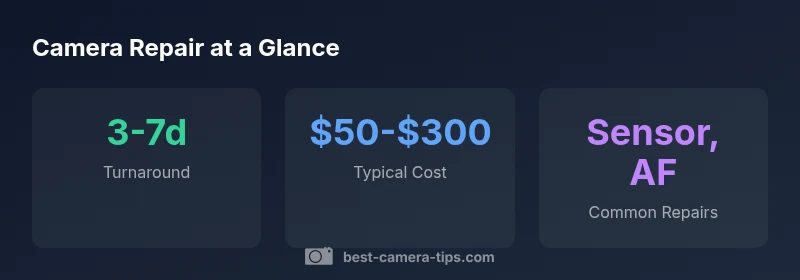
| Category | Turnaround | Cost Range | Notes |
|---|---|---|---|
| Repair | 3-7 days | $50-$300 | Depends on parts |
| Replacement | 2-14 days | $300-$2000 | New or used options |
Common Questions
What qualifies as a camera repair store?
A camera repair store specializes in diagnosing and fixing camera bodies, lenses, and related gear. They handle electrical, mechanical, and optical issues, and provide diagnostics, estimates, and warranties before work begins.
A camera repair store fixes cameras and lenses, and should give you a clear estimate before starting.
How do I compare repair quotes?
Obtain written estimates from at least two shops, compare line items (diagnostic fees, parts, labor, shipping), and check warranty terms. Look for consistency in scope and timelines.
Get written quotes with a clear breakdown to compare fairly.
How long does a typical repair take?
Turnaround varies with issue and parts, but many repairs take a few days to a week. More complex cases can extend this timeline if parts are backordered.
Most repairs take a few days to a week depending on parts.
Do repairs void camera warranties?
Repair work can affect warranties depending on who performs it and local policy. Always confirm warranty terms before proceeding and ask about post-repair coverage.
Ask if the repair affects your warranty before starting.
Should I repair or replace my camera?
Weigh repair cost, device age, and your shooting needs. If repair costs are close to replacement value or reliability is a concern, replacement may be wiser.
Weigh cost, age, and needs; replacement may be wiser if repair is costly.
What should I bring to a repair shop?
Bring the camera body, lenses, serial numbers, any service records, and a clear summary of symptoms to speed evaluation.
Bring the device, accessories, and notes on symptoms.
“A quality repair can extend a camera's life for years when the shop provides clear diagnostics and transparent pricing.”
The Essentials
- Choose a shop with transparent diagnostics and written estimates
- Verify warranties and clearly stated turnaround times
- Obtain a written repair estimate before any work
- Compare repair costs against replacement value before deciding
- Follow post-repair maintenance to extend gear life