How to Use a Film Camera: A Practical Beginner's Guide
Master the basics of using a film camera—from loading film to exposure and development. A practical, beginner-friendly guide for aspiring photographers.


By the end of this guide, you’ll know how to load film, estimate exposure, compose with intention, and prepare your footage for development. You’ll learn the essentials of film formats, gear choices, and safe handling practices that set you up for successful shoots and consistent results. Expect practical steps, common pitfalls, and tips to keep your camera and film safe between sessions.
How to Use a Film Camera: Types and Differences
How you use a film camera depends on its design. The most common formats today are 35mm and medium format, with SLRs, rangefinders, and compact viewfinder models offering different handling and focusing experiences. Manual cameras require you to set exposure and focus by feel, while some later models add automatic features. For beginners, a straightforward 35mm SLR or a simple rangefinder provides a forgiving first experience. This section helps you understand the basic differences so you pick a model that suits your goals, whether you want emphasis on street photography, portraits, or landscapes. Remember, the core skill is learning to translate light and composition into a finished negative, regardless of brand. How to use a film camera starts with choosing a format you can easily source and develop, then practicing consistent loading, exposure, and framing habits.
Film Formats and Stocks You Should Know
Film stock comes in several varieties, with 35mm being the most accessible for beginners and for general-purpose photography. Within 35mm you’ll find color negative, black-and-white, and slide (transparency) stocks, each requiring different development paths. Medium format (like 120 film) offers larger negatives and finer grain, but cameras and developing options are less common and more expensive. When choosing stock, consider light conditions, desired mood, and development workflow. Color negative is forgiving for everyday scenes, while black-and-white emphasizes contrast and texture. Matching the stock’s ISO to your shooting environment helps you avoid guesswork during exposure. Keep a simple note of the film type and ISO on each roll so you can plan your development and scanning accordingly.
Essential Gear and Setup for Your First Shoots
Beyond the camera body, the essential gear is surprisingly straightforward. A standard lens (around 50mm on a 35mm body) is a versatile starting point. Have a lens hood to control flare and protect the glass, and bring a light-safe bag or changing bag for loading in bright settings. A simple light meter or a smartphone app can be helpful if your camera lacks a built-in meter. Clean, lint-free cloths for the lens and a small notebook for notes about lighting and scenes will keep your workflow organized. If you shoot in daylight, you may not need much extra gear, but a steady hand, a stable stance, and a conscious approach to framing will improve your results from the very first roll.
Loading, Advancing, and Framing
Loading film correctly is the first practical hurdle. Work in a light-safe space, open the back, insert the spool, thread the film across the rollers, and secure it to the take-up reel. Close the back gently and advance until you see the first frame number in the viewfinder (or frame counter). Always handle the film by the edges to avoid fingerprints on the emulsion. After loading, gently advance the film to ensure the camera advances smoothly and the shutter can cock properly. This step prevents wasted frames and fogging caused by accidental light exposure.
Exposure Basics on Film: Metering and Bracketing
Exposure on film hinges on balancing shutter speed, aperture, and the film’s ISO. If your camera has a built-in meter, set the ISO to match your film stock and take readings for the scene. If not, you can rely on the Sunny 16 rule as a practical starting point in daylight: f/16, then adjust based on your film speed. In tricky lighting, bracket your exposure by shooting the same scene at a couple of adjacent settings to compare results. Remember, film responds to light differently than digital, so a slightly different approach to metering can yield pleasing results rather than perfect digital-replica exposure.
Focus, Composition, and Depth of Field on Film
Focus accuracy matters more in film because you won’t get a preview after pressing the shutter. Use the viewfinder to frame your subject, then fine-tune focus by turning the lens focus ring until your subject appears sharp. Consider depth of field: wider apertures (lower f-numbers) produce shallower DOF, so think about what should be sharp in the scene. On rangefinder cameras, aligning the double image in the viewfinder is your cue for accurate focus. In daylight, a mid-range aperture like f/5.6–f/8 often yields a useful balance of sharpness and light.
Handling, Storing, and Developing Film
After shooting, keep film sealed from light exposure and store rolls upright in a cool, dry place. When you’re ready to develop, you can choose a local lab or home development if you have the equipment and safety measures in place. Label rolls with date and scene notes to help you track your results later. If you’re new to development, start with color-negative C-41 or black-and-white processes as appropriate for your stock. Proper handling protects the integrity of your negatives and improves your scanning or printing outcomes later on.
Shooting Tips and Common Pitfalls
A few practical tips can save you time and improve your results: practice loading in a dedicated light-safe area, keep a simple log of each shot’s lighting, and avoid changing exposure mid-roll unless you know what you’re trying to achieve. Common pitfalls include underexposure in low light, camera shake from handheld shooting, and neglecting to wind the film properly between frames. Bracket in uncertain lighting, use a sturdy stance, and take a few test frames to calibrate your expectations before you commit to a whole roll. With consistent technique, your film photography will become more predictable and enjoyable.
Tools & Materials
- Film camera body(Ensure the shutter fires and the film door opens/closes smoothly.)
- Lenses(A standard 50mm is a versatile starting point; add a wider or longer lens later.)
- Loading film (rolls)(Match film speed (ISO) and stock type (color/black-and-white) to your plan.)
- Light-safe loading bag or darkroom access(Load film only in a light-safe environment to avoid fogging.)
- Film stock (color/BW, ISO 100-400 typical)(Select stock based on desired look and development path.)
- Cleaning cloth and microfiber(Keep the lens and body clean; avoid touching the emulsion.)
Steps
Estimated time: 60-90 minutes
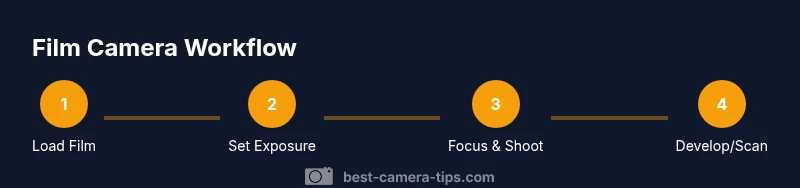
- 1
Prepare your camera and film
Inspect the camera body and lens to ensure the shutter fires and the wind mechanism works. Attach a standard lens to start and confirm the film’s ISO so you can plan exposure. Decide whether you’ll shoot color or black-and-white and set up a safe loading space.
Tip: Check the battery (if applicable) before loading film to avoid missing shots. - 2
Load the film in a light-safe area
Open the camera back in a light-tight environment, insert the film spool, thread the film across the rollers, and secure it to the take-up reel. Close the back, gently advance the film, and watch the frame counter or viewfinder for the first frame.
Tip: Handle the film by the edges and avoid touching the emulsion to prevent fingerprints. - 3
Advance to the first frame
With the back closed, cock the shutter and advance the film until the frame counter reads 1. Ensure the film is properly seated on the take-up spool to prevent light leaks.
Tip: If the counter doesn’t move, recheck film alignment and ensure the back is fully closed. - 4
Set rough exposure
If your camera has a built-in meter, set the ISO to match your film and take a metered reading for the scene. If you don’t have a meter, use the Sunny 16 rule as a starting point in daylight and adjust for shadow and highlight areas.
Tip: Bracketing is a safe approach in unfamiliar lighting—shoot multiple frames at adjacent exposures. - 5
Focus and compose
Frame your subject, then adjust focus using the lens ring. Pay attention to depth of field and how it shapes the scene; on rangefinders, ensure the rangefinder patch aligns correctly for accurate focus.
Tip: Take a moment to check for distractions in the background that could soften or obscure your subject. - 6
Shoot and wind the film
Take the shot, then wind the film to advance to the next frame. Repeat, keeping track of the number of frames shot so you don’t overshoot or miss frames.
Tip: Avoid double-pressing the shutter on the same frame to prevent overexposure. - 7
Finish the roll and rewind
When you reach the last frame, wind to the end and rewind the film slowly to avoid tearing the canister. Remove the film in darkness or a changing bag if needed, and seal in a light-tight container for development.
Tip: Label the roll with date and scene notes to help later evaluation. - 8
Develop or scan
Choose a development path: local lab processing or home development if you have the chemicals and temperature control. Scanning negatives will reveal your results; you can adjust scanning settings to optimize contrast and exposure for digital viewing.
Tip: If developing at home, follow safety guidelines for chemicals and ventilation.
Common Questions
What film formats are best for beginners?
35mm is the most approachable format for beginners due to wide availability, affordable stock, and broad lab support. It offers a forgiving workflow that helps you learn loading, exposure, and development without specialized equipment.
For beginners, 35mm is the easiest format because you can find lots of film options and labs.
Do I need a light meter with a film camera?
Many film cameras include a built-in meter; if yours doesn’t, an external hand meter or relying on a practical exposure rule like Sunny 16 can work for initial practice.
Some cameras have meters built in; otherwise, you can estimate exposure with Sunny 16.
How expensive is film photography to start?
Costs vary with film stock and development method. Expect ongoing expenses for film rolls and development, but you can manage by choosing budget-friendly stocks and local labs.
Film and processing can add up, but starting with affordable stock and a local lab helps keep costs reasonable.
Can I shoot with a film camera in low light?
Yes, but you’ll benefit from faster lenses, stable support, and careful exposure planning. Tripods or steady hands help when available light is limited.
Yes, but use fast lenses and a tripod or steady hands for better results.
What’s the difference between 35mm and medium-format film?
Medium format yields larger negatives and finer grain detail, with potentially sharper images, but cameras and film stock are pricier and less common for beginners.
Medium format gives bigger negatives and more detail but costs more and is less common.
Watch Video
The Essentials
- Load film in a light-safe environment.
- Bracket exposure when unsure about lighting.
- Practice focusing and composition before chasing perfection.
- Develop or scan promptly to review results.
- Label and store rolls for organized archiving.