Is Camera Better Than Phone? A Practical Comparison for 2026
Explore whether dedicated cameras still outperform smartphones in 2026. This data-informed guide weighs image quality, control, and use cases for photographers and enthusiasts.


In most real-world scenarios, a dedicated camera still delivers superior image quality, dynamic range, and creative control, especially in challenging light or when lenses are essential. However, premium smartphones excel in portability, instant sharing, and advanced computational photography that can rival mid-range cameras for everyday use. The right choice depends on your priorities: absolute image quality and versatility versus convenience and always-on social sharing.
Is the question is camera better than phone? A foundational framing
The question is camera better than phone becomes meaningful when you define what “better” means in practice. For many hobbyists and aspiring photographers, better implies higher image quality, more control over exposure, color, and lens choice, plus reliable performance across genres. For everyday users, better can mean convenience, quick edits, and instant sharing. According to Best Camera Tips, the best answer hinges on context: are you chasing pristine RAW files for a gallery, or do you want fast captions and social posting on the go? The short answer remains nuanced: dedicated cameras typically outperform phones in image quality and flexibility, but modern phones close the gap in favorable lighting and with robust computational features. This nuance is why the question is still worth asking in 2026: the decision often comes down to how you shoot, where you shoot, and how much you value portability.
When you frame the comparison around your typical subjects—portraits, landscapes, street photography, or video—you’ll see that is camera better than phone shifts with each use case. The Best Camera Tips team emphasizes balancing two axes: optical realism (the physics of light) and digital optimization (how software processes a capture). The end result is not a single winner but a practical decision matrix tailored to your needs.
The anatomy of capture: sensors, lenses, and light
Camera systems excel where physics matters: sensor size, lens quality, and light gathering drive dynamic range and tonal latitude. A dedicated camera offers larger sensors, optional interchangeable lenses, and deeper color science that translates into smoother tonality and detail in shadows and highlights. Phones compress this physics into a single compact sensor with multiple fixed lenses and on-chip processing. While smartphone computation can offset smaller sensors through HDR, multi-frame stacking, and artificial sharpening, there are still thresholds where a camera gains the upper hand—especially in high-contrast scenes or night photography where lens speed and sensor area matter most. The trade-off is complexity and weight, plus the ongoing cost of lenses and gear. If your goal includes learning traditional photography workflows, a camera invites a tangible learning curve but rewards patience with long-term growth and higher ceiling.
Image quality: resolution is not everything
Resolution matters, but it is only one part of image quality. Dedicated cameras often produce cleaner files with controllable noise, better dynamic range, and more accurate color rendering in RAW workflows. Phones shine in color science and white balance consistency across scenes, plus sophisticated noise reduction that preserves detail in midtones. The practical takeaway is that is camera better than phone in terms of image fidelity when you need fine control over tone and texture, or when you intend large prints or critical post-processing. In everyday scenarios, a top-tier phone can yield stunning results with minimal editing, especially given night modes and computational features that reduce noise and enhance sharpness. The decision should emphasize your shooting environment, post-processing plan, and display intent (print or screen).
Computational photography vs traditional optics
Phones rely heavily on computational photography to compensate for optical limits. Techniques like multi-frame averaging, digital stabilization, and scene recognition push results beyond what hardware alone could achieve. This is where is camera better than phone becomes nuanced: phones may outperform cameras in landscapes and urban scenes thanks to real-time stacking, but true optical control—like shallow depth of field, lens flare control, and color grading—remains stronger on dedicated bodies with manual controls. For video, smartphones now offer excellent stabilization and codecs, yet cameras deliver more robust dynamic range and color profiles that withstand grading in post. The best balance is to know when to leverage software magic and when to trust optical reality.
Portability, setup time, and everyday readiness
Carrying a camera can slow you down, but it also ensures you are always prepared to capture decisive moments with the right settings. Smartphones win on portability, battery life for normal day-to-day use, and the habitability of quick edits and instant sharing. If your priority is spontaneity and social media, the phone is difficult to beat. If your priority is documentary-style shooting, studio work, or fine art prints, the camera’s larger sensor, better optics, and superior manual controls offer a clear edge. Workflow differences matter too: cameras often require more steps before sharing (importing, editing, exporting), while phones offer near-instant posting. In 2026, many photographers keep both on hand—an ergonomically chosen camera for serious work and a phone for everyday captures—leveraging strengths of each tool.
Creative control, RAW, and accessories
Creative control is the heart of is camera better than phone for many enthusiasts. Dedicated cameras provide reliable RAW capture, flexible white balance, precise exposure bracketing, and a broad ecosystem of lenses, tripods, filters, and external mics. Phones have improved RAW formats in some models and support for manual controls, but still lag behind when it comes to lens interchangeability and the tactile feedback creators expect. If you want to push color grading, texture retention, and dynamic range in post, a camera remains the superior platform. Accessories—like fast primes, macro lenses, and external flashes—extend your range far beyond what a phone can provide, turning a camera into a highly capable creative instrument.
Use-case scenarios: portraits, landscapes, and action
Different scenarios highlight the strengths of each tool. For portraits demanding controlled lighting and depth of field, a camera with a prime lens and a larger sensor delivers a flattering background separation and cleaner skin tones. For landscape photography, both tools can deliver stunning results, but the camera’s lens options and RAW latitude often win on large prints or when you want to push the limits in post-processing. In street or travel photography, the phone’s portability and quick sharing can outpace even a compact camera, but a camera can still rise to the challenge when you need faster autofocus in tough lighting. For action and sports, high frame rates and robust autofocus on some cameras outperform phones, though modern smartphones can record high-quality video in many dynamic settings. The best advice is to align your tool with your primary subjects and your post-processing aspirations.
Cost, value, and lifecycle considerations
Cost is a meaningful factor in the is camera better than phone debate. Dedicated cameras typically command higher upfront costs, especially if you assemble a lens kit and accessories. However, they also tend to hold resale value longer and offer longevity through flagship cameras with durable bodies and reliable service. Phones come with a bundled ecosystem: software, features, and accessories in one device, often making the initial outlay lower. Over a multi-year horizon, the camera can be more cost-efficient if you shoot frequently and upgrade the body or lenses with a designed upgrade path. In contrast, the phone’s value is tied to software updates and habitual replacement cycles. The decision should reflect your budget, expected lifetime of gear, and the kind of image quality you expect at print sizes or exhibition displays.
Maintenance, durability, and longevity
Cameras demand routine maintenance: lens care, sensor cleaning, and protecting electronics from dust and moisture. Weather sealing and rugged bodies provide resilience in demanding environments, which matters if you photograph outdoors or in challenging conditions. Phones tend to be more durable day-to-day but are less protective against lens damage or accidental impact to optics. With proper care, cameras and lenses can last many years, and you can upgrade parts rather than the whole kit. The best practice is to store gear properly, clean lenses regularly, and protect your investment with weather-resistant housings or pouches when physics of light changes with the season. Regular maintenance reduces the risk of degraded image quality and costly repairs over time.
How to decide: a practical decision framework
If your goal is absolute image quality and the flexibility to adapt to many genres, a camera earns the decisive edge. If you prioritize portability, speed, and social sharing, a phone is exceptionally compelling. A practical decision framework can help: list your most frequent subjects, decide how often you’ll print or publish large-format images, and estimate how much space you’re willing to dedicate to gear. Consider trying each tool in a controlled test—shoot the same scene with both devices under the same lighting, compare RAW files, and assess workflow differences. The bottom line is to choose the tool that optimizes your creative output without compromising your ability to shoot when inspiration strikes. The decision may even involve owning both and using each for what it does best.
Comparison
| Feature | Dedicated Camera | Smartphone Camera |
|---|---|---|
| Sensor Size | Large (APS-C/Full-frame options) | Small (embedded in phones) |
| Lenses/Optics | Interchangeable lenses, optical quality varies by mount | Fixed lenses, compact, multi-camera array |
| Low Light Performance | Higher potential with larger sensors | Strong computational photography and night modes |
| RAW / Post-Processing | Full RAW, extensive post-processing latitude | RAW exists on some models with auto-processing |
| Portability | Heavier, bulkier, needs case and bag | Pocketable, always with you |
| Durability | Rugged bodies and weather sealing options | Generally lighter, consumer-grade materials |
| Upgrades / Longevity | Lens upgrades and body refresh cycles | Software updates extend life but hardware cannot upgrade |
| Cost | Higher upfront and accessory costs | Lower upfront cost, ongoing replacement cycle |
Positives
- Higher image quality with larger sensors and better dynamic range
- Greater creative control with interchangeable lenses and manual settings
- Longer lifespan and broader resale options for cameras
Downsides
- Higher upfront and ongoing costs, plus weight and space
- Steeper learning curve and setup time
- More gear management during travel and shoots
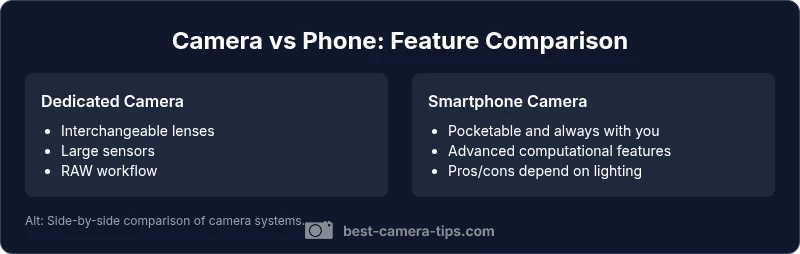
Dedicated cameras lead in image quality and control; smartphones win on portability and immediacy
Choose a camera for serious photography, where dynamic range and lens flexibility matter. Choose a phone for travel-ready, quick-turnaround content and everyday captures.
Common Questions
Is a camera better than a phone for beginners?
Phones are typically easier for beginners due to automatic settings and built-in editing. A camera offers long-term learning opportunities but requires more time to master manual controls and lenses. Start with the tool that matches your motivation and willingness to practice.
For beginners, a phone is usually the gentler entry point, but a camera can be learned over time if you’re committed to mastering exposure and lenses.
When should I choose a dedicated camera over a phone?
Choose a dedicated camera when you need the best possible image quality, better dynamic range, and greater lens flexibility for specialized genres like portraits or landscapes. If you value portability, quick sharing, and convenience, a phone may be sufficient for many situations.
Pick a camera when image quality and lens choices matter most; pick a phone for portability and speed.
Can a phone replace a camera for professional work?
Phones can handle many professional tasks, especially with modern computational tricks and video capabilities. However, dedicated cameras still outperform in critical tasks that require control over depth of field, RAW processing, and lens versatility. Consider your project’s requirements before deciding.
A phone can do a lot, but for high-end professional work you’ll still reach for a dedicated camera.
What about video capabilities?
Smartphones now offer superb video with stabilization and advanced codecs. Cameras can deliver higher bit depth, better rolling shutter control, and more precise focus pulls for cinematic results. Your choice depends on whether you prioritize convenience or the finest video aesthetics.
Phones are great for video on the go; cameras win when you need cinematic control and options.
Should I own both a camera and a phone?
Many creators find value in owning both, using the phone for quick captures and social content while employing a camera for serious shoots and print-ready images. The synergy between both devices often yields the best results.
Yes—many shooters carry a camera for quality and a phone for speed and sharing.
The Essentials
- Prioritize image quality or portability based on your primary use case
- Invest in lenses and a tripod for maximum camera capability
- Leverage RAW workflows for the best post-processing latitude
- Factor total cost and lifecycle when choosing gear
- Test both tools in your typical environments before committing