Difference Between Camera and Digital Camera: A Practical Guide
Explore the difference between camera and digital camera with clear definitions, history, sensor basics, and practical guidance for beginners and enthusiasts.


The difference between camera and digital camera centers on the capture medium and workflow: a traditional camera often refers to film cameras using chemical development, while a digital camera records images as digital data for instant viewing, editing, and sharing. Digital cameras dominate for versatility, speed, and convenience, but film-based cameras preserve a tactile, artisanal process and a distinct aesthetic that some photographers still seek.
What is a camera? Historical context and core concept
To many, a camera is simply a device that captures light to create an image. According to Best Camera Tips, the core concept remains stable across eras: a device that records light in a way you can later view or print. This article begins by examining the difference between camera and digital camera to ground your understanding in both historical and practical terms. A camera, at its most basic level, converts incoming photons into a recordable medium, whether film or digital sensor. Early cameras used chemical processes, glass plates, or emulsions; modern devices rely on electronic sensors and instant feedback. Across this continuum, the purpose is the same: shape a moment into a reproducible image, with fidelity influenced by the capture medium and processing choices.
What is a digital camera? Evolution and key traits
Digital cameras emerged from advances in sensor technology, electronics, and data storage. They capture light as electrical signals, assemble those signals into digital files, and provide immediate feedback through LCDs or electronic viewfinders. Because images live as data, you can review, edit, and share instantly, and you can experiment with multiple frames without changing film. The digital camera’s core strengths include versatility across lighting, high ISO performance, and a robust post-processing workflow that unlocks creative control without chemical steps. This shift transformed how people learn photography and how images circulate in the age of social media.
Understanding the difference between camera and digital camera
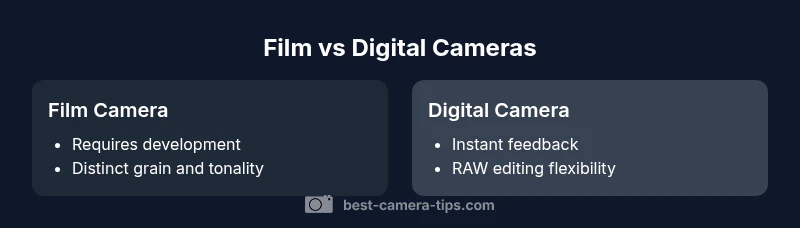
The phrase “difference between camera and digital camera” captures a core distinction: the capture medium and subsequent handling of images. A traditional camera (often film-based) records light onto chemical material and requires development, scanning, or printing steps. A digital camera stores captured data as digital files on memory cards, enabling in-camera processing, metadata tagging, and rapid distribution. The difference affects cost models, archival strategies, and even aesthetics. While film can yield unique grain and tonality, digital offers flexibility, nondestructive editing, and a broader toolset for experimentation. This distinction matters for students weighing learning curves, workflow preferences, and long-term project goals.
Sensor technology: Film vs Digital
Film and digital sensors operate on fundamentally different principles. Film responds to light chemically, with emulsion speed, grain structure, and developer choices shaping the final image. Digital sensors convert photons into electrical charges, then into digital data, with performance governed by pixel size, dynamic range, noise, and color science. Sensor design and processing pipelines influence sharpness, contrast, and color rendition. Understanding this difference helps explain why digital images can look different from film emulations and why some photographers pursue film aesthetics through digital simulations or true film capture.
Image capture and processing pipeline
In a film workflow, exposure is followed by chemical development, scanning, and archival storage, often requiring external labs or DIY darkroom work. In a digital workflow, light is converted to electronic signals, processed by the camera’s image processor, and saved as RAW or JPEG files on memory cards. Digital workflows enable non-destructive editing, histogram-based exposure corrections, and rapid iteration. Each path has its own timing, tools, and skill sets. The choice impacts how you learn composition, how you critique results, and how quickly you can iterate on a project.
Lens systems and adaptability
Lens choice shapes image quality across both film and digital cameras. Modern digital bodies often offer extensive lens ecosystems, autofocus performance, and compatibility with vast third-party options. Film cameras, particularly classic SLRs and rangefinders, emphasize manual focus, zone focusing, and a tactile relationship with focal length and aperture. Adapting lenses across formats can be rewarding but requires attention to mount differences, crop factors, and potential limitations in autofocus or metering. The lens ecosystem remains a major factor in long-term versatility for either path.
File formats and archival considerations
Film culminates in physical negatives or slides, requiring careful storage conditions to prevent degradation. Digital cameras produce files in formats like RAW and JPEG, which must be backed up and managed across devices. Archival longevity depends on storage media, redundancy, and migration strategies to prevent obsolescence. In practice, digital archives benefit from cloud and external backups, while film archives benefit from controlled environments and reliable laboratory practices. Both paths demand thoughtful maintenance to preserve work over decades.
Image quality and aesthetic: grain, dynamic range
Film brings organic grain and a distinct tonal curve that some describe as “character.” Digital cameras excel in dynamic range, consistent color science, and low-light performance, especially with modern sensors. The aesthetic compromise is often subjective: some prefer the predictability and editing latitude of digital, others prize film’s micro-contrast and texture. Understanding where your priorities lie—real-time feedback vs. tactile image capture—will help determine which path aligns with your vision.
Workflow and speed: shooting, reviewing, sharing
Digital cameras enable immediate review, quick exposure adjustments, and rapid sharing across devices. Film workflows require planning, careful exposure, and patience for development. The speed difference matters for genres like street photography or event work, where rapid feedback informs decisions on the next shot. Yet some photographers value the deliberate pace of film as a discipline that fosters careful composition and intentional framing. Your subject matter and learning style will guide the best approach.
Durability, maintenance, and longevity
Film cameras emphasize mechanical durability and a mechanical feel, often with fewer electronics to fail. Digital cameras rely on sensors, electronics, and firmware, which can introduce maintenance needs but also offer feature updates and improved performance over time. Longevity hinges on proper care, environmental conditions, and timely service. If you travel or shoot under harsh conditions, both paths require protective gear and routine checks to keep optics and bodies performing at peak levels.
Cost considerations and ownership models
Ownership costs diverge over time. Film photography incurs ongoing expenses for film, processing, and printing, plus potential costs for scanning negatives. Digital photography involves a higher upfront investment in the camera body and lenses, with ongoing costs mainly tied to storage, backups, and occasional upgrades. The total cost of ownership depends heavily on how often you shoot, the formats you favor, and your willingness to manage physical vs. digital assets.
Practical decision framework for choosing
Start with your goals: do you value immediacy and flexibility or tactile, hands-on control? Consider your budget, patience for processing, and willingness to manage archival risks. Create a short list of genres you’ll shoot most, then map each genre to which medium offers the best fit in terms of ergonomics, lens availability, and post-processing needs. Try a hybrid approach—begin with digital for learning and later incorporate film experiments to explore texture and process. This framework helps you move from theory to a concrete, workable path.
Common myths about cameras and digital cameras
Myths abound around whether film is “better” quality or digital always dominates. In reality, both formats can deliver exceptional results depending on the user’s skill, lighting, and intent. Film’s grain and dynamic response are not universally superior; digital’s precision and post-processing flexibility are not universally inferior. Debunking these myths helps you select based on workflow, goals, and personal preferences, not nostalgia or hype.
Future trends in camera technology
The trajectory favors smarter sensors, computational photography, wider lens ecosystems, and better archival strategies for both mediums. Expect ongoing improvements in autofocus reliability, imaging pipelines, and cross-format compatibility, enabling more hybrid workflows. For enthusiasts, the future will likely emphasize accessibility, learning aids, and cloud-based storage solutions that reduce the friction between capture and utilization of photographs.
Practical starter tips for beginners
If you’re new, start by defining your learning goals and test a few shots in familiar environments. Practice exposure using the histogram, explore basic post-processing concepts, and compare results across formats. Keep a simple backup routine and organize your work so you can revisit it later. Above all, commit to a cadence that lets you observe progress over weeks and months. A deliberate, steady approach yields the best long-term growth.
],
comparisonTable_Notes_deleted_if_unused_QA_placeholder_ignored? I'll ignore this line
Comparison
| Feature | Film camera | Digital camera |
|---|---|---|
| Media format | Film: negatives or prints | Digital: RAW/JPEG files |
| Viewfinding & feedback | Optical viewfinder or rangefinder (often no live preview) | Live view with LCD/EVF and instant feedback |
| Processing & development | Chemical development; scanning or printing required | In-camera processing; immediate viewing and editing |
| Recurring costs | Ongoing film, development, and printing costs | Lower per-shot cost after purchase; storage costs apply |
| Workflow speed | Cumulative development time; slower to iterate | Rapid shooting, review, and sharing enabled |
Positives
- Immediate feedback and learning with digital workflows
- Lower recurring costs per shot for digital over time
- Wide lens ecosystems and accessory options
- Advanced post-processing capabilities (RAW, nondestructive edits)
- Flexible archiving and backups for digital work
Downsides
- Requires digital storage management and backups
- Sensor noise at high ISO can affect image quality
- Digital workflows can encourage over-editing if not controlled
- Film offers tactile, artisanal value that some users prize despite slower workflows
Digital cameras win on versatility and speed; film cameras retain value for tactile control and unique aesthetics.
For most photographers, digital platforms provide better flexibility, faster feedback, and easier sharing. Film remains appealing for those who prize physical processes and distinctive grain. Your choice should align with learning goals, workflow preferences, and artistic aims.
Common Questions
What is the fundamental difference between a camera and a digital camera?
Historically, cameras used film and chemical processes to capture images. Digital cameras store light as electronic data on sensors and memory, enabling instant review and editing. The core difference is the capture medium and the subsequent handling of images.
The key gap is film versus digital storage and processing; film uses chemicals, while digital stores data as files.
Can I still shoot on a film camera today?
Yes. Film cameras remain popular among enthusiasts. You have access to film stocks, development labs, and scanning services that can produce prints or digital files from negatives.
Absolutely—film is alive and kicking for those who love the process.
Is a digital camera easier to learn than a film camera?
In general, digital cameras offer more forgiving automation and instant feedback, which reduces the learning curve. Film cameras require more manual control and patience but teach fundamentals steeperly.
Digital is usually easier to start with; film teaches you to slow down and think before you shoot.
What should a beginner consider when choosing between film and digital?
Consider your willingness to engage in a processing workflow, budget for ongoing consumables, and your readiness to back up work. Also assess how quickly you want to learn and share results.
Think about your patience for processing, your budget, and whether you want instant results.
Do digital cameras ever become obsolete?
Technology evolves, but camera bodies and lenses retain value based on optical quality and build. You can extend useful life through firmware updates and selective upgrades.
Cameras don’t instantly become useless, but software and sensor tech advance—planning for upgrades helps.
The Essentials
- Evaluate your workflow needs before choosing
- Estimate total costs beyond the purchase price
- Experiment with RAW workflows to maximize data
- Consider lens ecosystems and future expansion