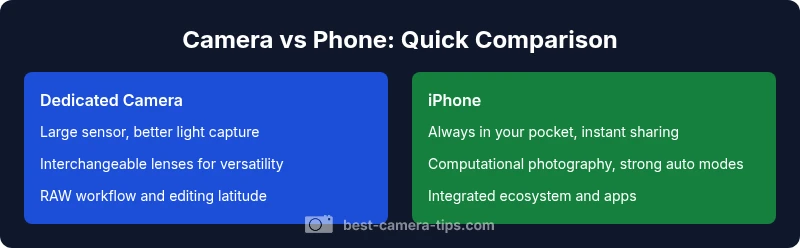
Is a Camera Better Than iPhone? A Practical Comparison for Photographers
Explore whether a dedicated camera or an iPhone delivers better results. We analyze image quality, workflow, and real-world use to help photographers choose the right tool for their goals. Learn when to upgrade your gear and when your phone suffices.


The short answer: in controlled settings, a dedicated camera generally offers higher image quality, greater control, and better low-light performance; the iPhone wins on convenience, instant sharing, and advanced computational photography. For is camera better than iphone, your needs decide—professional work leans toward a camera, daily captures favor the iPhone. For a deeper dive, see our full comparison.
Sensor Size, Optics, and Core Differences
The core distinction between a traditional camera and an iPhone is sensor size and lens flexibility. A dedicated camera uses a larger sensor with interchangeable lenses, which means more light gathering, better separation between subject and background, and finer control over depth of field. This advantage translates into crisper detail in landscapes, portraits with pleasing bokeh, and scenes with challenging light. By contrast, the iPhone packs multiple small sensors behind compact lenses and relies heavily on software to optimize exposure, color, and noise reduction. The result is consistently usable images in a compact package, but the raw creative potential can feel capped when you want to push the boundaries of focal length, aperture, or macro performance.
From a practical standpoint, plan your setup based on how you shoot. If you often shoot landscapes, events, or portraits with deliberate lighting, a camera with the right lenses will unlock more artistic options. If you travel light, document family moments, or post quick social media updates, the iPhone’s form factor and ecosystem can be unbeatable.
In the context of the question is camera better than iphone, the short answer is: consider intent. The camera’s physics offer a path to superior results in controlled situations, while the iPhone’s software-driven enhancements excel in everyday capture and speed. This framing helps you decide what to invest in next. Best Camera Tips analyses consistently show that the choice hinges on goals, not a universal rule.
Image Quality: Sensor Design and Light Handling
Sensor design directly influences how an image renders texture, color, and dynamic range. A larger sensor captured with dedicated lenses gathers more information per pixel, allowing cleaner separation of highlights and shadows and more latitude for post-processing. This translates into richer color rendition, better tonal gradation, and less banding in challenging scenes. A phone camera must balance sensor size with compact optics and aggressive on-chip processing. While software can compensate, there are limits to how much noise reduction or sharpening algorithms can achieve without compromising natural detail.
Lighting conditions reveal these differences more clearly. In bright scenes, both platforms can deliver excellent results, but the camera often has an edge in resolving fine textures and maintaining fine detail when you crop or print large. In low light, dedicated cameras paired with appropriate fast lenses tend to hold detail with less noise, provided you manage long exposures and stabilize the shot. The iPhone compensates with multi-frame stacking and smart noise reduction, which yields impressive images but can occasionally oversmooth texture or misinterpret color in dynamic scenes.
If you’re aiming to learn, experiment with RAW capture on a mirrorless or DSLR and compare to iPhone JPEG/HEIC outputs. You’ll notice how RAW preserves more latitude for adjustments, especially in post. This experiment helps answer the question more precisely for your own style, rather than relying on generalizations.
Post-Processing: RAW, JPEG, and Workflow
A key differentiator is the freedom you gain in post-processing. Dedicated cameras encourage RAW shooting, which preserves more color information and tonal data than standard JPEG. With RAW, you control white balance, exposure, contrast, and color grading with less risk of degrading detail. This is essential when you need precise editing for print work, fine art, or branding projects. The iPhone supports RAW in recent generations and exports images in formats suitable for professional workflows, but the processing stack remains optimized to deliver ready-to-share results quickly. If you value speed, you’ll appreciate the iPhone’s convenience; if you value flexibility, RAW remains the preferred route.
Workflow is also a factor. A camera-based workflow often involves a computer or external editor, catalogs, and backups. This can be a learning curve but pays off with better organization and repeatable results. The iPhone ecosystem excels in seamless syncing, mobile editing apps, and quick sharing to social or cloud storage. Your choice should align with how much time you want to invest in editing and how you structure your archival system.
Ultimately, the decision isn’t purely about file format. It’s about whether your creative process benefits from RAW’s latitude or from the iPhone’s streamlined, mobile-first approach. Both paths can produce stunning results when used skillfully.
Autofocus, Speed, and Subject Tracking
Autofocus performance has evolved rapidly on both platforms. Dedicated cameras often feature advanced phase-detection systems, multiple focus points, and specialized algorithms that lock onto moving subjects with high reliability. This is particularly valuable for sports, action, or fast-paced street photography where quick, precise focus determines the shot’s success. In situations with fast-changing light, a camera’s AF system can recalibrate more predictably, yielding fewer missed frames.
Smartphone autofocus has also grown, aided by computational tricks like subject detection, real-time tracking, and predictive focus during video capture. While phones are formidable in casual, candid scenarios, they can occasionally hunt or rely on face/eye detection that misfires in busy backgrounds. If you frequently shoot fast action or dynamic scenes, a camera with a weather-sealed body and dedicated AF modules offers an edge in reliability and consistency. For many beginners, automatic modes on a phone are sufficient until a desire for manual focus control or advanced tracking appears.
If you are learning, test AF performance by shooting moving subjects at different distances and lighting. Note where systems excel or hesitate, and think about how this translates to your typical shoots. This hands-on comparison helps you decide whether to invest in a more capable mirrorless or DSLR system or stay with a smartphone’s convenience for most tasks.
Low Light and Dynamic Range Realities
Low light is a critical battleground for is camera better than iphone comparisons. A larger sensor with quality glass can capture more light per pixel, which usually means less noise and more faithful color in dim settings. A camera paired with a fast lens and proper technique will often render smoother gradients, better texture, and more natural shadows than the phone’s computational approach, especially as you push the exposure in post.
Smartphones tackle low light with multi-frame capture, stacking, and aggressive denoising. This yields clean images with surprising detail, but it can also flatten texture and compress tonal nuance. In scenes where you’re balancing bright highlights with dark shadows, a dedicated camera provides more control over dynamic range by letting you meter and set exposure, shutter speed, and ISO independently.
For regular night photography or concerts where lighting is unpredictable, a camera becomes a more versatile tool. For casual night shots, the iPhone remains a compelling option due to its instant processing and sharing. Both devices have their place, and your choice should reflect how often you shoot in challenging light and how much post-processing you’re willing to do.
Video Capabilities and Creative Options
Video is a growing playground for both platforms. Dedicated cameras offer interchangeable lenses, variable frame rates, manual exposure control, and robust codecs that can deliver superior color, sharpness, and latitude in post. This makes them ideal for serious videography, interviews, or productions where every nuance matters. Larger sensors also provide better image stabilization in many scenarios, especially with stable rigs or gimbals.
Smartphones shine in convenience: compact form factor, quick social sharing, and accessible editing apps squarely target creators who post often to mobile platforms. While iPhones can deliver excellent 4K video with cinematic-style processing, professional video work often benefits from external mics, lighting, and a broader lens kit that a camera provides.
If your focus is video, list the requirements you actually need: audio quality, stabilization, color control, and workflow integration. Then map those needs to the right tool—phones for quick, polished clips; cameras for controlled, high-quality productions with a broader creative toolkit.
Convenience, Portability, and Everyday Use
For many people, the deciding factor in the is camera better than iphone debate is convenience. A smartphone is always ready in your pocket, with a UI designed for quick shots and rapid sharing. The camera, even with a compact body, requires a bag, lenses, and careful planning. This difference matters for travelers, hobbyists, or families who want to document moments without lugging gear. The accessibility of built-in editing apps on the phone also makes it easier to finalize and share images on the go.
That said, there is a tactile joy to handling a camera: physical controls, longer battery life in some setups, and a dedicated grip that can improve stability during long shoots. If you shoot frequently in public or require a professional appearance, a camera setup paired with the right lenses and a steady hand can be a meaningful upgrade.
The bottom line is that convenience and speed often trump absolute quality in everyday life, but the best results still come from choosing the right tool for the scenario. The decision should balance how often you shoot, how much gear you’re willing to carry, and how much you value post-processing control.
Cost, Durability, and Long-Term Value
Value isn’t only about initial price. A camera system involves the camera body, lenses, and accessories, each affecting total ownership costs and potential resale value. Over time, high-quality glass retains its value, and a robust body with weather sealing can outlast budget setups. While the entry cost for a dedicated camera can be higher, the long-term return in image quality and flexibility often justifies the expense for enthusiasts and professionals.
Smartphones depreciate quickly in terms of hardware capability, but ongoing software updates can extend useful life multiple years, especially for casual users who don’t rely on advanced image capture. The true cost comparison depends on your shooting frequency, desired quality, and whether you plan to expand the system with additional lenses or accessories.
If you’re counting pennies yet want better results, weigh the cost of upgrading a single lens or adding an efficient lighting setup against a newer phone with improved computational photography. This approach helps you decide where your investment will yield meaningful improvements.
Use-Case Scenarios: When a Camera Helps, When a Phone Suffices
Professional photographers working on client assignments or fine-art projects will often benefit from a dedicated camera setup. The higher sensor quality, more precise controls, and broader lens choices enable a more nuanced creative approach. For travel, street photography, or daily documentation, a phone camera shines by reducing friction: it’s always ready, attaches to social channels instantly, and integrates with a powerful editing ecosystem. The answer to is camera better than iphone depends heavily on context.
For family moments, quick social posts, or situations requiring swift documentation, the iPhone often suffices. If you’re building a learning path in photography, starting with a camera provides a strong foundation in composition, exposure, and post-processing. Beginners should consider their goals before choosing a path; the right choice aligns with how you intend to shoot most of the time and how much you value control over final output.
Comparison
| Feature | Dedicated camera (DSLR/mirrorless) | iPhone (smartphone camera) |
|---|---|---|
| Sensor size | Large sensor with extensive light-gathering capacity | Small sensor with computational enhancements |
| Lens versatility | Interchangeable lenses for different focal lengths and effects | Fixed lenses with digital zoom and software corrections |
| RAW and editing latitude | Full RAW capture with wide post-processing latitude | HEIC/JPEG with mobile editing pipelines |
| Low-light performance | Better potential with prime/fast lenses and proper exposure | Strong noise handling via software, good results in many situations |
| Autofocus and tracking | Advanced AF systems with precise tracking | Solid autofocus with smart subject detection |
| Video capabilities | Professional codecs, high control over exposure and color | Excellent for everyday video with mobile stabilization |
| Portability | Bulky gear, luggage considerations | Always-pocketable, ready to shoot |
| Cost of ownership | Higher upfront costs, long-term value from glass | Lower upfront cost, ongoing devices upgrade via phone plans |
Positives
- Superior image quality in optimal conditions
- Lens versatility enables creative control
- Better RAW workflow and color management
- Ergonomics and tactile controls for learning
Downsides
- Higher upfront and ongoing costs
- Bulky gear reduces portability for travel
- Steeper learning curve for manual modes
- Requires additional accessories for full professional use
Dedicated cameras win on image quality and creative control; iPhones excel in convenience and quick sharing.
If your priority is image latitude and professional-grade results, a camera is the better choice. If you value portability, speed, and seamless mobile sharing, the iPhone is a strong partner. The right answer depends on your goals and workflow.
Common Questions
Is a camera better than iPhone for low-light photography?
In many scenarios, dedicated cameras with fast lenses perform better in low light due to larger sensors and higher image quality potential. However, modern iPhones use computational photography to produce clean images, especially for quick sharing. Your decision should weigh the importance of absolute detail versus convenience.
Dedicated cameras often perform better in low light, but iPhones are excellent for quick shots in dim conditions.
Can I replace a camera with an iPhone for professional work?
For most professional assignments, a camera offers more control, consistent quality, and flexibility with lighting and lenses. An iPhone can handle many tasks when speed and portability are crucial, but it may not match the tonal range and detail of a high-end camera in challenging environments.
A phone can handle many jobs, but a dedicated camera is usually required for high-end professional work.
What about video quality between camera and iPhone?
Cameras typically provide superior video options, with broader codec choices, better dynamic range, and more control over exposure. iPhones deliver outstanding consumer-ready video with stabilization and editing apps, making them ideal for everyday video and social sharing.
For cinema-grade control, cameras win; for everyday vlogging, iPhones are fantastic.
Is it cheaper to maintain a camera setup than relying on a phone?
Upfront costs for cameras can be higher, and lenses add ongoing expenses. Phones are bundled with a service plan and may require fewer add-ons, but the total lifetime cost depends on how deeply you invest in lenses, lighting, and editing workflow.
Cameras can cost more upfront, but lenses are a long-term value; phones have ongoing service costs.
Should beginners start with a camera or the iPhone for learning photography?
Beginners often start with an iPhone to learn composition and lighting quickly, then graduate to a camera to gain manual control and RAW editing skills. Either path builds fundamentals; choose based on how you prefer to learn and how quickly you want to deepen technical skills.
Start with what motivates you: quick results on a phone or deeper control with a camera as you learn.
Can I use both effectively in my workflow?
Absolutely. Many photographers pair a camera for high-quality shoots with a phone for on-the-go capture and social posting. This approach lets you optimize your kit for different situations without compromising learning momentum.
Many creators use both: cameras for quality, phones for quick sharing.
The Essentials
- Assess your primary shooting goals before buying
- Prioritize sensor size and lens options for quality gains
- Leverage RAW and post-processing for maximum flexibility
- Use the iPhone for quick captures and social sharing
- Balance cost with long-term value when upgrading gear