Can You Tell If Ring Camera Is Recording? A Practical Guide
Learn how to verify Ring camera recording status. Step-by-step app checks, indicators, and privacy considerations to confidently confirm when your Ring camera is recording.


Yes—can you tell if ring camera is recording? You can verify by inspecting the Ring app for recent events, using Live View to observe real-time activity, and reviewing the device’s activity logs. Ring records when motion is detected or when you initiate recording in the app, and those clips are typically stored in the cloud depending on your plan. This quick check helps you confirm whether recording is happening now or has recently occurred.
Can you tell if Ring camera is recording? How it works
If you're asking can you tell if ring camera is recording, the short answer is yes. You can verify recording status by checking the Ring app, reviewing event history, and using Live View to observe real-time activity. Ring devices record when motion is detected or when you manually initiate recording in the app, and those recordings are typically stored in the cloud (depending on your plan). This article explains how to read status indicators, confirm live activity, and interpret logs so you can trust what the camera is doing. Being able to confirm recording status is essential for reliable surveillance and privacy awareness, especially for aspiring photographers who also care about documenting property setups.
In practice, understanding what qualifies as “recording” helps you distinguish between live streaming, motion-triggered clips, and manual recordings. This distinction matters if you’re coordinating with a shoot, managing multiple cameras, or auditing a security setup for a project. By familiarizing yourself with how Ring logs activity, you can quickly verify that a camera is actively capturing footage when you expect it to.
For those balancing photography practice with home security, recognizing when a Ring camera is recording can also help you time exposure settings and field-of-view tests without interrupting ongoing surveillance work. The goal is to align your camera’s recording behavior with your workflow so you’re never guessing about whether footage is being saved.
Verifying recording status in the Ring app
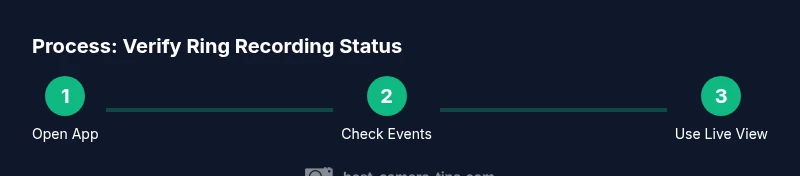
The Ring app is the primary way to confirm whether a camera is recording. Start by selecting your device from the dashboard, then check the Events or History tab for recent clips and live activity. A live view session will show ongoing recording if motion is actively triggering the camera, and the event timeline will display when clips were saved. If you use a Ring Protect plan, you can review cloud-stored videos; without a plan, you can still verify that the camera triggered and attempted to record by the presence of new clips or Live View activity. Regularly refreshing the app and ensuring your camera is online will provide accurate status indicators.
Additionally, you can navigate to the device health page within the app to verify connectivity, battery level (for battery-powered units), and firmware version. If the device shows a warning or offline status, your ability to see recording activity may be compromised until the connection is restored. For teams working on multiple installations, consider creating a simple checklist to confirm that Live View is accessible and that new events appear within a defined window after motion occurs.
Live View is particularly useful when you want to confirm a current recording session. Start Live View and wait a few moments to see if a new recording begins; if motion occurs, you should notice a clip appear in the timeline shortly after. If nothing shows up, double-check that your motion zones and sensitivity settings are configured correctly, as overly strict rules can prevent clips from appearing even when there is activity.
Finally, remember that cloud storage access depends on your plan. Even if recording is happening, a lack of storage permissions or an expired subscription can affect whether you can replay older footage. Keep your plan status in mind when interpreting historical data from the app.
Indicators and logs you can rely on
Reliance on indicators should be coupled with logs to avoid confusion. Look for: (1) Event history timestamps showing when clips were created, (2) Live View indicators that show an active stream, (3) Health status in the device settings confirming the camera is online and connected, and (4) any motion zones that are configured to trigger recording. Remember that privacy zones or muted modes can affect what gets recorded, so verify that the correct settings are enabled for the period you care about. If you see recent activity but no video, check your subscription status and storage permissions; lack of cloud storage access may hide older clips even when recording occurs.
As you expand your camera network for photography practice or home surveillance, document the exact times you test recording. This habit helps you correlate lighting, motion events, and camera behavior, ensuring you have a reliable trail of activity and verification for future projects. Regular audits also highlight whether firmware updates or app changes alter how status is presented in the interface.
For those who use Ring devices in professional shoots or educational demonstrations, keeping a log of each device’s recording status during test runs can save time during live events and reduce confusion among team members. A consistent approach to status verification builds trust with clients and household members alike.
Troubleshooting when recording status isn't clear
If you can't confirm that the camera is recording, start with a quick test: trigger controlled motion within the field of view and observe whether a new clip appears in the event history within a minute or two. Next, verify your internet connection and power supply since intermittent connectivity can interrupt recording. Update the Ring app and device firmware, and retry Live View to rule out temporary glitches. If issues persist, consult Ring support or Best Camera Tips for best-practice steps to diagnose hardware or network problems and reconfigure recording rules.
In some cases, incorrect time zone settings can misalign event timestamps, making it seem like footage is missing. Ensure your account time settings match your local time and that the device clock is synchronized with the Ring service. If you manage multiple devices, consider centralizing checks into a weekly health review to catch issues early and maintain consistent recording behavior across your camera network.
When privacy or security concerns arise, avoid making ad-hoc changes during critical moments. Instead, implement a controlled test window where you verify that recordings are occurring as expected, then restore your standard configuration. This approach minimizes risk while delivering clear verification results.
Privacy, ethics, and best practices for recording status
Always consider privacy and local laws when recording with security cameras. Use clear signage where required, enable privacy features for sensitive areas, and avoid recording in spaces where there is a reasonable expectation of privacy. Keep a log of testing and status checks to document that your camera was functioning as intended, especially if you are sharing footage with others or using your system for documentation in a project setting. Regular testing and transparent policies help build trust while maintaining camera effectiveness.
As a photographer or security hobbyist, you should also align your device usage with best practices for data protection. Limit who can access the app, enable two-factor authentication, and review access permissions periodically. By combining technical checks with privacy-conscious operation, you can maintain a robust and responsible surveillance workflow that respects others’ rights while delivering reliable recording status information.
Quick tips for photographers and homeowners
- Schedule routine status verifications to ensure continuous awareness of recording activity.
- Use Live View during testing to confirm real-time recording is active when you expect it to be.
- Keep firmware and app up to date to avoid false negatives caused by software glitches.
- Maintain a written testing log for accountability and future reference.
- If multiple cameras are involved, standardize checks to simplify cross-device verification and redundancy.
Tools & Materials
- Smartphone or tablet with the Ring app installed(Sign in to the Ring account with proper permissions)
- Stable internet connection(Wi-Fi or mobile data with adequate bandwidth)
- Account credentials for Ring(Needed to access device settings and history)
- Safe testing area(A controlled space to trigger motion without risk)
- Secondary device for cross-check (optional)(Helps confirm consistency across devices)
Steps
Estimated time: 20-40 minutes
- 1
Open Ring app and select the device
Launch the Ring app and tap the camera you want to inspect. This centers your view on the specific device and shows its current status (online/offline) and most recent activity.
Tip: If you manage multiple devices, use the device filter to quickly switch between cameras. - 2
Check the Event History for recent clips
Navigate to the Events or History tab to see when clips were captured. Look for timestamps that match the period you’re testing or expect activity.
Tip: Filter by date and time to isolate the test window. - 3
Use Live View to observe in real-time
Start a Live View session and monitor for ongoing activity. If recording is active, a clip should appear after motion or a manual start.
Tip: Keep Live View running momentarily to capture any delayed responses. - 4
Verify device health and connectivity
Open Device Health to confirm the camera is online, the battery (if applicable) is sufficient, and firmware is up to date.
Tip: A device that's offline or with an outdated firmware may not record reliably. - 5
Test with a controlled motion event
Trigger a motion event within the camera’s view and watch for a corresponding entry in the event history and a new clip.
Tip: Place the test within the configured motion zones for best results. - 6
Review and document results
Note whether recordings appeared as expected and whether cloud storage access aligns with your plan.
Tip: Document the test in a simple log for future audits or client projects.
Common Questions
Can you tell if Ring camera is recording without opening the app?
You can check Live View or the event logs within the Ring app to confirm recording. Generally, ongoing activity is reflected in the app, and new clips appear in the history as soon as they’re created. Without access to the app, verification is unreliable.
Open the Ring app and check Live View or the event history to confirm recording. If you don’t have app access, verification isn’t reliable.
Does Ring record all the time or only when motion is detected?
Ring cameras typically record when motion is detected or when you explicitly start recording. A Ring Protect plan is often required to save clips to the cloud, but live view and immediate recording can still be observed without a plan.
Recordings usually happen on motion or manual start. A cloud plan is usually needed to save clips long-term.
What affects whether Ring is recording?
Recording depends on motion zones, sensitivity settings, device health, internet connectivity, and privacy modes. Misconfigured zones or offline devices can prevent clips from being saved even when motion occurs.
Motion zones, sensitivity, device health, and connectivity affect recording. Misconfigurations can stop clips from saving.
Can privacy mode stop recording on Ring devices?
Yes. Privacy mode disables recording and motion detection in affected areas. Disabling privacy mode resumes normal recording behavior once the mode is turned off.
Privacy mode stops recording; turning it off resumes recording.
Where can I check status and logs for Ring recordings?
Check the Ring app’s Events/History for clips and timestamps, then use Live View for real-time status. Device Health shows online status and connectivity, and subscription status can affect access to cloud recordings.
Use Events history and Live View for status, plus Device Health for connectivity and your plan for cloud access.
What should I do if recordings aren’t appearing after a test?
Confirm the camera is online, test motion within configured zones, and verify that your Ring Protect plan is active for cloud clips. If issues persist, reboot the device and recheck after firmware updates.
Ensure online status, test motion in zones, and confirm your plan; reboot and update if needed.
Watch Video
The Essentials
- Verify with Event History and Live View for accurate status.
- Regularly check device health and connectivity.
- Document test results to support privacy and security audits.
- Understand that cloud access depends on your Ring Protect plan.
- Keep software current to minimize status discrepancies.