How Much Camera: A Practical 2026 Pricing Guide
Explore how much camera gear costs, from entry-level kits to pro setups, with budgeting tips, price ranges, and buying strategies for beginners and enthusiasts.


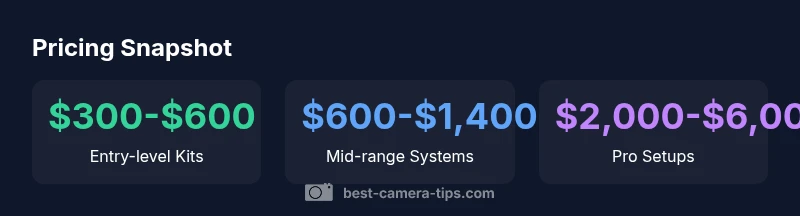
The price of camera gear varies widely, but entry-level kits start around $300-$600, mid-range systems typically run $600-$1,400, and professional setups can exceed $2,000-$6,000, depending on lenses and features. In practice, most buyers budget for the body plus essential accessories, with total costs often landing in the hundreds to several thousand dollars. Regions and financing options also influence the final amount.
How much camera: price ranges explained
When people ask how much camera they need, they’re really asking about the overall cost of gear that fits their goals. Price is driven by sensor size and type, autofocus performance, durability, and whether you buy a kit with lenses or a body alone. Importantly, the total cost of ownership includes memory cards, spare batteries, bags, filters, and maintenance. For context, entry-level kits with a basic lens often fall in the $300-$600 range, mid-range systems with better sensors and more versatile optics typically land between $600-$1,400, and professional setups featuring flagship bodies and high-end zooms can push well beyond $2,000-$6,000. These bands are guides, not guarantees, because regional pricing, bundles, and financing shapes the final sticker price. If you’re aiming to maximize value, anchor your budget to real use cases—portraits, landscapes, sports, or video—as this guides whether you should chase the newest sensor or a solid, reliable older model with proven lenses. In short, how much camera you should buy depends on your goals and your willingness to invest in lenses and accessories that unlock your potential.
Entry-level vs. mid-range: price bands and what you get
The next step in analyzing how much camera you need is distinguishing entry-level from mid-range gear. Entry-level bodies usually offer straightforward controls, reliable auto-focus, and a compact or lightweight design suitable for beginners. They pair with kit lenses that cover a broad focal range, which reduces the immediate need for multiple lenses. Mid-range options introduce improved low-light performance, faster processing, better autofocus for action, and more flexible lens ecosystems. The price band shift here reflects not just the body but the broader capabilities you gain: better high-ISO performance, more robust build quality, and a wider set of native lenses. If you’re choosing between an entry-level and a mid-range system, assess how often you’ll shoot in low light, how critical fast AF is to your style, and whether you’ll benefit from a wider selection of lenses. Remember, how much camera you buy should line up with your shooting needs and future growth, not just a perception of status.
Kit vs body-only: calculating the total cost
A core budgeting decision is whether to buy a kit (body plus one or more lenses) or a body-only setup and source lenses separately. Kits are convenient and often cost less per lens when bundled; they simplify the initial purchase and reduce decision fatigue for beginners. Body-only purchases can save money if you already own compatible lenses or plan to invest in a specific focal length or brand ecosystem later. The total cost depends on the lens selection, adaptor needs, and whether you require specialty lenses for macro, ultra-wide, or telephoto work. If you expect to grow quickly, a kit that includes a general-purpose zoom and an additional prime or macro lens can be a smart compromise, balancing immediate usability with room to expand your kit without a steep price cliff. In many cases, buyers should budget not only the body price but at least one versatile lens upgrade to unlock meaningful improvement in image quality.
Used gear, rentals, and financing: flexible options
Flexible funding and smart sourcing can dramatically alter the real cost of ownership. Used gear can offer substantial savings, but it requires careful evaluation of shutter life, sensor condition, and compatibility with current accessories. Renting gear for specific shoots is a practical way to access high-end bodies or specialty lenses without committing to a purchase. Financing options—whether through retailer plans or credit partnerships—can spread the cost over time and make mentally budgeting for a better camera easier, especially for enthusiasts upgrading from entry-level to mid-range gear. If you choose to buy used or rent, verify return policies, service history, and warranty terms. Always prioritize reliable sources and transparent conditions to protect your investment.
Practical budgeting tips for beginners and enthusiasts
To avoid buyer’s remorse when answering how much camera to buy, start with a reality check on your actual needs. Create a minimal gear list that covers your primary genres—portrait, landscape, street, or video—and price out each item. Aim to spend a higher proportion on lenses than the camera body itself, since lenses often determine image quality more than the body’s megapixel count. Set a cap for accessories (memory, batteries, tripods, SD cards) and look for bundles that include these essentials. Take advantage of seasonal promotions, refurbished programs, and student or professional association discounts when available. Finally, practice patience: you don’t need the perfect setup on day one, and waiting for the right deal can yield a substantial saving without sacrificing your learning curve.
Common myths about camera prices
One common myth is that the newest model always equals the best value. In many cases, last year’s model or a proven older body can deliver outstanding results at a fraction of the cost. Another misconception is that more megapixels automatically translate to better images; sensor quality, dynamic range, color science, and lens performance often matter more for real-world results. Finally, some buyers assume that higher-priced lenses are mandatory for sharp portraits; many affordable prime lenses offer exceptional sharpness and pleasing rendering, especially when paired with a quality sensor. Debunking these myths helps ensure your budget goes toward gear that truly improves your photography, not just the brand name on the box.
Authority references
- https://www.nist.gov/
- https://www.bls.gov/cpi/
- https://www.popularphotography.com/ (major publication)
Typical price bands for camera systems and what you get
| Tier | Typical Price Range (USD) | Notes |
|---|---|---|
| Entry-level kit | 300-700 | Body + kit lens, beginner-friendly |
| Mid-range kit | 800-1600 | Better sensor, versatile zooms/lenses |
| Pro-level body | 2000-6000 | Full-frame or high-end sensors + premium lenses |
| Lens-only upgrades | 200-1500 | Common upgrade path between bodies |
Common Questions
What is the typical entry price for a basic camera kit?
For beginners, a basic kit usually starts around $300-$600, including a body and a kit lens. Prices vary by brand and region, and bundles with memory cards or bags can affect the total.
A beginner kit typically runs between three and six hundred dollars, depending on the brand and included accessories.
How do prices differ between DSLR and mirrorless options?
In the same class, prices are often comparable, but mirrorless bodies can be slightly more expensive upfront due to newer technology. Lenses and ecosystem support also influence overall cost.
Mirrorless or DSLR, prices are similar for entry-level to mid-range, with minor differences depending on features and lenses.
Are used cameras a good value?
Used gear can offer substantial savings if inspected carefully for shutter life and sensor health. Buy from reputable sellers with return policies and verify firmware compatibility and accessory availability.
Used gear can save you money, just be sure to check the shutter count and overall condition.
Should you buy a camera body only or a kit with lens initially?
For most newcomers, a kit with a versatile lens is more cost-effective and faster to start producing good results. Buying body-only can save money if you already own compatible lenses.
Start with a kit if you’re new, or buy a body and add lenses later depending on your needs.
Is it worth upgrading to pro-level gear for a beginner?
Pro gear brings better low-light performance and faster autofocus, but the price-to-benefit ratio may be low for beginners. Upgrade thoughtfully as you grow your skills.
Pro gear is often overkill at the start; upgrade as your needs and skills grow.
“Price is only part of the decision. Choose gear that fits your actual use and workflow, not merely the newest model.”
The Essentials
- Define a total budget, not just the body price
- Choose kit or body-only based on current needs
- Consider used gear and rentals to stretch your budget
- Expect accessories to add 10-25% to the core gear cost