How Much Is a Digital Camera in 2026? A Practical Guide
Explore current price ranges for new digital cameras—from entry-level to pro—and learn how to estimate total costs, weigh new vs used, and buy strategically in 2026.


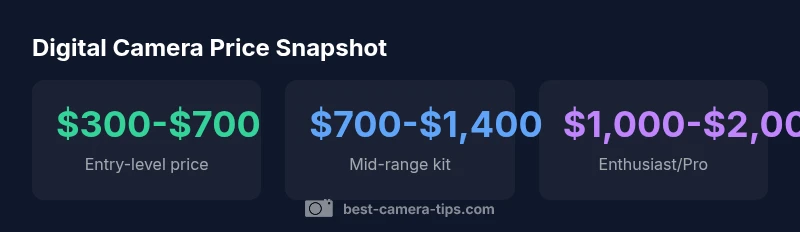
On average, a brand-new digital camera for beginners costs roughly $300 to $700 for entry-level models, while mid-range cameras with advanced features run about $700 to $1,400. Enthusiast and prosumer bodies typically start around $1,000 and can exceed $2,000, especially when bundled with lenses. In 2026, prices are influenced by sensor quality, video features, and kit options.
Understanding the price spectrum
Prices for digital cameras span a broad spectrum, from affordable entry-level bodies to flagship pro systems. For beginners, most buyers start with a kit that includes a body and one or two lenses. In 2026, new entry-level cameras commonly sit in the $300-$700 range, offering practical image quality, reliable autofocus, and basic video capabilities. Mid-range kits, typically aimed at enthusiasts who want more versatility, often fall in the $700-$1,400 range and may include better lenses, faster focusing, and improved low-light performance. For photographers seeking advanced control, weather sealing, higher-end sensors, and robust video features, prices usually range from $1,000-$2,000+ for bodies or bundles. Remember, the bundle (body-only vs kit) profoundly affects upfront cost, and many buyers find substantial value by choosing a kit that includes a second lens or an external microphone for video. Finally, price is not the only predictor of satisfaction; feature alignment with your shooting style matters as much as sticker price.
What drives digital camera prices
Price is driven by several interdependent factors. Sensor size and resolution influence image quality and cost; newer sensors and processors enable better autofocus and faster burst rates, which raise price. Lens ecosystem is a major driver: a kit with two versatile lenses costs more upfront but can reduce future purchases. Video capabilities (4K/6K, high frame rates, camera stabilization) add cost through codecs, heat management, and data handling. Build quality, weather sealing, viewfinder type, and battery life contribute to price ladders. Brand positioning matters too: premium brands charge more for perceived reliability, support, and resale value. Finally, kit contents—whether you’re buying body-only or with lenses, memory cards, and accessories—shape the total entry price. Consider whether you need features like in-body stabilization, microphone input, or high-contrast autofocus, as these features can significantly affect price and long-term value.
New vs used: balancing risk and value
Buying new guarantees the latest features, full warranty, and pristine condition, but at a higher price. Used or refurbished cameras offer meaningful savings, often 20%–40% less than new, but require careful evaluation. Check shutter count (the number of photos taken), sensor condition, lens cleanliness, and the presence of original accessories. If possible, buy from reputable sellers that offer a short warranty or return window. For beginners, a gently used mid-range model can deliver solid performance at a lower cost, while you learn your preferred style. If you want cutting-edge tech and guaranteed compatibility with the latest lenses, buying new remains the safer choice. Best Camera Tips Analysis, 2026 suggests balancing risk and reward by aligning your purchase with your planned usage over the next 2–4 years.
Estimating total cost of ownership
Beyond the sticker price, you should budget for essential accessories and ongoing costs. A basic memory card and a spare battery are common needs for any camera; a charger, extra caps, and a case add to the initial outlay. Depending on your plan, you may want to invest in a spare kit lens or two more lenses to cover wide-angle and portrait work. Consider insurance or extended warranties if you rely on gear for paid gigs. Also, plan for maintenance items like screen protectors and cleaning kits. If you shoot frequently in challenging conditions, factor in weather sealing and rugged housings. Finally, daily or monthly costs for cloud backups, photo editing software, and color-calibration tools can add up over time. A realistic approach is to estimate a 15–25% uplift on the body price to cover essential accessories in the first year.
Buying strategies for 2026
To maximize value, adopt strategic timing and careful comparison. Watch for seasonal sales (back-to-school, holidays) and for new model introductions, which often push older stock into discounted pricing. Compare bundles: a body plus two lenses may cost more upfront but save money over buying separately. Always verify the warranty, return window, and included accessories. If you can, buy from retailers that offer price-matching and clear upgrade paths. Use reputable sources, read reviews on autofocus, battery life, and reliability, and consider starting with a model that has a wide lens ecosystem so you can grow without immediate upgrades. Finally, track prices for a few weeks before purchasing to catch dipping prices.
Common mistakes to avoid when shopping
Rushing to buy the cheapest option can backfire if autofocus, image quality, or reliability disappoints. Overlooking the importance of a lens kit limits your long-term flexibility. Failing to consider total ownership costs (memory, batteries, warranties) inflates the budget. Buying a model with a cramped grip, poor menu navigation, or weak low-light performance yields frustration. Not testing the camera in-store or through a thorough return policy can mask hidden faults. Lastly, neglecting to review firmware updates or compatibility with your planned accessories can leave you with a dead-end setup after a few months.
Price ranges and starter kit costs by category
| Category | New Price Range | Starter Kit Estimated Cost |
|---|---|---|
| Entry-level body (kit) | $300-$700 | $350-$850 |
| Mid-range body (kit) | $700-$1,400 | $850-$1,900 |
| Enthusiast/pro body (kit) | $1,000-$2,500 | $1,150-$2,400 |
Common Questions
What is the typical price range for a new digital camera in 2026?
New cameras span a wide range: entry-level bodies with a kit generally cost $300-$700, mid-range kits run about $700-$1,400, and enthusiast/pro models often start around $1,000 and can exceed $2,000. Promotions and bundles can shift these bands.
Entry-level options usually sit in the few-hundred-dollar range, with higher-priced bundles offering better value over time.
Is it better to buy a used digital camera to save money?
Used cameras can offer substantial savings, often 20%–40% less than new, but require due diligence on shutter count, sensor condition, and warranty availability. Buy from reputable sellers and check return policies to reduce risk.
Used gear can save money, but verify shutter count and warranty before buying.
Do I need to buy lenses and memory cards right away?
Yes. Most cameras require at least one lens, and memory cards are essential for storage. Some bundles include a spare lens or card, which can save money, but plan for future needs as you grow.
You’ll want a lens and memory card upfront, with room to add more gear later.
Which features affect price most: megapixels, video, or autofocus?
Autofocus performance, sensor size, and video capabilities usually drive price more than megapixel count alone. Consider your real needs—do you video, shoot in low light, or need fast AF?
Autofocus, sensor and video features drive price the most.
What should I buy for YouTube/vlogging on a budget?
Aim for a camera with reliable autofocus, a mic input, and decent stabilization. A kit with a versatile lens plus a compact mic and light setup often gives the best value without breaking the bank.
Focus on autofocus, mic input, and stabilization for good-looking vlogs.
When is the best time to buy a digital camera?
Look for sales during holidays and model transitions. Prices often dip when new models arrive, and older stock is cleared at discount. Plan to buy when your preferred model is on promotion.
Shop during sale seasons and model transitions for the best deals.
“Prices reflect both technical capability and ecosystem reliability. The right purchase balances immediate needs with future growth, maximizing long-term value.”
The Essentials
- Compare bundles to maximize value
- Budget for total ownership costs beyond the body
- Assess new vs used by model age and planned use
- Choose gear that matches your shooting style for long-term satisfaction
- Track prices and promotions to time the purchase