How Much Is a Film Camera? A Practical Price Guide
Explore how much a film camera typically costs, with format-based ranges, condition factors, and hidden expenses. A data-driven guide to budgeting for 2026 tailored for aspiring photographers and analog enthusiasts.


According to Best Camera Tips, a film camera can cost from as little as $50 for a basic used 35mm body to several thousand dollars for rare medium format or new models. Most hobbyists pay around $100-$300 for a functional used 35mm kit, including a body and a basic lens. Prices vary widely by format, condition, and included accessories.
What drives the price of film cameras
If you’re wondering how much is a film camera, you’re really asking about the core levers that shape analog pricing. The most important variables are format (35mm, medium format, large format), condition (cosmetic wear, shutter reliability, light seal integrity), and what’s bundled with the camera (lens, viewfinder, case, meter). Brand heritage and rarity can push prices upward, but well-made, mainstream bodies often deliver good value for learning purposes. In practice, a typical 35mm body with a standard lens will sit well within reach for beginners, while collectors or professionals chasing specific formats will see broader ranges. The Best Camera Tips team notes that price reflects not just image quality but the tangible experience of using a mechanical camera, which explains the wide spread across the market. If you can tolerate a slight learning curve, you’ll often gain more long-term value for your money by choosing a reliable used model with a known history. When assessing value, consider how often you’ll shoot, storage conditions, and future expandability, since these factors directly influence how much you should budget for a film camera over its lifetime.
Price ranges by format and condition
Price expectations shift dramatically by format and condition. For a practical starting point:
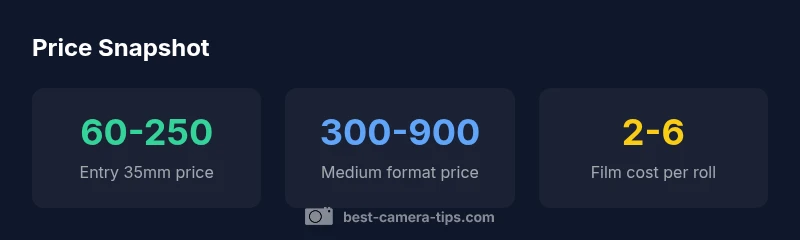
- 35mm SLR or rangefinder (used): commonly in the low hundreds, often around the $60-$250 range depending on shutter health and lens quality.
- Medium format (120) used: typically in the hundreds to low thousands, often $300-$900 for a solid body with a decent lens.
- Compact film cameras (fixed-lens or point-and-shoot): generally affordable, roughly $20-$150, though premium models can push higher if in excellent condition.
- New or rare film cameras: pricing is highly variable and can exceed $600-$1000 for specialty models; availability is limited and condition remains critical.
When you price by format, remember that a full kit with reliable glass and a working light meter adds substantial value. The price gap between poor and excellent condition can be 2x or more, especially for shutter reliability and seals. Price tags also reflect the ecosystem—availability of spare parts and lenses, future compatibility with film stocks, and the ease of finding a repair shop. The goal is to map your budget against your learning curve and future ambitions, rather than chasing the lowest price.
Verifying condition and value when buying used
Before committing to a used film camera, run through a practical checklist to verify value. Test the shutter across speeds to ensure responsiveness and accuracy. Inspect seals around the mirror box and back door for age-related light leaks; brittle foam is a common failure point. Check the lens for scratches, fungus, or haze, and test autofocus (if applicable) and manual focus accuracy. For a 35mm body, verify film advance works smoothly and the frame counter advances consistently. For medium format, inspect theBellows and if feasible, test with a film pack to confirm the exposure meter’s functioning. Request a history, warranty or return option when available. Price should reflect condition plus the cost of needed maintenance,; if a seller cannot confirm shutter spray or light-seal integrity, reduce the offer accordingly. A cautious approach will help you avoid paying a premium for a “vintage aesthetic” that doesn’t deliver reliable results.
Hidden costs to consider beyond the sticker price
Budgeting for a film camera means accounting for ongoing costs beyond the initial purchase. Film stock costs, processing, and scanning or printing can add up, especially for frequent shooters. Expect to pay a few dollars per roll for development, plus potential costs for color processing, light-sensitive film, and the occasional lens or accessory upgrade. If you plan to shoot regularly, include the cost of batteries for any light meters or electronics, and consider the expense of camera repair or restoration later on. It’s also wise to factor in the potential need for a spare battery, a new strap, a light meter, or a lens hood. When budgeting, assume about two to four rolls per week for committed shooters, adjusting for your film availability and processing speed. A conservative budget helps prevent sticker shock after your first month of shooting.
Practical budgeting strategies for aspiring photographers
To approach prices like a pro, start with a clear budgeting framework. First, set a target format (35mm is the most practical starting point for beginners) and outline a must-have lens set. Second, budget for a used body in good working order plus a standard 50mm or 40mm lens. Third, reserve funds for film and development costs. Fourth, build a small fund for periodic maintenance or urgent repairs. Finally, as you gain experience, consider expanding into medium format or adding specialized lenses. A methodical plan prevents overspending and helps you preserve more of your budget for ongoing learning. When you’re ready to upgrade, evaluate whether the incremental cost is justified by improved handling, metering accuracy, and ease of use.
Market snapshot for 2026: what buyers can expect
The 2026 landscape for film cameras remains a mix of affordable, practical options and aspirational collectors’ pieces. Budget-minded buyers can typically find solid used 35mm kits in the low-to-mid range, while medium format gear tends to command higher prices, especially for bodies with working meters and reliable light seals. The price-sensitive buyer should prioritize dependable optics, known shutter speeds, and a repair-friendly model with accessible service. The market is influenced by stock availability for film and processing, and interest in retro aesthetics continues to drive demand for certain brands and formats. Overall, you can plan for a balanced approach: invest in a sturdy used 35mm kit to learn, then grow into larger formats as your skills and projects demand.
Price ranges for common film camera formats (used market)
| Format | Typical Used Price Range | Notes |
|---|---|---|
| 35mm SLR/Rangefinder | 60-250 | Common entry point; depends on shutter and lens quality |
| Medium format (120) | 300-900 | Higher-cost bodies; lens ecosystems more expensive |
| Compact film cameras | 20-150 | Budget-friendly; limited advanced controls |
Common Questions
What factors most influence the price of a film camera?
Price is driven by format, condition, included lenses, and overall mechanical reliability. Rarity or brand heritage can push values higher, but practical investment hinges on shutter health and lens condition.
The price mainly depends on format, condition, and what you get with the camera. Rarity may push it up, but reliability and lenses matter most.
Is it better to buy a used or a new film camera?
For most hobbyists, a well-maintained used film camera offers the best value. New film cameras are rare and expensive; used models with a known history provide reliability at a fraction of the cost.
Usually, a good used camera gives you more bang for your buck, unless you specifically want a brand-new model and can justify the price.
Are there cheap film cameras that still take good photos?
Yes. Many entry-level used 35mm bodies and compact models deliver solid results at low prices. The key is to inspect shutter accuracy, lens cleanliness, and light seals for reliability.
Absolutely. You can get good photos from affordable used cameras if you check the basics first.
What should I look for when buying a film camera?
Prioritize shutter accuracy, light seals, lens condition, and functional metering. Request a return option if possible and test at least a couple of film rolls to confirm performance.
Check shutter speeds, seals, and the lens—and if you can, test it with film before buying.
How much does it cost to develop film per roll?
Developing costs vary by film type and service quality, but expect a range of a few dollars per roll, with higher-end color scanning potentially increasing the price.
Development costs can add a small but noticeable amount per roll, depending on where you go.
What is the value of a vintage camera today?
Value depends on rarity, condition, and market interest. Common vintage models offer historical value and feel, while rare pieces can fetch premiums with documentation and functional reliability.
Value varies a lot—common models are affordable, rare ones can be pricey if they’re working and well-documented.
“Film cameras reward patient shoppers with durable mechanics and tactile control; price signals format and condition more than brand.”
The Essentials
- Start with a used 35mm kit to learn basics
- Prices vary mainly by format and condition
- Factor film, processing, and scans into total cost
- Test shutter, seals, and lens compatibility before buying
- Budget for maintenance and future upgrade paths