Develop Disposable Camera Film: A Step-by-Step Guide
Learn how to develop disposable camera film with practical, beginner-friendly steps. This guide covers safety, required tools, a complete step-by-step workflow, and tips for better results from Best Camera Tips.


Learn how to develop a disposable camera film, either at home in a dark space or by sending to a lab. This quick guide explains the core steps, safety considerations, and gear you’ll need to get reliable results. By the end you’ll understand the process and common pitfalls for beginners.
What is a disposable camera and what does it mean to develop single use camera
In photography, a disposable camera is a simple, self-contained film unit designed for quick shooting and archiving memories. Developing the film from such a device involves safely unloading the negative strip from its light-tight canister and processing it in chemicals to reveal images. According to Best Camera Tips, understanding the film’s construction helps you plan safe handling and compatible developing methods. The goal is to preserve images while minimizing light exposure that could fog the film. Whether you shoot for fun or practice basic photography concepts, knowing how to develop a disposable camera empowers you to recover memories with tangible results instead of merely hoping for digital copies.
How the film inside a disposable camera is organized
Disposable cameras use 35mm film wound onto a spool inside a light-tight cartridge. The film surface records light across multiple frames before it’s sealed away. When you unload the film in darkness, you expose each frame to a sequence of chemical baths that reveal the images. The cassette’s design emphasizes user safety and simplicity, but it also means you’ll need a proper developing setup or a trusted lab to get consistent results. Understanding the layout helps you minimize accidental exposures and achieve even development.
DIY development vs professional labs: pros and cons
Developing at home offers hands-on learning and potential cost savings, but it requires a safe dark space, fresh chemicals, and careful handling to avoid fogging or uneven results. Labs provide consistent results, higher-quality tonality, and faster turnaround, but come with a fee and limited control over final appearance. Best Camera Tips notes that many hobbyists prefer starting with a simple home setup to grasp timing and chemistry basics, then rely on a lab for high-volume shoots or archival projects. The choice depends on your goals, space, and willingness to manage a chemical workflow.
Tools, chemicals, and safety you’ll need
A basic home development setup needs a light-safe environment, a developing tank with reels suitable for 35mm film, and a few common chemicals: developer, stop bath, and fixer. Protective gloves and eyewear, a timer, and safe storage for used chemicals are essential. Handling films and reagents in a well-ventilated area reduces health risks. Always follow product instructions and local safety regulations. If you’re unsure, start with a beginner-friendly lab kit or a local darkroom to learn proper technique before attempting more advanced workflows.
Step-by-step overview: preparing your space and timing
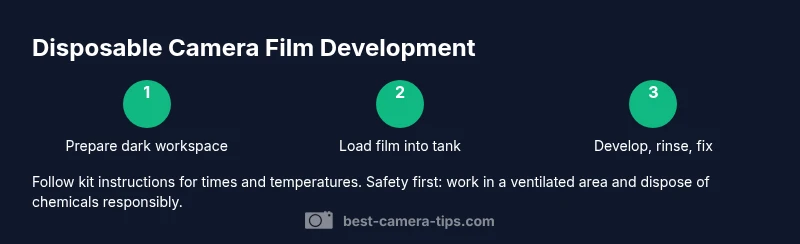
Before you begin, arrange a light-safe workspace or a dedicated changing bag in a dark room. Gather your chemicals and tools, then set up a timer and a clean rinse station. The exact times depend on the chemicals you use; always follow manufacturer guidance. Maintaining clean containers and labeled bottles reduces the risk of cross-contamination and ensures you can trace steps easily if you need to troubleshoot.
What to expect when you get the film developed
After processing, you’ll rinse the film, wash away chemicals, and dry the negatives. Expect a range of tones and contrast that reflect your shooting conditions and chemical batch. If you’re learning, compare results from different lighting conditions and film speeds to understand how exposure and development interact. The final prints or scans will show how well you preserved details in shadows and highlights.
Alternatives and next steps
If DIY development feels daunting, consider sending your disposable camera film to a local photo lab or an online service. Labs often provide color correction and consistent results, especially for archival projects. As you gain confidence, you can experiment with different developer brands, temperatures, and agitation techniques to tailor the look of your photos. Keep a simple log to track what works best for your film stock and lighting situations.
Common mistakes to avoid
Avoid exposing film to stray light during loading or unloading. Do not mix chemicals from unknown sources; use reputable, fresh solutions and discard any suspect solutions. Rinse thoroughly to prevent residue that can cause staining. Finally, never rush the drying process; damp films can stick to each other and cause damage when scanned or printed.
Tools & Materials
- Red safelight or darkroom safe lighting(Provides illumination without fogging film)
- Dark bag or dedicated darkroom space(Used to load film in darkness)
- Developing tank with reels (35mm)(For holding film and chemical baths)
- Film developer(Follow product instructions for dilution and timing)
- Stop bath(Stops development chemically)
- Fixer(Fixes image to made film so it stays visible)
- Rinsing water (clean)(Rinse film after development)
- Thermometer(Monitor chemical temperature)
- Timer or clock(Track development and wash times)
- Gloves and protective eyewear(Safety for handling chemicals)
- Scissors or film cutter(Optional for removing film in darkness)
- Drying rack or clothesline(Air-dry negatives without scratching)
- Measuring jugs or bottles(Use for mixing chemicals per kit)
- Waste container for chemicals(Dispose of used chemicals safely according to local guidelines)
Steps
Estimated time: 60-120 minutes
- 1
Prepare a safe, dark workspace
Set up a light-safe area or use a changing bag. Gather all tools and chemicals, and verify you have clear space to work. This minimizes accidental exposure and keeps film quality high.
Tip: Double-check the blackout conditions before touching the film. - 2
Open the camera and extract the film
In darkness, carefully remove the film canister and unwind the film onto a spool or ready it for loading into the developing tank. Avoid touching the emulsion side to prevent fingerprints.
Tip: Keep the film in darkness until it’s secured in the reel or tank. - 3
Load film onto developing reel
Place the film onto the reel or spool inside the developing tank. Seal the tank to keep it light-tight and prevent any accidental exposure.
Tip: Ensure the film is flat and evenly wound to avoid uneven development. - 4
Pour in developer and start timing
Add the developer solution according to your kit’s instructions. Cap the tank and agitate gently according to the recommended routine to achieve even development.
Tip: Avoid splashing; keep the tank steady to prevent air bubbles on the film. - 5
Rinse with water between steps
Rinse the film with clean water to remove residual developer before applying stop bath. This helps control contrast and line artifacts.
Tip: Use a gentle agitation to avoid damaging the film surface. - 6
Apply stop bath and fix the image
Introduce the stop bath to halt development, then process the film with fixer to stabilize the image for long-term storage.
Tip: Follow the exact times recommended by your chemical kit for best results. - 7
Final rinse and wash
Rinse the film thoroughly to remove all chemical residues. A longer wash reduces staining and improves clarity.
Tip: Use distilled water if possible to minimize mineral deposits. - 8
Hang to dry and inspect
Dry the negatives away from light on a clean rack. Once dry, inspect for fogging, patches, or edge damage that might require reprocessing.
Tip: Handle dried film with lint-free gloves to avoid smudges. - 9
Scan or print your negs
Convert the dried negatives to digital images via a scanner or lab service. Compare frames to plan future shoots and calibration.
Tip: If colors look off, you can adjust white balance in post-processing, not during development.
Common Questions
Can I develop a disposable camera film at home?
Yes, with a safe dark space and basic chemistry, beginners can learn the process. Start with a beginner-friendly kit and follow instructions closely to minimize risk and fogging.
Yes, you can develop at home using a dark space and a beginner kit. Follow the instructions closely to stay safe and minimize fogging.
What equipment do I need to develop film safely?
A safe light source, a developing tank with reels, developer, stop bath, fixer, a timer, gloves, and a drying area are the core items. For best results, set up in a dedicated, well-ventilated space.
You’ll need a safelight, developing tank, chemicals (developer, stop bath, fixer), a timer, gloves, and a clean drying area.
How long does development take?
Times vary by chemical kit and temperature; follow the manufacturer’s guidance. Plan for setup, development, rinse, fixation, and drying, typically spanning an hour or two.
Times vary by the kit and temperature; follow the instructions and plan for about an hour or two total.
Can I reuse the film roll after development?
No. Once the film has been exposed and processed, it cannot be reused. You’ll start with a fresh roll or a new disposable camera for additional shots.
No, film can’t be reused after development. Use a new roll for more shots.
What should I do if the film is fogged?
Fogging usually indicates light exposure or improper development. Ensure darkness during loading, verify chemical freshness, and consider sending affected frames to a lab if quality matters.
Fogging often means light exposure or development problems. Re-check loading, chem freshness, and consider lab processing for best results.
Where can I get my film developed if I don’t have a darkroom?
Local photo labs and many drugstores offer film development services. Online labs are also convenient; compare turnaround times, price, and color correction options.
You can use a local lab or online service. Check turnaround times and pricing, and ask about color correction if needed.
Watch Video
The Essentials
- Handle film in darkness during loading and unloading
- Use fresh, correctly mixed chemicals for reliable results
- Rinse thoroughly to prevent chemical staining
- Dry film completely before scanning or printing
- Lab development is a reliable option for archives