Camera and Video Recorder: A 2026 Comparative Guide
Compare cameras and video recorders in 2026: hybrids, camcorders, and separate gear. Practical guidance for beginners and enthusiasts on choosing the right tool for stills, video, and workflow.


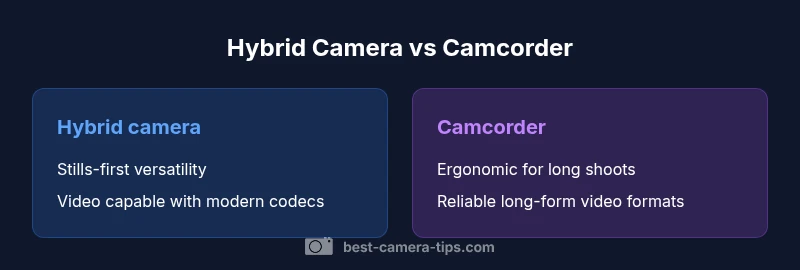
In short, choosing between a camera and a video recorder depends on your primary goal. A modern hybrid camera often handles both stills and video well, while a dedicated camcorder shines in ergonomics and long-form recording. For many creators, a hybrid camera offers the best all-in-one solution.
What is a camera and video recorder?
In everyday usage, the phrase camera and video recorder often refers to devices that both capture still images and record moving pictures. The distinction matters because some devices prioritize photos, others prioritize extended video sessions, and a few aim to balance both. In practice, the term is most meaningful when you compare hybrids—cameras that can shoot high-resolution stills and robust video—against dedicated devices that emphasize one function. According to Best Camera Tips, the modern landscape favors hybrids for most creators who want flexibility without carrying multiple gadgets. The choice hinges on your typical workflow, storage strategy, and output needs. If your work alternates between magazine-quality stills and on-the-go video, a single system that covers both can reduce friction and speed up post-production. On the other hand, if your priority is the ultimate still image quality, or you need long uninterrupted video runs with minimal heat and stabilization concerns, a specialized device may deliver better results. In this guide we unpack these differences with concrete examples, avoiding hype and focusing on practical trade-offs that matter in real-world shooting.
wordCount":193},
Comparison
| Feature | Hybrid camera (all-in-one) | Dedicated camcorder |
|---|---|---|
| Image quality (stills) | High-resolution stills with modern sensors | Video-optimized stills; may lag behind hybrids in still performance |
| Video capabilities | 4K/60p+ with advanced codecs and color science | Prolonged recording with robust codecs and stabilized formats |
| Ergonomics & handling | Compact, versatile; great for travel | Gripped design; long sessions are more comfortable |
| Lens ecosystem | Interchangeable lenses across brands | Dedicated lens suites optimized for video workflows |
| Battery life | Balanced power for mixed use | Long-form video often benefits from extended battery options |
| Price/value | Typically higher upfront for built-in versatility | Often lower upfront for focused video use, with long-term savings on accessories |
Positives
- All-in-one flexibility for stills and video
- Modern hybrids offer strong autofocus and color science
- Streamlined workflow reduces gear count
- Good for travel and everyday shooting
- Wide lens ecosystems support growth
Downsides
- Trade-offs in long-form video ergonomics and heat management
- Premium hybrids can be costly
- Camcorders may lag in still image quality
- Limited battery life for very long events without planning
Hybrid cameras generally offer the best all-in-one value for mixed-use needs.
If you want one device to cover both stills and video, a modern hybrid camera is usually the safest choice. For specialized, long-form video or ultra-high-quality stills, consider dedicated devices and lenses within your preferred ecosystem.
Common Questions
What is the main difference between a camera and a video recorder?
The primary difference is that cameras focus on capturing high-quality still images while video recorders optimize continuous motion footage. Hybrids blend both capabilities, whereas dedicated devices specialize in one function for maximal performance in that area.
Cameras shoot stills; video recorders shoot moving pictures. Hybrids try to do both well.
Can I rely on a hybrid camera for long-form documentary work?
Yes, hybrids can handle long shoots, especially with reliable batteries and efficient codecs. However, for marathon sessions, you should consider extras like external recorders or additional batteries and proper cooling to prevent heat throttling.
Hybrids work for long shoots with the right power setup.
Do camcorders support modern codecs and 4K?
Many camcorders support 4K and a range of professional codecs. While some models excel at long-form stability and color grading, verify codec options and recording limits before purchase.
Camcorders often offer solid 4K with long recording limits.
Are there affordable options that cover both stills and video?
Yes, there are affordable hybrids that deliver competent stills and solid video. Look for models with reliable autofocus, decent dynamic range, and a flexible lens ecosystem to maximize value.
You can get a capable hybrid without breaking the bank.
What should beginners look for when choosing between these devices?
Beginners should prioritize sensor quality, autofocus performance, ergonomics, and battery life. A beginner-friendly hybrid can reduce the learning curve while offering room to grow across both still and video work.
Focus on ease of use, stable autofocus, and good battery life.
How important is lens selection in this decision?
Lens ecosystems influence future versatility. Interchangeable lenses offer flexibility for different subjects, while fixed lenses in camcorders can simplify shooting in specific scenarios.
Your lens choice can make or break long-term versatility.
The Essentials
- Assess your primary use before buying
- Choose a hybrid for flexibility and workflow simplicity
- Invest in quality lenses to maximize both stills and video
- Plan for storage, power, and editing needs
- Leverage your ecosystem for future-proofing