Baby Steps with Your Camera: A Beginner's Guide to Shooting
Learn baby steps what to do with camera: a practical, step-by-step guide for beginners to get comfortable with basics, gear setup, and safe shooting practices.


You will learn the essential first steps to start using a camera confidently, from choosing basic settings to safe handling. This guide outlines a simple, repeatable path for beginners, prioritizing consistent practice, small experiments, and patience. According to Best Camera Tips, building a routine with tiny, repeatable steps yields faster confidence.
Start with the Right Mindset for Baby Steps
Getting comfortable with a camera starts in your mindset as much as with any button or dial. The goal is steady, repeatable practice that builds confidence without overwhelming you with every feature at once. According to Best Camera Tips, beginners who focus on tiny, daily wins—like adjusting exposure for a single subject in consistent light—build long-term habits faster. Embrace curiosity, not perfection, and reward yourself for showing up and trying new things, even if the results aren’t gallery-worthy yet. This approach reduces fear of failure and makes photography feel like a manageable, enjoyable skill rather than a mystery.
- Set one tiny goal per session (e.g., set exposure for a portrait in natural light).
- Keep your sessions short and consistent (15–30 minutes daily).
- Log your settings and outcomes to track progress over time.
Understand Your Camera's Core Controls
Before chasing fancy features, lock in the basics. Every camera shares a few core ideas: exposure, focus, and color balance. Start with the exposure triangle: shutter speed, aperture, and ISO. In beginner-friendly modes like Aperture Priority or Program Auto, you can let the camera handle some decisions while you learn the consequences of each choice. White balance adjusts color warmth to match lighting, which matters for skin tones and mood. Auto modes are useful at first, but moving to semi-automatic modes helps you control outcomes without becoming overwhelmed. Practice with a familiar scene (a desk setup, a plant, or a friend) and compare how the image changes when you tweak one control at a time.
- Use a steady stance and breathing to steady your shots.
- Practice with one subject in the same light to see how changes affect the result.
- Note how ISO affects noise in low light and how aperture alters depth of field.
Create a Simple Practice Routine You Can Keep
A sustainable routine beats sporadic heavy sessions every time. Build a small, repeatable workflow: prepare, shoot, review, and adjust. Start with a single focal length and a fixed white balance for a week, then incrementally introduce minor variations. The Best Camera Tips analysis shows that learners who stick to a tiny set of variables perceive faster improvement because they can clearly see causal relationships. Use a consistent subject and light, and keep a log of what you changed and why. Over time, you’ll recognize patterns: what settings produce sharp focus, how to keep subjects well lit, and how to frame a story with a few easy tweaks.
- Week 1: Auto mode with one preset, fixed white balance, one lens.
- Week 2: Introduce exposure compensation and a second subject.
- Week 3: Add manual focus attempts and basic framing changes.
Basic Gear Setup: What to Have and How to Use It
You don’t need every lens or gadget to begin; you just need a reliable baseline setup. Start with your camera body, a standard zoom lens (kit lens), and a memory card with ample space. A spare battery reduces interruptions, especially during learning sessions. A lightweight tripod becomes handy for stability in low light or long exposures, but you can skip it in the early weeks if you prefer handheld practice. Clean, dry hands and a soft microfiber cloth help keep the lens free of smudges as you shoot.
- Keep a simple, protective bag to hold the basics.
- Carry an extra memory card and battery in the same pocket.
- Use a tripod only when it improves stability or framing for difficult shots.
Lighting and Composition Basics for Everyday Shots
Good lighting unlocks most of photography’s magic. For beginners, work with natural light and avoid harsh, direct sun. Learn the rule of thirds to compose more engaging images: place important elements along gridlines or at intersections. Perspective changes can dramatically alter a photo’s feel, so experiment with shooting from eye level, a low angle, and a high angle. Color harmony matters too; notice how warm tones feel cozy while cooler tones feel clinical. Start with scenes you know well, like a favorite room or a street corner near home, and observe how changes in angle, distance, and framing affect mood.
- Shoot during the “golden hour” for softer light and pleasing shadows when possible.
- Use leading lines like roads, fences, or windows to guide the viewer’s eye.
- Try three frames per scene: close, medium, and wide to understand context.
Safe Handling to Protect Your Camera and Memory Cards
Safety and care prevent frustration and loss of work. Always turn the camera off before changing lenses or inserting memory cards to avoid data corruption. Keep memory cards in a protective case, and back up images regularly; losing a practice session’s work is demotivating. Clean the lens carefully with a dedicated cloth, and store the gear in a dry, climate-controlled space to avoid condensation. If you’re shooting near kids, pets, or busy environments, use a strap and be mindful of your surroundings to prevent accidental drops.
- Never force a battery when it doesn’t click in place.
- Keep liquids away from the camera body and electronics.
- Back up files after every practice session to a reliable storage source.
Common First Photo Scenarios and How to Improve
New photographers often start with portraits, everyday objects, and simple landscapes. Each scenario teaches a different skill: portraits demand steady hands and good lighting, objects teach texture and detail, and landscapes sharpen composition and depth. Start with a familiar subject, notice how the background affects the main subject, and move your position to balance foreground and background. If your photo is too flat, try increasing contrast or adjusting exposure slightly. If it’s blurry, stabilize and re-check focus.
- Portraits: position your subject away from harsh light; use reflectors or a window for soft shadows.
- Objects: move closer to reveal texture; try a plain background to avoid distractions.
- Landscapes: include foreground interest and depth with a small object in the foreground.
Progression: How to Build on Your First Month
After a month of baby steps, you’ll have a clearer sense of your preferences and the camera’s capabilities. Start setting monthly micro-goals: one new technique, one new lighting scenario, one editing workflow. Review your favorite shots and note which settings produced the best results. If you struggle to interpret a shot, revisit the basics—exposure, focus, composition—and practice with a specific goal in mind, such as improving sharpness or color fidelity. The long-term benefit is a growing intuition for how to frame moments quickly and confidently. The Best Camera Tips team emphasizes consistency over intensity; small, steady improvements compound into real skill, especially when you document your process and reflect on it regularly. By maintaining a calm, curious mindset, you’ll continue to grow as a photographer and a thoughtful camera user.
Tools & Materials
- Camera body(Any DSLR or mirrorless camera with manual controls)
- Kit lens (18-55mm or equivalent)(Standard zoom lens suitable for beginners)
- Memory card(At least 16GB, Class 10 or UHS-1 recommended)
- Spare battery(Keep charged and ready for learning sessions)
- Camera strap(Useful for carrying; not essential in all situations)
- Cleaning kit(Soft microfiber cloth and lens cleaner)
- Tripod(Lightweight tripod helps stability for low light)
- Notebook and pen(Record settings and reflections for progress)
Steps
Estimated time: 90-120 minutes
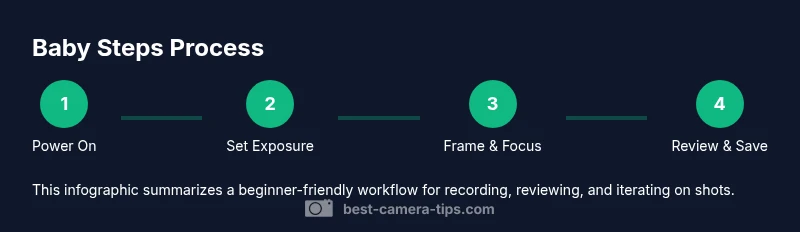
- 1
Power on and set shooting mode
Power up the camera and choose a simple shooting mode (Auto or Program). Confirm the LCD shows a usable exposure and framing. This first action builds familiarity with the device without overwhelming you with options.
Tip: Hold the camera steady and look through the viewfinder or screen to frame your subject. - 2
Set a baseline exposure
Begin with a fixed ISO and aperture in a well-lit scene. Observe how changing exposure compensation affects brightness. This step helps you understand how light changes the image.
Tip: Take two shots: one slightly underexposed and one slightly overexposed to compare outcomes. - 3
Frame with the rule of thirds
Turn on gridlines and place your subject along the lines or at an intersection. This improves balance and makes your composition more engaging.
Tip: Shift your stance to align the subject with the gridlines rather than centering it perfectly. - 4
Focus and depth
Lock focus on the subject and notice how depth of field changes with distance and aperture. Practice manual focus at least once to feel the difference from autofocus.
Tip: If autofocus struggles, switch to single-point focus and linger on the subject for precision. - 5
Review and adjust
Review your shots on the camera LCD, noting brightness, sharpness, and framing. Adjust exposure, white balance, or focus and re-shoot the scene.
Tip: Keep your review quick; the goal is to learn, not perfect every shot. - 6
Organize and log
Transfer images to your computer or cloud, then label with simple notes about settings and conditions. A log helps you reproduce successful results later.
Tip: Create a single folder for each practice session. - 7
Plan your next micro-goal
Set a tiny objective for your next session (e.g., try a new lighting direction or shoot a subject at a different distance).
Tip: Keep goals specific and achievable to maintain momentum.
Common Questions
What is the best camera for a complete beginner?
For beginners, an entry-level DSLR or mirrorless with a kit lens is ideal. Focus on learning the basics first, rather than investing in advanced gear. Use automatic modes while you study exposure and composition.
For beginners, start with an entry-level camera and kit lens to learn basics, then gradually try manual settings.
Should I learn manual settings or stick to auto first?
Begin with auto or semi-automatic modes to build familiarity. Move to manual once you’re comfortable with exposure, focus, and white balance. This staged approach reduces overwhelm.
Start with auto, then slowly add manual controls as you grow more confident.
How long does it take to get comfortable with camera basics?
Learning pace varies, but consistent practice for a few weeks typically reveals noticeable progress in handling exposure, focus, and framing.
With daily practice, you usually notice progress within a few weeks.
What are the essential accessories for beginners?
A spare memory card, a charged extra battery, a basic cleaning kit, and a lightweight tripod if you shoot in low light or at slower shutter speeds.
Start with a spare card, extra battery, and a small cleaning kit.
How do you keep camera safe during home setups?
Use a strap, store in a padded bag, and avoid exposing the gear to moisture or extreme temperatures. Back up files regularly.
Carry with a strap and store in a padded bag; back up your photos often.
Can I shoot in RAW as a beginner?
Yes. Shooting RAW gives greater editing flexibility, but it requires more storage and post-processing. Start with JPEG if you prefer speed, then graduate to RAW.
Yes—RAW offers more editing options, but it takes more storage and time to edit.
Watch Video
The Essentials
- Start with mindset and small, repeatable steps
- Master core controls before chasing features
- Build a consistent practice routine
- Log settings and reflect to track growth