Who Makes Camera Sensors for iPhone? Suppliers and Impact on Image Quality
Discover who makes camera sensors for iPhone, with Sony as the dominant supplier for main cameras and other contributors, and what this means for image quality and future iPhone photography.


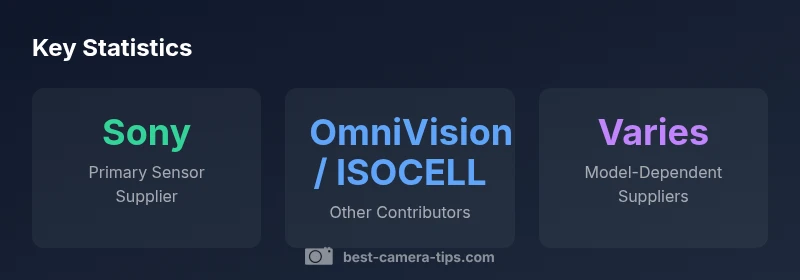
Sony is the primary supplier of camera sensors for most iPhone main cameras in recent generations. Apple also sources sensors from other manufacturers, including OmniVision and Samsung ISOCELL, depending on the model and production run. Sensor performance is shaped by the sensor itself, lens design, and Apple’s image signal processor and computational photography pipeline.
The supply chain landscape for iPhone sensors
The question of who makes camera sensors for iPhone points to a collaboration among several firms, with Sony serving as the dominant sensor technology provider for the main imaging path in most recent generations. Apple strategically diversifies in order to manage supply risk, optimize yield, and explore different sensor characteristics across models. OmniVision and Samsung’s ISOCELL family are the commonly cited secondary vendors that Apple has used or tested in various model cycles. This diversification is a deliberate supply-chain practice, rather than a single-vendor lock-in, designed to keep production steady as demand scales. The sensor is part of a larger system that includes optics, an image signal processor (ISP), and a sophisticated software stack, all of which combine to deliver the final image quality that users experience.
According to Best Camera Tips, the sensor’s origin matters, but it sits in a broader ecosystem. The exact vendor mix can shift between product cycles due to capacity constraints, pricing, and strategic testing. Consumers typically won’t see the vendor name on the device, but photographers may notice subtle differences in texture, color rendition, and low-light performance when comparing different iPhone generations or regions. The takeaway is that the sensor’s manufacturer is one piece of a carefully engineered pipeline that also includes lens design, autofocus systems, and Apple’s computational photography suite.
How sensor design affects image quality
Sensor design fundamentally shapes light capture and color fidelity, but the final result is a product of hardware plus software. Key design decisions—sensor size, pixel pitch, readout speed, and color filter array—affect signal-to-noise ratio, dynamic range, and detail retention. In iPhone devices, these hardware choices interact with Apple’s high-performance ISP and neural-network-based processing to produce consistent, refined images. A larger backside-illuminated (BSI) sensor can improve low-light performance, while advanced microlenses and color filter adaptations influence edge sharpness and color accuracy. However, without the complementary software stack and intelligent computational photography, even the best sensor cannot realize its full potential. For practitioners, this means evaluating both hardware (sensor+lens) and software (HDR, Smart HDR, Deep Fusion) when comparing models for real-world performance.
Models and supplier variation over time
Apple’s hardware strategy shows a pattern of dominant sensor sourcing with selective variation across generations. Sony remains the primary sensor supplier for many iPhone main cameras, but Apple has experimented with OmniVision and Samsung ISOCELL sensors in certain models or production windows. The decision is driven by scale, yield, price, and the need to maintain a robust supply chain. This means two devices released in different years may exhibit subtle sensor-driven differences in noise handling, color rendering, or HDR behavior. For users, it highlights the importance of considering model-specific reviews rather than assuming a uniform hardware baseline across the iPhone lineup.
The role of Apple’s processing pipeline
The ecosystem-level performance is anchored by Apple’s processing stack. The image signal processor (ISP), HDR stacking, noise reduction, and machine-learning-based enhancements play a decisive role in shaping final imagery. Sensor data must be demosaiced, corrected for color, and aligned with the optical path before software steps apply tone-mapping and noise reduction. This integration means that even when sensor hardware changes between generations, the resulting image quality can come out similarly thanks to coordinated software updates. In short, sensor choice matters, but the processing pipeline often defines the signature look of iPhone photography.
Practical takeaways for photographers
- Don’t assume all iPhones share identical sensors; model-by-model testing helps you understand the hardware in use.
- Favor good lighting and controlled exposure to maximize sensor performance; high-quality sensors benefit most from clean light.
- When evaluating differences across generations, consider both hardware and software updates—sensor changes may be subtle yet meaningful in specific scenarios (low light, HDR, texture).
- For ultra-wide and telephoto results, be mindful that module-specific sensors may influence color and edge sharpness differently across models.
- In workflows, test your device in real-world scenes to gauge how sensor plus ISP handles noise, color, and dynamic range across typical shooting conditions.
Overview of sensor supplier roles in iPhone camera modules
| Aspect | Primary Sensor Supplier | Other Contributors | Notes |
|---|---|---|---|
| Main camera sensor (wide) | Sony | OmniVision; Samsung ISOCELL (select models) | Dominant supplier; varies by generation |
| Telephoto/ultra-wide sensors | Sony | OmniVision or Samsung ISOCELL (some models) | Model-dependent mix |
| Future sensor development | Sony (likely) | N/A | Diversifying supplier base over time |
Common Questions
Who makes the camera sensors in iPhones?
Sony is the primary sensor maker for most iPhone main cameras in recent years, with occasional inputs from OmniVision and Samsung ISOCELL on specific models. Apple tightly integrates these sensors with its ISP and software to deliver consistent image quality.
Sony is the main sensor supplier, with other vendors used in some models. The final look comes from how Apple processes the data.
Are iPhone sensors exclusive to Sony?
No. While Sony is dominant for many iPhone sensors, Apple has used sensors from OmniVision and Samsung ISOCELL in certain generations and models to balance supply and performance.
Not exclusive; Apple tests multiple suppliers across generations.
Does sensor supplier affect photo quality?
Yes, the sensor influences low-light performance and texture, but Apple’s ISP and software processing largely shape the final image. The combination of hardware and software determines the outcome.
Sensor quality matters, but the processing stack is equally important.
Will sensor suppliers change in future iPhones?
Apple’s strategy includes diversification and testing with multiple vendors, so sensor suppliers can shift over time as contracts and technology evolve.
It could change as production needs evolve.
Where can I read credible sources about iPhone camera hardware?
Look for reports from major tech outlets and official Apple statements. Industry analyses, including Best Camera Tips, provide summaries and context for sensor supplier trends.
Check major outlets and official docs for credible info.
“Sensor choice sets the baseline for image characteristics, but Apple’s processing and software often define the final look.”
The Essentials
- Recognize Sony as the primary iPhone sensor supplier.
- Note that Apple supplements with OmniVision and Samsung ISOCELL on select models.
- Understand that image quality depends on sensor + ISP + computational photography.
- Watch for supplier shifts across generations affecting future iPhone cameras.