What are the camera specs on iPhone 13?
Explore the iPhone 13 camera specs, from dual 12 MP sensors to video features like 4K60 and Cinematic mode. Practical tips for aspiring photographers and home security enthusiasts.


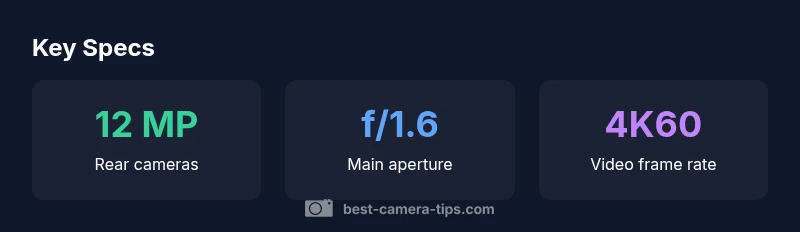
The iPhone 13 uses a dual 12 MP camera system (wide and ultra-wide) with the main lens featuring f/1.6 and sensor-shift optical stabilization. The ultra-wide adds a broader field of view with f/2.4, and the phone records 4K video up to 60fps along with Night mode and Cinematic video capabilities.
What are the camera specs on iphone 13?
What are the camera specs on iphone 13? According to Best Camera Tips, the iPhone 13 relies on a dual-camera system with two 12 MP sensors (wide and ultra-wide). The main wide lens uses an f/1.6 aperture and includes sensor-shift optical stabilization to help keep photos sharp in low light. The ultra-wide lens uses an f/2.4 aperture and a broader field of view for expansive landscapes. This configuration provides a solid baseline for everyday photography and for users transitioning from older iPhone models.
Beyond raw resolution, the practical impact lies in how the sensors and software work together. In daylight, dual 12 MP sensors deliver crisp details and pleasing color rendering. In challenging lighting, Night mode on both lenses helps recover detail you might miss with older setups, while Smart HDR 4 helps balance highlights and shadows across scenes.
Dual-camera system and image processing
The iPhone 13’s two 12 MP cameras give you versatility without adding physical complexity. The wide camera handles standard shots with rich color and contrast, while the ultra-wide captures broader scenes without stepping back. Apple’s image pipeline—combining Deep Fusion, Smart HDR 4, and machine learning—optimizes exposure, sharpness, and color tone in a way that many beginners miss when editing later.
Photographers who shoot landscapes or architecture will notice the benefit of the ultra-wide’s perspective, while daily snaps gain from the improved dynamic range and color accuracy achieved through the software stack. Practically, you get more usable frames straight from the camera, reducing post-processing time.
Sensor stabilization and low-light performance
Sensor-shift optical image stabilization (OIS) on the main camera is a key upgrade for low-light handheld photos and video. This technology moves the image sensor itself to compensate for camera shake, which can yield crisper photos in dim environments and steadier video when you’re moving.
Low-light performance is further enhanced by the camera’s processing stack, which blends data from multiple frames to preserve detail while minimizing noise. The result is more natural skin tones, better texture in shadows, and less grain in indoor settings such as restaurants or living rooms.
Zoom, HDR, and video capabilities
The iPhone 13 supports up to 2x optical zoom out, with digital zoom up to around 5x, giving you flexibility for close-ups without physically moving. Video capabilities include 4K recording at up to 60fps and 1080p at higher frame rates for slow-motion shots (up to 240fps). Dolby Vision HDR recording is supported, which preserves rich color and dynamic range when you edit in post.
In addition to standard video, Cinematic mode introduces rack focus and depth effects, enabling a professional-looking shift of focus between subjects. This feature is recorded at 1080p30, so expect a cinematic look even if you’re not shooting in the highest resolution.
Cinematic mode and computational photography
Cinematic mode leverages depth data and AI-assisted focusing to create film-like focus transitions. It’s designed for storytelling and can be an accessible entry point for aspiring filmmakers who want to experiment with focal shifts without a dedicated lens kit.
The computational photography stack—Smart HDR 4, Deep Fusion, and Photographic Styles—helps tailor color tones and exposure to your scene before you even start editing. While not a replacement for expert lighting, it’s a powerful helper for achieving professional-looking results quickly.
Front camera and selfies
The front-facing 12 MP TrueDepth camera supports Night mode and Deep Fusion, enabling better selfies in low light and improved texture in daylight. Video on the front camera includes 1080p recording with HDR support, making vlogging or video calls look more polished. The front camera’s capabilities are particularly useful for social media creators who want quick, high-quality content without external gear.
Practical tips for shooting with iPhone 13
- Use Night mode when lighting is low; hold steady or use a stable surface to maximize results.
- Try Portrait mode for subject isolation and creative lighting in portrait or macro-like shots.
- Experiment with the ultra-wide for environmental storytelling; be mindful of distortion at the edges.
- When recording video, enable Dolby Vision if you plan to edit later; it will preserve more dynamic range through color grading.
- Take advantage of Photographic Styles to create a consistent look across your gallery.
Practical considerations: what changed vs. earlier models
Compared with the iPhone 12, the iPhone 13 brings sensor-shift stabilization to the main camera, a brighter main aperture, and improvements in low-light processing. While both phones share dual 12 MP sensors, the software stack has matured to deliver more reliable color and exposure, particularly in fluctuating lighting. For users upgrading from a single-lens or older dual-camera iPhone, the 13’s improvements are most noticeable in everyday shooting and video stabilization.
Common pitfalls and how to avoid them
- Relying on automatic white balance in mixed lighting can produce colors that feel off; switch to a standard scene or adjust white balance in post.
- Shooting video in very low light without stabilization can cause jitter; use a tripod or stabilize with a surface.
- Overusing 4K can fill storage quickly; consider 1080p for longer clips and reserve 4K for key moments.
- Don’t forget to check Dolby Vision compatibility in editing software to preserve the full dynamic range.
iPhone 13 camera specs quick-reference
| Aspect | iPhone 13 spec | Notes | |
|---|---|---|---|
| Rear cameras | 12 MP wide + 12 MP ultra-wide | Dual-camera system with two sensors | |
| Main aperture | f/1.6 | Wide lens aperture | ],[ |
Common Questions
Does the iPhone 13 have a telephoto lens?
No. The iPhone 13 relies on a dual-camera system with wide and ultra-wide lenses, lacking a dedicated telephoto lens. You can achieve closer framing via digital zoom, but optical zoom options are limited to the two built-in sensors.
No telephoto lens is included; you’ll rely on the wide and ultra-wide for framing and digital zoom for closer crops.
Can the iPhone 13 record 4K Dolby Vision HDR video?
Yes. The iPhone 13 supports 4K video at up to 60fps with Dolby Vision HDR, enabling rich color and dynamic range for post-processing and sharing.
Yes—4K with Dolby Vision HDR supports rich color for your videos.
Is Night mode available on the ultra-wide camera?
Yes. Night mode is available on both rear lenses, including the ultra-wide, helping capture brighter, clearer images in low light.
Night mode works on both rear cameras, including the ultra-wide.
What is Cinematic mode and what resolution does it record at?
Cinematic mode creates depth effects and rack focus at 1080p with 30fps on iPhone 13, offering a film-like look for video storytelling.
Cinematic mode records at 1080p30 and adds depth effects for a cinematic feel.
Does the front camera support Night mode?
Yes, the front TrueDepth camera supports Night mode, enabling brighter selfies in low light as well as extended dynamic range when needed.
Yes, Night mode is available on the front camera for better selfies in low light.
How does the iPhone 13 compare to iPhone 12 in camera specs?
The iPhone 13 adds sensor-shift stabilization on the main camera and a brighter main aperture, improving low-light performance and stabilization over the iPhone 12, while keeping dual 12 MP sensors on both devices.
The iPhone 13 improves stabilization and low-light performance over the iPhone 12.
“The iPhone 13 delivers reliable everyday photography and video tools, powered by a mature computational stack. Mastering light and stabilization yields consistently strong results.”
The Essentials
- Master the dual-camera setup to cover diverse scenes
- Leverage sensor-shift stabilization for sharper handheld shots
- Record 4K60 video and explore Cinematic mode for storytelling
- Use Night mode on both lenses for better low-light results
- Front camera offers strong selfies with Night mode and 1080p video