Is a Fujifilm Camera Good? An In-Depth 2026 Review
A balanced, data-driven review of Fujifilm cameras, focusing on color science, ergonomics, lens ecosystem, video, and who should buy. Learn if a Fujifilm camera is right for your photography goals.


Is a Fujifilm camera good? In practical terms, yes for many photographers, especially if you value color rendering, classic handling, and a strong lens lineup. Fujifilm cameras deliver distinctive skin tones, film simulations, and robust ergonomics that suit documentary, street, and portrait work. They excel in stills, while video AF can trail newer rivals. Overall, they’re a solid choice for enthusiasts and pros who prioritize look, feel, and system versatility.
Is a Fujifilm camera good? A practical look at strengths and trade offs
Is a Fujifilm camera good? For many photographers the answer hinges on priorities: color rendering, controls, lens ecosystem, and how you plan to shoot. In this in depth review we evaluate Fuji's approach to stills, film simulations, and system reliability. Rather than chasing the latest pixel counts Fuji emphasizes look, handling and consistency across its line. You will see how these decisions affect real world shooting in street, portrait, landscapes and travel.
Fuji has cultivated a coherent ecosystem where bodies and lenses are designed to work together from day one. The result is a predictable, forgiving yet precise experience that rewards calm, deliberate shooting. For beginners the camera can feel busy at first but the dials and menus teach good habits; for seasoned shooters the deep RAW controls and firmware updates offer room to grow. In short, is a Fujifilm camera good? It often is when your priorities align with Fuji design philosophy.
Color science and film simulations
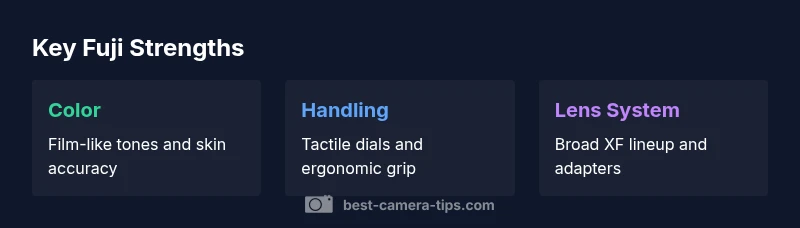
A central reason photographers choose Fujifilm is its distinctive color science. Skin tones tend to read warm yet natural, and the in camera film simulations provide mature starting points that mimic classic film stocks without post production guesswork. These simulations are not a gimmick; they reflect deliberate color pipelines and sensor processing choices. In daylight and studio lighting, Fuji images often feel cohesive straight from the camera, which reduces post processing time for many workflows.
Beyond skin tones, the film simulations cover a wide tonal range, from bright, airy looks to moody, high contrast styles. The ability to preview a handful of styles in camera helps photographers lock in a creative direction before the first shutter press. This is especially valuable for documentary and travel work where speed matters and producing a consistent aesthetic is a priority.
Ergonomics, handling, and user interface
Fuji cameras are famous for their tactile controls. Dials for shutter speed, ISO, and exposure compensation sit where photographers expect them, inviting a traditional feel that many modern mirrorless cameras lack. The menus are dense but logical, especially after spending time with the learning curve; most settings can be adjusted by feel rather than hunting through menus.
The ergonomics shine in longer shoots: the grip is solid, the body balance feels natural with larger lenses, and the electronic viewfinder offers quick refresh rates for accurate anticipation. The color navigation and film simulation toggles are well labeled, enabling quick stylistic shifts on the fly. The downside is that for absolute beginners the wealth of options can feel overwhelming until you build a mental map of your typical shooting scenarios.
Sensor technology and image quality
Fujifilm has consistently delivered strong sensor performance with good dynamic range and color rendering. While not the most pixel dense among competitors, Fuji emphasizes a balance between resolution, noise management, and color fidelity. In practice, RAW files benefit from the in camera processing options, and the color pipeline remains consistent across body generations. This means a predictable look when you upgrade bodies without having to relearn every setting.
Low light performance is competitive but not the market leader in some models; you’ll notice a drop in fine detail at higher ISOs compared with some rivals. However, this is offset by Fuji’s crisp JPEGs and robust RAW processing, which preserve tone and texture well. For landscape and portrait work, the sensor delivers pleasing detail with a pleasing, film-like quality across the tonal range.
Lens ecosystem and upgrade path
A major strength of Fujifilm is its lens ecosystem. The XF lens lineup is broad, with primes and zooms designed to complement the camera bodies’ color and rendering. The balance between image quality, size, and weight makes it practical to assemble a compact kit or a more expansive setup for travel and studio work. Because Fuji tends to harmonize body and lens design, upgrades feel cohesive rather than disruptive.
There is also a thriving ecosystem of third party lenses and adapters that extend versatility for specialized needs, such as macro work or ultra wide landscapes. If you shoot frequently with primes, the tactile pairing with Fuji bodies is particularly rewarding. The upgrade path often centers on stepping into stronger video features or heavier duty bodies, while preserving the same filmic look across generations.
Autofocus performance and real world testing
Autofocus performance has improved considerably across generations of Fuji bodies, with reliable tracking for street and action when subject motion is moderate. In practice you can count on accurate AF for typical scenes, though tracking fast, erratic subjects in low light can still pose challenges compared with some rivals that implement more aggressive AI tracking.
Face and eye detection are solid, especially for portrait work, and AF-S/AF-C modes can be tuned for different shooting contexts. Real world tests show consistent focus performance with a wide range of Fuji lenses, especially the fast f/1.4 to f/2.8 primes that provide shallow depth of field without sacrificing optical quality. If you primarily shoot action or sports, you may want to consider how Fuji models compare to other brands in your price segment.
Video capabilities and limits
Video is a strong suit for many Fujifilm bodies, with 4K capture and high bitrate options that support good detail and color. However, autofocus performance during continuous video can vary by model and lighting conditions, and some bodies lag behind competitors with more aggressive continual AF during fast action. Color and skin tones remain pleasing in video, especially if you leverage the film simulations or custom LUTs.
Video enthusiasts should check the specific body’s rolling shutter, heat management, and bitrate ceilings before purchase. In general Fuji offers solid options for creators who want a stills first camera that doubles effectively as a capable video tool, rather than an ultimate video machine. Always align your expectations with the model you choose and your typical shooting scenarios.
Build quality, durability, and field usability
Build quality on Fujifilm cameras tends toward a sturdy, tactile feel with metal framing and weather sealing on higher end models. The controls are designed for frequent use in challenging conditions, which makes Fuji bodies appealing for travel and street work where reliability matters. Battery life is adequate for a full day of shooting under normal conditions, though intensive video capture or continuous heavy use can require spares.
Field usability benefits from a compact footprint combined with durable construction. Weight distribution is generally comfortable with most top tier lenses, though some wider prime lenses can add noticeable heft. For wildlife or sports shooters, verify the specific body’s AF performance and battery life under your typical use case before committing to a long run in the field.
Medium format option: when it makes sense to consider GFX
Fujifilm also offers a medium format option through the GFX line, which targets photographers who need extremely high resolution and dynamic range for large prints and studio work. The GFX system reflects a different balance of cost, size, and image quality. If your work demands exceptionally rich files, gorgeous tonality, and a willingness to invest in glass and bodies, the GFX route can be compelling.
In day to day shooting the GFX is less practical for run-and-gun street or travel work due to size and cost, but in controlled environments like fashion photography or fine art, it can deliver breathtaking results. The decision typically hinges on your need for image latitude and output scale rather than a simple preference for a smaller system.
How Fujifilm compares to peers in 2026
When weighing Fujifilm against competing mirrorless brands, a few themes emerge. Fuji’s color science and film simulations remain standout strengths that many shooters prize for consistent, creative output straight from the camera. In autofocus and video, some other brands may offer faster performance or more aggressive subject tracking, especially for sports and wildlife. Yet many users prefer Fuji for its tactile experience and the aesthetic it yields.
Practical considerations like lens availability in certain focal lengths, support ecosystems, and service networks also factor into the decision. If you value a cohesive, aesthetically driven system with a strong emphasis on color and handling, Fuji often edges ahead. If your priority is ultimate video autofocus or cutting edge speed, you may want to review specific rival models against the Fuji line. The best choice depends on your shooting style and long term goals.
Practical setup and workflow tips for new Fujifilm users
Getting up to speed with a Fujifilm camera is easier when you approach setup with a plan. Start by selecting a film simulation that matches your preferred look and map it to your most used shooting scenarios. Use the advanced RAW processing options to fine tune dynamic range and color; save these as presets for quick recall. Create custom button mappings so your most-used functions are accessible without menu diving.
Organize your lens kit around your most common subjects. Street work benefits from compact primes in the 23–35 mm range, while portraits often demand faster primes with shallow depth of field. Keep test shots of the same scene across different simulations to understand how your chosen look translates across lighting conditions. Finally, maintain consistent white balance practices to preserve color integrity when moving between environments.
Who should consider a Fujifilm camera and how to buy
If your photography emphasizes color aesthetics, documentary style, cataloging, or portrait work where skin tones matter, a Fujifilm camera is worth serious consideration. Enthusiasts who enjoy a hands on shooting experience and a broad lens ecosystem will likely feel at home with Fuji gear. For buyers with a primary focus on ultra fast autofocus or cutting edge video features, compare current Fuji bodies against competitors to ensure your needs are met.
When purchasing, assess both body and lens options together. Look for a kit that minimizes total weight while delivering your preferred focal length coverage. Consider rental or borrow programs to test a body before committing, especially if you are buying into the GFX range or upgrading to a newer model with improved autofocus or video capabilities.
Positives
- Excellent color science and film simulations
- Ergonomic, tactile controls with fast access to core functions
- Strong lens ecosystem and consistent image quality
- Solid JPEG/RAW processing with great post flexibility
Downsides
- Video autofocus can lag behind top rivals on some models
- Battery life varies by usage and model
- Higher price point for newer bodies and professional-grade lenses
- Fewer third-party lens options compared to some competitors
Best overall pick for color-conscious stills shooters who value handling
Fuji’s color rendering and tactile experience make it a premier choice for photographers who want a distinct look straight from the camera. If your priority is video AF leadership or ultra high frame rates, some rivals may offer advantages. Overall, Fuji remains a top option for stills driven workflows and creative control.
Common Questions
What makes Fujifilm color science stand out compared to other brands?
Fuji’s color pipeline emphasizes natural skin tones and film-like tonal transitions. The in camera simulations reproduce a range of film aesthetics, allowing photographers to craft a distinctive look without heavy post work. While color is subjective, the consistency across Fuji bodies is a strong selling point.
Fuji colors are known for skin tones and film inspired looks that stay consistent across cameras.
Are Fujifilm cameras easy for beginners to learn?
Yes, especially if you enjoy a hands on workflow. The dials and tactile controls encourage learning shooting fundamentals, while tutorials and presets help speed up learning. Some features can feel overwhelming at first; starting with a simplified setup helps.
Yes. Fuji gear is great for hands-on learners, just take time to set up defaults first.
Which Fujifilm models are best for video in 2026?
Many Fuji bodies support 4K and advanced color options, but autofocus behavior and heat management vary. If video is essential, compare models in your budget that emphasize video features and check user reviews for long recording sessions.
Check the latest Fuji models for video features and test AF in real world clips.
Do third party lenses work well with Fujifilm cameras?
Third party options are available but the strongest glass typically comes from Fujifilm itself. Adapter options exist, expanding the range, but may affect autofocus speed and image quality depending on the lens.
Adapters open more lens choices, but native Fuji glass usually delivers best results.
Is Fujifilm better for stills than for sports or wildlife?
Fuji stills performance is strong, particularly for portrait and street work. For fast sports or wildlife, you may encounter stiffer AF competition, so verify the specific model’s tracking capabilities against your subjects.
Fuji excels at stills; for fast action, check the model’s AF and burst settings.
What should I buy first if I want to start with Fujifilm?
Start with a body that fits your kit and a couple of versatile lenses. A midrange body with a standard zoom or 35mm prime gives you a practical start while you evaluate color and handling preferences.
Get a balanced body and a versatile lens to begin exploring Fuji’s look and feel.
The Essentials
- Favor Fuji for color-first aesthetics and film simulations
- Leverage the lens lineup to tailor your kit
- Expect strong stills performance with solid RAW processing
- Video AF can vary by model; confirm spec before buying
- Invest in a test drive to compare handling with rivals
- Consider GFX only if you need very high resolution and tonality