Difference Between a Mirrorless Camera and a DSLR: An In-Depth Comparison
A rigorous, analytical comparison of mirrorless cameras and DSLRs, covering sensor tech, autofocus, lenses, ergonomics, battery life, video, and system ecosystems. Learn how to choose the right system for your photography style with insights from Best Camera Tips.


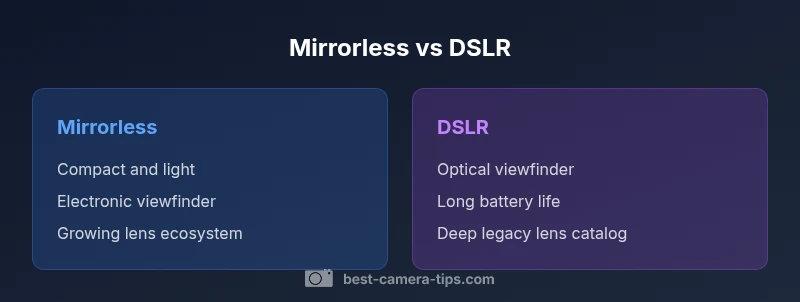
Mirrorless cameras are generally lighter with electronic viewfinders and advanced video features, while DSLRs typically offer longer battery life and a robust optical viewfinder with a vast legacy lens catalog. The best pick hinges on your priorities: portability and modern autofocus for mirrorless, or battery longevity and traditional ergonomics for DSLR. Best Camera Tips suggests evaluating lens strategy and shooting needs before deciding.
Core Differences at a Glance
For many photographers, the question that drives early purchases is the difference between a mirrorless camera and a DSLR. In practical terms, the choice boils down to portability, viewfinding experience, and how you plan to work day-to-day. According to Best Camera Tips, mirrorless bodies are generally smaller and lighter, with electronic viewfinders that preview exposure and color in real time. DSLRs rely on an optical viewfinder, a mirror, and a separate phase-detect system, which some shooters still prefer for its direct, lag-free optical feel. This quick snapshot helps you map your priorities: if you want a compact setup with silent operation and a modern lens ecosystem, mirrorless is typically the winner; if you value battery life, rugged handling, and an enormous legacy lens catalog, a DSLR remains compelling. The landscape is not binary, though: many brands now produce high-end mirrorless systems that rival or surpass their DSLR counterparts in performance while expanding lens portfolios. The key is to align your choice with how you shoot most often—stills, video, travel, sports, or event photography—rather than chasing the latest buzz. Best Camera Tips emphasizes that the best camera for you is the one that fits your workflow, budget, and long-term goals rather than the trend alone.
Sensor Tech, Autofocus, and Real-Time Feedback
Sensor design and autofocus systems are the core differentiators in modern cameras. Mirrorless bodies rely on sensors that handle both imaging and autofocus duties, often employing on-sensor phase-detection and contrast-detection that enables rapid subject tracking and face/eye detection. This results in real-time exposure preview and immediate feedback, which you can see through the electronic viewfinder or LCD. DSLRs, by contrast, traditionally use a separate autofocus module that works with an optical viewfinder; when you compose through the viewfinder, you’re effectively seeing the scene through a direct optical path. In practice, mirrorless AF tends to shine for moving subjects and live-view/video work, while DSLRs can feel more intuitive for photographers who prefer an optical moment-to-moment connection. As the ecosystems mature, both options improve in live view and video performance, but the unfussy optical path of a DSLR remains appealing to many long-time shooters who prize simplicity and a familiar manual focus experience. The difference between a mirrorless camera and a DSLR is evolving as processing power and AI-driven features advance across brands.
Lenses, Adapters, and the Future-Proof Path
The lens ecosystem is a major factor in the decision. Mirrorless systems are rapidly expanding native lens catalogs and offer compact designs that maximize sensor performance. For older lenses, adapters unlock access to a broader range of optics, though performance can vary with autofocus speed and metering accuracy. DSLRs carry the advantage of a long-established lens legacy; enormous catalogs exist for many brands, and adapters can still enable compatibility with older glass. If you plan to migrate later, check adapter availability and compatibility for your primary lenses. Keep in mind that future-proofing often favors mirrorless in terms of ongoing firmware updates and new native lens developments, whereas DSLRs may see slower growth in new lens introductions as brands shift focus to mirrorless platforms.
Size, Weight, and Ergonomic Considerations
Form factor matters in daily use. Mirrorless cameras typically offer smaller bodies and lighter weights, which can reduce fatigue during long shoots or travel. Ergonomics vary by model, and many brands aim to balance compactness with comfortable handholds. DSLRs usually deliver a larger grip and a more traditional control layout, which many practitioners find reassuring for prolonged shooting sessions, especially when using long telephoto lenses. The weight and balance of a system influence how you pair lenses and how you move around a scene. If you shoot handheld in tight spaces or hike with gear, mirrorless often wins on portability; if you shoot from a vehicle or require a sturdy, time-tested grip, a DSLR may feel more predictable.
Battery Life and Reliability in Day-to-Day Use
Battery life is a practical concern that affects fieldwork. Mirrorless systems often consume more power because the electronic viewfinder and live previews are active throughout shooting. However, manufacturers continually improve efficiency, and newer models frequently offer larger batteries and smarter power management. DSLRs have historically delivered strong endurance thanks to simpler subsystems and optical viewfinders that don’t drain power when the screen is idle. If you travel or shoot without frequent charging opportunities, this difference can be meaningful. Reliability also includes weather sealing, build quality, and after-sales support, all of which vary by brand and model. In the end, the best choice aligns with how often you need to shoot without interruptions and how comfortable you are managing battery life with charging plans and spares.
Video Capabilities, Live View, and Workflow
Video performance is a cornerstone for many modern cameras. Mirrorless cameras widely lead in video-first workflows, offering advanced codecs, high frame rate options, fast AF during recording, and streamlined live view workflows. DSLRs have improved in video over the years, but some models lag behind mirrorless in continuous autofocus during video or in the depth of field control available in live view. For hybrid shooters who need strong stills and video, mirrorless systems tend to be the more versatile option, while DSLR users may still enjoy robust video capabilities in specific models or price bands. The difference between a mirrorless camera and a DSLR is most evident when you evaluate your video needs, mic input options, heat management, and post-processing workflow.
System Ecosystems, Investment, and Long-Term Planning
Picking a system isn’t only about the current camera body; it’s about the ecosystem and future compatibility. Mirrorless platforms typically push more aggressive upgrade paths, with ongoing firmware updates and new lens lines that accelerate feature parity with dedicated video tools and AI-based autofocus. DSLRs provide stability, long-lived lens catalogs, and a straightforward upgrade path if you already own a large collection of native glass. Best Camera Tips recommends mapping out your lens strategy and considering whether you value rapid access to new glass or the certainty of a mature lens catalog. Your long-term plan—whether you want to expand into cinema-style video, wildlife work, or studio portraiture—will guide the decision.
Practical Buying Scenarios: A Decision Framework
To apply the difference between a mirrorless camera and a DSLR to real-world purchases, start with your base use case. If you travel light, shoot a lot of video, and value rapid autofocus with cutting-edge technology, mirrorless is typically the stronger fit. If you prioritize the longest possible battery life, optical viewfinder familiarity, and a vast used lens market, a DSLR may deliver the most predictable value for your budget. Consider also the total cost of ownership, including adapters, spare batteries, and service plans. By aligning your choice with the way you shoot most often—sports, portraits, travel, or documentary work—you’ll reduce the risk of buyer’s remorse and maximize your creative potential.
Comparison
| Feature | Mirrorless camera | DSLR |
|---|---|---|
| Size & weight | Generally lighter and more compact bodies | Typically larger and heavier, with a bulkier grip |
| Viewfinder experience | Electronic viewfinder with real-time exposure preview | Optical viewfinder for direct scene viewing |
| Autofocus performance | On-sensor AF with rapid subject tracking | Dedicated AF module; robust in good light; strong through viewfinder |
| Lens ecosystem | Growing native lens lines; easy to adapt third-party glass | Long-standing lens catalog; widespread compatibility |
| Battery life | Power usage from EVF/LCD can reduce life; improving in newer models | Often longer battery life due to simpler live view needs |
| Video capabilities | Strong video features, codecs, and autofocus in many models | Solid video, but sometimes lag behind mirrorless offerings |
| Pricing & value | Price varies; entry models often competitive; resale value evolving | Typically strong used-market value; initial costs can be higher |
| Future-proofing | Active development in native glass and firmware upgrades | Long-term system stability with legacy glass support |
Positives
- Smaller, lighter bodies improve portability
- Growing native lens ecosystems and adapters
- Advanced live view and video features in mirrorless
- Real-time exposure preview via electronic viewfinder
Downsides
- Battery life can be lower and relies on charging routines
- Higher upfront costs for some mirrorless systems
- Adapter use for legacy lenses adds complexity and cost
Mirrorless generally offers modern features and portability; DSLR remains attractive for battery life and legacy glass
If portability and cutting-edge autofocus matter most, choose mirrorless. If you value long battery life and a vast lens catalog, a DSLR may be the better fit, especially on a tighter budget.
Common Questions
What is the primary difference between mirrorless cameras and DSLRs?
The primary difference is in how the view is composed and how autofocus is achieved: mirrorless cameras use an electronic viewfinder and autofocus on the sensor, while DSLRs use an optical viewfinder and a separate autofocus module. This affects real-time feedback, battery use, and lens ecosystems.
In short, mirrorless uses an electronic viewfinder and sensor-based focus; DSLR uses an optical viewfinder and a separate AF module.
Which system is better for beginners, mirrorless or DSLR?
Both can serve beginners well. Mirrorless systems often provide easier live feedback and compact gear, while DSLRs offer a large legacy lens catalog and robust, familiar ergonomics. Your choice should hinge on budget, portability, and planned lens strategy.
Both work for beginners, but think about portability and the lenses you want before deciding.
How does autofocus performance compare in practice?
Mirrorless autofocus tends to be fast and reliable, especially for moving subjects and video, due to on-sensor detection and face/eye tracking. DSLRs can be very dependable in good light, with a direct optical path that some photographers still prefer for feel and response.
Mirrorless AF is quick and smart, while DSLRs stay solid in bright light for a traditional feel.
What about battery life and reliability for field use?
DSLRs generally offer longer battery life in many setups due to their simpler imaging path and absence of continuous EVF use. Mirrorless cameras improve with larger batteries and power-saving modes, but real-world endurance varies by model and shooting style.
DSLRs often last longer on a single charge; mirrorless models are getting better with newer batteries.
Will mirrorless systems hold their value long-term?
Mirrorless systems are widely viewed as the wave of the future, with ongoing updates and new glass. DSLRs offer reliability and legacy lenses, which can retain value, but brand momentum is shifting toward mirrorless in most markets.
Mirrorless is the future, but DSLRs still hold value if you already own glass.
Do I need adapters to use older lenses on mirrorless bodies?
Adapters exist to use legacy DSLR lenses on mirrorless bodies, expanding options without buying new glass. Performance varies by adapter and camera, particularly for autofocus and metering, so test compatibility before committing.
Adapters let you use old lenses, but check autofocus and metering first.
The Essentials
- Prioritize portability for travel or street shooting
- Consider your lens collection and future upgrades
- Weigh battery life against EVF reliance
- Match your choice to video vs stills emphasis
- Evaluate ecosystem support before buying