How to Prevent Camera Lens Fogging: A Practical Guide
Learn proven methods to prevent camera lens fogging in humid, cold, and changing environments. This step-by-step guide covers environment prep, anti-fog options, and gear handling with field-tested strategies from Best Camera Tips.


Learn the step-by-step methods to prevent camera lens fogging in challenging conditions. This guide covers environment prep, anti-fog options, and camera handling to keep your shots clear. Master essential techniques for humid, cold, or rapidly changing weather with practical, field-tested tips, including pre-shoot routines and quick-fix wipes. The core idea is how to prevent camera lens from fogging in real-world shoots.
What causes lens fogging and why it matters
Fogging occurs when warm, moist air touches a cooler lens surface, causing condensation on the front element. In photography, this can ruin shots, delay shoots, and waste time adjusting gear. Understanding the causes helps you choose the right prevention techniques. According to Best Camera Tips, fogging is a common hurdle for photographers moving between climates. Temperature differentials, ambient humidity, breath moisture, and camera body warmth all contribute. The better you anticipate these factors, the more reliable your results will be. This block introduces a practical, system-wide approach to preventing fog, not a single trick. The phrase how to prevent camera lens from fogging anchors the topic and reminds you that prevention is a routine, not a one-off fix.
Core strategies for minimizing fog throughout a shoot
Prevention rests on three pillars: environment, gear, and workflow. In humid environments, manage ambient moisture; in cold weather, reduce rapid temperature changes. Use a lens hood and keep your camera tucked close to your body when moving between rooms to minimize condensation buildup. Prepare a quick check routine before every shot: inspect the lens surface, confirm there is no visible condensation, and ensure anti-fog measures are ready. By planning ahead, you’ll cut the chances of fog appearing during critical moments. This section also introduces related terms like anti-fog coatings, silica desiccants, and pre-warming methods that matter for long-term success.
Essential tools and products
A practical fog-prevention kit contains the following items: a microfiber cleaning cloth, an anti-fog spray or gel suitable for camera lenses, silica gel desiccant packs, a lens hood or protective cap, and a dedicated storage pouch. Optional but helpful accessories include small hand warmers for extremely cold shoots and a microfibre brush for stubborn dust. Choose products that are safe for lens coatings and follow the manufacturer’s instructions. Keep supplies organized so you can deploy them quickly in the field. Quick access to a clean surface and drying cloth makes a big difference when you’re scrambling to clear a foggy lens.
Techniques: cleaning, coating, and pre-warming
Begin with a gentle wipe using a dry microfiber cloth to remove dust and moisture from the front element. If condensation is visible, use a lens tissue or microfiber pad dampened lightly with a dedicated lens cleaner, then buff dry with a clean cloth. Apply a small amount of anti-fog solution following the product instructions, and let it dry to a thin film. Pre-warm the lens by holding it close to your body or using a warm breath technique only if safe for your coatings; never apply heat directly. When moving between climates, acclimate gradually and avoid sudden exposure to steam or hot air.
Field-tested workflows for common shooting scenarios
Outdoor winter shoots benefit from a pre-warm routine and a quick surface wipe before each take. In humid coastal environments, keep the lens hood in place and store the camera in a dry bag when not in use. Indoor studio sessions require controlled humidity and a clear separation between camera and humid air. For travel, pack desiccants in your camera bag and check the pack’s seal before opening at the destination. These workflows minimize condensation and help you stay ready for the moment.
Maintenance and storage to prevent fog long-term
Regular maintenance reduces fog risk over time. After a shoot, clean all surfaces, reapply anti-fog if necessary, and store gear in a dry, dust-free environment. Use desiccant packs in your camera bag and cargo cases to absorb moisture, and keep lens caps on when the camera isn’t in use. Periodically inspect coatings for wear and replace any compromised anti-fog products. By maintaining your kit and practicing consistent habits, you’ll reduce fog risk across seasons and locations.
Tools & Materials
- Microfiber cleaning cloth(Lint-free cloth; use one dedicated to camera gear)
- Anti-fog spray or gel for camera lenses(Choose a product proven safe for optical coatings and follow directions)
- Silica gel desiccant packs(Place in camera bag to absorb humidity; replace as needed)
- Lens hood or protective cap(Prevents direct exposure to humid air and reduces fog risk)
- Lens cleaning solution (optional, dedicated to lenses)(If using spray, ensure it’s compatible with coatings)
- Dry storage bag or pouch(Keep gear dry between shoots)
Steps
Estimated time: 15-25 minutes
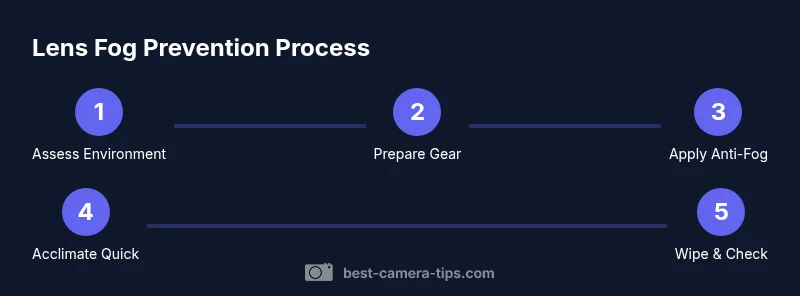
- 1
Prepare the environment and gear
Assess humidity, temperature, and your surroundings. Gather your anti-fog kit and camera, ensuring you have a clean surface nearby. This pre-check reduces last-minute fog risks during quick shot changes.
Tip: Do a quick lens check before leaving the car or studio. - 2
Clean the lens surface
Wipe the front element with a microfiber cloth in gentle circular motions to remove condensation and dust. If needed, follow with a dry pad or cleaner designed for lenses and buff dry.
Tip: Dust on the lens can seed fog; remove first. - 3
Apply anti-fog treatment
Apply a small amount of anti-fog product to the lens according to directions; spread evenly and let dry to a thin film. Avoid pooling product near edges where coatings are thin.
Tip: Test on a small area first to ensure coatings aren't affected. - 4
Warm the lens and acclimate
Hold the camera close to your body or use a gentle warming method to acclimate to upcoming exposure to cooler air. Do not apply direct heat to the lens or coatings.
Tip: Avoid direct heat; gradual acclimation reduces condensation risk. - 5
Manage airflow and condensation during shots
Keep the lens hood in place; minimize exposure to steam and abrupt temperature shifts. If fog begins to form, pause and wipe the surface quickly, then continue with a shorter take.
Tip: If you see fog forming again, stop and dry the lens quickly. - 6
Post-shoot care and storage
Dry all surfaces, reapply anti-fog if needed, and store gear in a dry bag with desiccants. Inspect coatings for wear and replace anti-fog products as required.
Tip: Re-check storage seals before long trips.
Common Questions
What causes camera lens fogging?
Fogging happens when moist air condenses on a cooler lens surface due to temperature and humidity changes. Proper preparation and anti-fog protocols reduce the risk.
Fog forms when humid air meets a cold lens, especially with rapid temperature changes.
Does breathing on the lens help?
Breathing onto the lens adds moisture and is not a reliable or safe solution. It can also affect coatings over time.
Breathing on the lens is not a good long-term solution.
Are anti-fog sprays safe for camera lenses?
Most anti-fog products designed for lenses are safe if used as directed. Avoid household products that aren’t formulated for optics.
Yes, when used as directed.
Will fogging occur when moving from air-conditioned spaces to outdoors?
Rapid changes in temperature and humidity can cause condensation. Acclimate gear gradually and keep lenses dry when transitioning.
Yes, acclimate gear slowly to avoid fog.
Can fogging be prevented in extreme cold or hot environments?
Pre-warming routines, humidity control, and anti-fog measures help, but nothing is foolproof in extreme conditions.
It helps, but it isn’t foolproof.
How often should I reapply anti-fog solutions?
Reapply per product directions, typically after cleaning or prolonged use; test on field shots before critical moments.
Follow the product directions and test beforehand.
Watch Video
The Essentials
- Plan ahead to minimize fog risk before shoots
- Use vetted anti-fog products safe for lenses
- Acclimate gear gradually to temperature changes
- Store gear properly with desiccants after use