How Much Does Camera Repair Cost? A Practical Guide
Explore how to estimate camera repair costs, from diagnostic fees to parts and labor. Learn factors that influence pricing, typical ranges, and strategies to get accurate quotes before authorizing any work.


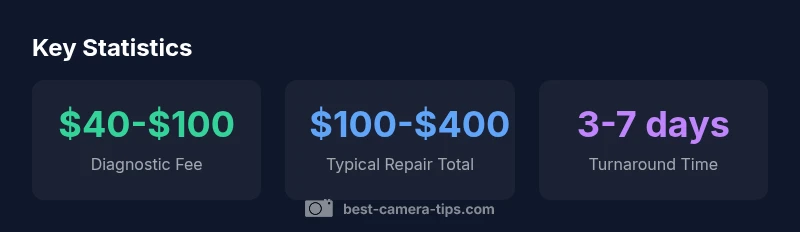
How much does camera repair cost? Expect a broad range that reflects the issue, model, and service location. Diagnostic fees plus parts and labor usually push totals into the low hundreds for simple fixes, while major electronics or mechanical failures commonly reach higher amounts. Always ask for a written, itemized quote before any repair to avoid surprises.
The baseline: what how much does camera repair cost means in practice
When you ask how much does camera repair cost, you’re asking about a moving target. Costs vary by issue, model, and service location. According to Best Camera Tips, the total you pay includes diagnostic fees, parts, labor, and any shipping if you use an out-of-warranty shop. For many hobbyist cameras, simple fixes like cleaning or sensor recalibration cost in the lower end, while major mechanical or electronics failures push totals higher. In 2026, a typical repair bill often lands in a broad band rather than a fixed number. This guide uses ranges to help you plan and compare quotes rather than chase a single price to the penny. The goal is to empower you to understand the components of price and to estimate a budget before you authorize work.
Common repair categories and typical price ranges
Cameras present in all shapes and sizes, and so do repair costs. Here are the broad categories you’ll encounter, with realistic ranges to help you gauge quotes:
- Simple cleaning or adjustment: $20-$100
- Sensor cleaning, autofocus motor, or minor realignment: $100-$250
- Shutter or mirror assembly work: $200-$600
- LCD/viewfinder replacement or display-related fixes: $150-$350
- PCB/electronics or firmware issues: $300-$700
- Lens repair (on-body lenses) sometimes billed separately: $100-$600
These figures reflect typical ranges for consumer cameras and align with industry guidance in 2026. When a repair involves multiple subsystems, the price compounds. Always seek an itemized quote that separates diagnostic fees, parts, and labor so you can compare apples to apples across shops.
How model, age, and parts affect cost
Your camera’s type and age are major price drivers. A current mirrorless camera with a modular sensor might cost more to replace than an older DSLR’s shutter mechanism. While higher-end bodies require specialized parts, budget models may use more generic components that lower costs. The same category of repair can vary by brand and model because certain parts are rarer or require more precise calibration. In practice, expect higher ranges for newer or high-resolution sensors and lower ranges for routine wear-and-tear tasks. Best Camera Tips notes that the same repair on one model could be twice as expensive on another due to part availability and technician time.
Diagnostic fees, warranties, and hidden costs
Many shops charge a diagnostic fee to assess the problem. Some waivе this fee if you approve the repair, but others keep it as a non-refundable charge. Shipping, handling, and rush-service fees are other potential add-ons. Warranties on parts and labor vary; some shops offer 90 days, while others provide longer coverage on certain components. Always ask what’s included in the warranty, what voids the warranty, and whether removal or disposal fees apply if a part is replaced. These hidden costs can add up quickly, and a clear written quote helps prevent sticker shock.
DIY vs professional repair: when DIY is safer
DIY repairs on cameras can be tempting, especially for simple tasks like lens resealing or minor sensor dust removal. However, many camera repairs require specialized tools, calibration equipment, and cleanroom-like environments to avoid introducing further damage. When you’re dealing with delicate sensors, high-precision shutters, or electronics, professional repair is usually safer and often more cost-efficient in the long run. If you’re considering DIY, weigh the risk of accidental damage against the potential savings and consider consulting a professional for an initial assessment.
How to get an accurate quote: questions to ask
To avoid surprises, prepare a short list of questions before requesting quotes. Ask for:
- A complete itemized estimate with diagnostic fees, parts, and labor
- Whether the quote includes shipping and tax
- Parts brands and warranty terms
- Estimated turnaround time and express-service options
- Whether the repair scope could change and how you’ll be notified
If you suspect your camera may require multiple repairs, request a staged approach with a quote for each stage. This lets you approve only the work you’re comfortable with and compare shop pricing on a like-for-like basis.
Quick decision framework: repair vs replacement
Use a simple framework: if the repair cost approaches or exceeds 60-70% of the camera’s current market value, replacement may be more economical in the long run. Consider sentimental value, the availability of parts, and whether a newer model would offer meaningful improvements (image quality, autofocus, durability). For older or niche models, factor in repair feasibility and future support. Best Camera Tips suggests running a cost-benefit check that includes expected lifespan after repair and potential resale value.
Choosing a repair shop: red flags to watch for
Choose shops with clear policy documentation, transparent pricing, and verified warranties. Avoid shops that pressure you into quick decisions or refuse to provide a written estimate. Look for technicians with camera-specific certifications, and check for recent customer reviews that mention warranty satisfaction and turnaround accuracy. Avoid shops with vague quotes or unclear part sourcing policies. A well-structured, reputable shop will make the pricing and process easy to understand.
What happens after repair: testing and return
After repair, expect functional testing to confirm the fix, and a review of the camera’s core performance (shutter, autofocus, sensor cleanliness). Some shops provide a short warranty on the repair, along with a service report detailing replaced parts and calibration data. If you notice residual issues, contact the shop promptly while the repair warranty is still active. Proper testing helps prevent repetitive trips for the same problem and protects your investment.
Estimated repair cost ranges by category
| Category | Typical Range (USD) | Notes |
|---|---|---|
| Simple cleaning/adjustment | 20-100 | Sensor cleaning or minor focus tweaks |
| Sensor repair/ replacement | 100-350 | Depends on sensor type and model |
| Shutter/mirror assembly | 200-600 | Requires precision and calibration |
| PCB/electronics repair | 300-700 | Board-level components and diagnostics |
| LCD/viewfinder replacement | 150-350 | Display issues common on older models |
| Lens repair (body). | 100-600 | Separate from lens element replacement |
Common Questions
What factors influence camera repair cost?
Repair cost is driven by the problem type, camera model, required parts, labor time, and diagnostic charges. Availability of parts and the shop’s pricing can also impact total. Getting an itemized quote helps you compare accurately.
Repair costs depend on the issue, model, and parts needed. Always ask for an itemized quote before any work.
Is it cheaper to repair or replace a camera?
If repair costs are significantly lower than the camera’s current value and you expect continued use, repair is reasonable. For high-value cameras or when multiple parts fail, replacement may be more economical in the long term.
If the repair is cheaper than buying a similar used camera and you’ll get more life out of it, repair is sensible; otherwise consider replacement.
Do diagnostic fees count toward the repair cost?
Most shops charge a diagnostic fee to identify the issue. Some waive it if you proceed with the repair, while others apply it regardless. Always confirm before service.
Diagnostics can be charged separately, sometimes waived if you proceed with repair.
How long does a typical camera repair take?
Typical repairs take about 3-7 days, plus shipping if needed. Complex repairs can take longer, especially if parts must be acquired.
Most repairs take a few days, but shipping and back-ordered parts can extend this.
Should I ask for a written quote?
Yes. A written quote protects you from surprises and provides a basis for comparing shops. Include part numbers, labor rates, and the scope of work.
Always get a written quote with a detailed scope before moving forward.
What should I look for in a repair shop?
Look for clear pricing, warranties on parts and labor, transparent source of parts, and customer reviews. Certifications from camera manufacturers or repair associations can also indicate reliability.
Choose shops with clear policies, warranties, and good customer feedback.
“Clear, written estimates and a transparent scope of work prevent costly surprises. Always compare quotes from reputable shops and ask about parts and warranty coverage.”
The Essentials
- Ask for an itemized, written quote before work starts
- Expect diagnostic fees and variable parts costs
- Major repairs can approach the camera’s value; weigh replacement
- Get warranty details on parts and labor
- Choose shops with clear policies and transparent pricing