How Much Does Camera Film Cost? A Practical 2026 Guide
Discover the true cost of shooting with film in 2026. This guide breaks down film prices, development, scanning, and budgeting for beginners and enthusiasts.


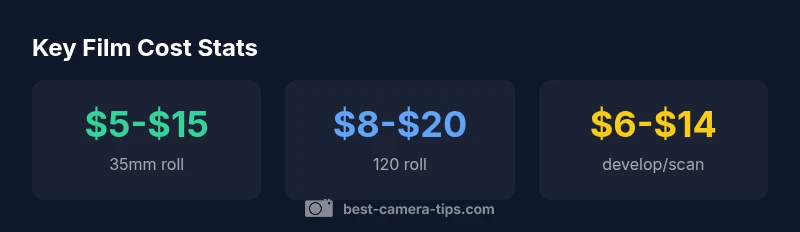
If you’re asking how much does camera film cost, the answer depends on format, brand, and purchasing origin. Typical 35mm color film rolls run about $5–$15 per roll, while 120 film often costs $8–$20. Add developing and scanning ($6–$14) to estimate per-roll expenses around $15–$40, depending on lab and options.
Quick reality check: what counts in the price
In photography, the sticker price on a roll of film is just the tip of the iceberg. According to Best Camera Tips, the final cost of shooting on film includes the film format you choose, the brand and speed (ISO), where you buy it (retail shop vs. online), and any extras like special finishes or color reversal processing. A simple 35mm color negative roll can be one of the cheaper options, but premium brands and specialty stocks can push the price higher. The cost of developing and scanning further colors the total per-roll expense. When budgeting, most photographers consider the per-roll price plus the lab services, with a rough expectation that development can add roughly the same amount as the film cost per roll.
How format choices drive your costs
Film costs are highly format-dependent. 35mm color negative film remains the most common and often the most affordable in regular batches. 120 (medium format) film tends to cost more per roll due to larger negatives and production costs. Instant film (such as Polaroid-type stocks) is typically the most expensive per frame, but it yields immediate prints that some shooters value for workflow and creative reasons. Black-and-white options, slide film, and specialty stocks (like high-ISO or unique tones) can push costs further. When planning, consider how many shots you expect per roll and the post-processing you’re comfortable with, because these choices determine your per-shot cost as well as your creative outcomes.
Where to buy film and what affects price
Retail channels matter for price. Online retailers often offer bulk pricing, longer expiry windows, and occasional mega-sales, while local camera shops may stock niche brands with higher markups but faster availability. Expiry dates can influence perceived value, but many photographers report surprisingly good results from slightly expired stock if stored properly. Geographic location also plays a role: in some regions, import duties and shipping can add to the per-roll price. Best Camera Tips recommends comparing brands, reading recent user reviews, and calculating total per-roll cost (film, development, and scanning) rather than relying on the label price alone.
Development and scanning: the hidden costs
Developing film is often the single largest added cost after the film itself. Lab prices vary by region, speed, and the service level (standard development, push processing, or cross-processing). Scanning can add another layer: scanning at 300-4000 dpi and delivering digital files fluctuates by lab quality and file formats. The total per-roll cost can easily double when you factor in professional development and high-resolution scanning. If you shoot a lot or value archival quality, you may want to budget for a mix of lab services and occasional home processing, where feasible and safe.
How to budget effectively for film shooting
A practical budgeting approach starts with a fixed-per-roll estimate that includes film, development, and scanning. Track your actual spend against this estimate for several rolls to refine your numbers. Consider buying film in bulk to reduce unit costs, but be mindful of expiry and storage conditions. Allocate separate funds for special runs (color reversal, high-ISO stocks, or vintage film bodies) that you plan to shoot infrequently. Finally, factor in a small contingency for price spikes caused by supply chain shifts or seasonal promotions. Clear budgeting helps you avoid sticker-shock and keeps your creative projects on track.
Real-world cost scenarios and examples
Scenario A: Casual shooter using 1 roll per month. If you shoot 12 rolls a year, you might budget roughly $180–$520 for film alone, with development and scanning adding another $90–$168, depending on lab choices. Scenario B: Student or project work with 3 rolls per month could push annual costs into the $1,000–$1,900 range for film plus developing, again depending on the labs and formats chosen. These figures are indicative and assume average brands and services; real costs can vary by region and supplier. Keeping a simple ledger helps you understand where your money is going and identify opportunities to save.
Ways to optimize costs without sacrificing quality
To keep costs predictable, plan your rolls around a consistent format and ask labs about bundle pricing for multiple rolls. Consider hybrid workflows: shoot film for the creative frames you love, then scan and edit digitally to extract maximum value from each frame. Some photographers mix cheaper consumer stocks with premium brands for key projects. Finally, store film properly to avoid waste from degraded stock and ensure you get the best possible results from every roll.
Practical budgeting guide for a film shooter
Step 1: Define your per-roll budget range by format (35mm vs. 120). Step 2: Estimate development and scanning costs and add them to your per-roll figure. Step 3: Build a monthly plan that aligns with your shooting goals (e.g., project timelines, travel, or portrait sessions). Step 4: Track purchases and outcomes to refine future budgets and identify the most cost-effective combinations of film, lab, and scanning options. By following this approach, you can stay creative without losing sight of the financial aspect of film photography.
Example cost scenarios and a quick budgeting checklist
- Scenario 1: One roll per month, casual shooting. Expect roughly $20–$60 per month once development and scanning are included. Maintain this pace with regular lab reviews and occasional promotions.
- Scenario 2: Monthly project with three rolls. Anticipate $60–$180 on film plus $20–$60 for development and scanning. Look for lab bundles and bulk deals to reduce per-roll costs.
Budgeting checklist:
- Compare 2–3 brands for each format.
- Ask about bulk pricing and promotions.
- Track your per-roll spend and adjust plans quarterly to fit creative goals.
- Reserve a small buffer for unexpected costs or urgent orders.
Quick budget checklist
Create a per-roll budget. Start with a base range for your chosen format, then add development and scanning. Shop around for labs. Request quotes and consider bundle pricing. Track every roll. Use a simple ledger to see where money goes, and adjust format choices if needed.
Final thoughts: budgeting for long-term film success
Film costs are not fixed; they reflect format choices, lab pricing, and storage conditions. A thoughtful budgeting approach lets you pursue creative goals without financial stress. By planning ahead, comparing options, and tracking spend, you can build a sustainable workflow that respects the economics of film while preserving the magic of analog imagery.
Approximate per-roll price ranges and typical use cases for common film formats in 2026
| Film Type | Typical Roll Price (range) | Common Uses |
|---|---|---|
| 35mm color negative | 5-15 | Everyday photography |
| 120 format color negative | 8-20 | Portraits and landscapes (medium format) |
| Instant film (Polaroid-style) | 15-25 | Instant prints and experiments |
Common Questions
What factors influence film price the most?
Format, brand, and purchasing origin are the biggest price drivers. Development and scanning can add substantially to the total cost per roll depending on the lab and service level chosen.
Format, brand, and where you buy it drive most of the price, with development and scanning adding extra costs.
Are film costs rising over time?
Prices have seen fluctuations with supply and demand, but long-term trends vary by format and region. Planning ahead helps mitigate unexpected spikes.
Prices have fluctuated, but budgeting and shopping around can keep costs predictable.
Is development included in the film cost?
Development is typically a separate service and adds to total cost per roll. Some labs offer bundled options that can reduce per-roll expenses.
Development is usually separate, but bundles can save money.
How can I save on film costs without sacrificing quality?
Buy in bulk, compare labs, and mix formats strategically for projects. Use promotions and store film properly to avoid waste.
Bulk buys and smart lab choices help you save without hurting quality.
Which film format offers the best value for beginners?
35mm color negative is often the most accessible and cost-effective for beginners, with 120 offering higher-quality results for special projects.
For beginners, 35mm is usually the best value and easiest to learn with.
“Film pricing is dynamic, reflecting supply, demand, and the broader photo-chemistry market. Careful budgeting and format choices keep costs predictable without sacrificing image quality.”
The Essentials
- Know your format: prices vary widely by 35mm vs 120 vs instant film
- Add development and scanning to your per-roll budget
- Shop around for labs and bulk film to save money
- Consider hybrid workflows to maximize value
- Track rolls to refine budgeting over time