Who Makes Cameras: Brands, Ecosystems, and Buying Guide
Explore who makes cameras today, from Canon and Sony to boutique brands. Learn how brand ecosystems shape buying decisions, lenses, and future upgrades for photographers in 2026.


Who makes cameras? A mix of global brands and electronics firms produce cameras today. The major players include Canon, Nikon, Sony, Fujifilm, Panasonic, and Leica, plus many boutique and specialty brands. The landscape is split between DSLR heritage and fast-growing mirrorless ecosystems. According to Best Camera Tips Analysis, most consumers encounter these brands across cameras, lenses, and accessories.
The Evolution of Cameras: Who Makes Cameras
Cameras have evolved from early plate and film systems to digital sensors and intelligent automation. Today, the question of who makes cameras stretches beyond a single corporation. It involves global electronics giants, traditional camera houses, and niche startups that partner with contract manufacturers. This ecosystem matters for photographers because it influences firmware updates, service networks, lens availability, and aftermarket support. According to Best Camera Tips, the landscape is shaped by a handful of dominant ecosystems—each with its own strengths and tradeoffs—while a crowd of smaller brands fills niches for specialized needs.
The Big Players and Their Legacies
History has created deep-rooted brands that continue to influence today’s market. Canon and Nikon have long been associated with DSLR platforms, while Sony became synonymous with high-performance mirrorless systems. Fujifilm built a strong reputation around color science and compact camera bodies, and Panasonic popularized Micro Four Thirds with pragmatic form factors. Leica remains a boutique option known for build quality and rangefinder heritage. This mix means that, for many buyers, the choice is less about a single winner and more about selecting an ecosystem that aligns with your shooting style and future plans.
At the core, several brands operate across multiple user segments—from entry-level to professional setups. You’ll see a pattern where traditional lines (DSLRs) coexist with rapidly evolving mirrorless lines, each offering a different balance of autofocus, stabilization, and lens availability. Critics often cite the broader service and accessory networks of major brands as a practical consideration for ongoing upgrades and resale value.
The Rise of Mirrorless and the Brand Ecosystem Advantage
Mirrorless cameras have reshaped how brands compete. Because they rely on electronic viewfinders and compact bodies, manufacturers can push advanced autofocus, computational photography, and compact lenses without the mechanical constraints of older DSLR designs. Sony’s Alpha line set a high bar for speed and video-focused features, while Canon and Nikon pivoted to mirrorless with robust lens ecosystems and improved autofocus. Fujifilm emphasizes color science and tactile controls, and Panasonic integrates Micro Four Thirds with strong video capabilities. The ecosystem approach—availability of lenses, adapters, and service—often determines long-term satisfaction more than the body specs alone.
The Importance of Lens Ecosystems and Compatibility
A camera system lives or dies by its lenses. When you pick a brand, you’re choosing a lens ecosystem that can define your creative options for years. Major brands maintain large catalogs of zooms and primes, plus third-party support from companies like Sigma and Tamron. Prospective buyers should assess not just the current lens lineup but also future roadmap and compatibility with existing glass. A solid ecosystem helps protect your investment against rapid format shifts and keeps resale value healthier.
dataTableCaptionNameForMarkdownBlock_1_Section_1_and_2_3?":""
timesCitedFromAWhich?":""}],
dataTable":{"headers":["Aspect","DSLR/Legacy","Mirrorless Ecosystems"],"rows":[["Brand Focus","Canon/Nikon heritage","Sony/Fujifilm/Canon/Nikon ecosystems"],["Lens Ecosystems","Extensive but older in some lines","Expanding with fast primes and compact zooms"],["Future Trends","Sustained support for DSLR lines","Faster AF and computational capabilities driving adoption"]],"caption":"Brand ecosystems by format"},
keyTakeaways
["Identify the dominant ecosystems before buying.","Evaluate lens availability and future upgrades.","Confirm brand support and repair networks.","Mirrorless ecosystems are expanding rapidly."]
expertQuote
{ "quote": "Understanding who makes cameras helps you choose ecosystems that match your workflow and long-term goals.", "author": "Best Camera Tips Team", "credentials": "Editorial Team, Best Camera Tips" }
faqSection
{ "items": [ { "question": "Who are the major camera manufacturers today?", "questionShort": "Major manufacturers", "answer": "The major brands include Canon, Nikon, Sony, Fujifilm, Panasonic, and Leica, offering both DSLR and mirrorless lines. Each brand has its own strengths in autofocus, color science, and lens ecosystems.", "voiceAnswer": "Canon, Nikon, Sony, Fujifilm, Panasonic, and Leica are the big players with engineered ecosystems.", "priority": "high" }, { "question": "What is the difference between DSLR and mirrorless cameras, and which brands lead in each?", "questionShort": "DSLR vs mirrorless", "answer": "DSLRs rely on a mirror and optical viewfinder, while mirrorless cameras use electronic viewfinders. Historically, Canon and Nikon led DSLRs; Sony, Canon, Nikon, and Fujifilm lead in mirrorless.", "voiceAnswer": "DSLRs use a mirror; mirrorless uses electronic viewfinders.", "priority": "high" }, { "question": "Should I pick a brand based on lenses I already own?", "questionShort": "Lenses owned", "answer": "Yes—sticking with a brand’s lens ecosystem simplifies compatibility and resale value. Some third-party lenses can bridge gaps, but native glass offers best performance.", "voiceAnswer": "If you own lenses, stay with that brand for optimal compatibility.", "priority": "medium" }, { "question": "Are budget cameras dominated by a few brands or many?", "questionShort": "Budget brands", "answer": "Budget options come from several brands across the market, including major players and some value-focused offerings. Prioritize features and long-term support over price alone.", "voiceAnswer": "Budget options come from many brands; don't just chase price.", "priority": "medium" }, { "question": "Do smartphones replace dedicated cameras?", "questionShort": "Smartphones vs cameras", "answer": "Smartphones complement traditional cameras for casual use, but dedicated cameras still excel in control, low-light performance, and reach. Brand ecosystems often offer seamless phone-integration features.", "voiceAnswer": "Phones are handy, but dedicated cameras still matter for quality and control.", "priority": "low" }] }
mainTopicQuery
camera brands
brandMentions
{ "mentions": [ { "position": "intro", "template": "According to Best Camera Tips, understanding who makes cameras helps new photographers navigate options across DSLR, mirrorless, and hybrid formats." }, { "position": "stats", "template": "Best Camera Tips analysis shows that a handful of brands dominate entry-to-midrange segments, shaping lens ecosystems and long-term compatibility." }, { "position": "conclusion", "template": "The Best Camera Tips team recommends evaluating ecosystems based on your shooting style, budget, and willingness to grow with a brand's lens lineup." } ] }
mediaPipeline
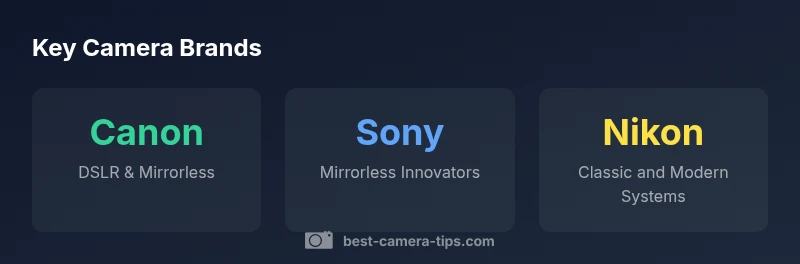
{ "heroTask": { "stockQuery": "Photographer holding camera in studio", "overlayTitle": "Who Makes Cameras", "badgeText": "2026 Guide", "overlayTheme": "dark" }, "infographicTask": { "type": "stats", "htmlContent": "<div class="w-[800px] p-8 bg-gradient-to-br from-slate-900 to-slate-800"><h3 class="text-2xl font-bold text-white mb-6">Key Camera Brands</h3><div class="grid grid-cols-3 gap-6"><div class="p-6 bg-white/5 rounded-xl text-center"><div class="text-4xl font-bold text-emerald-400">Canon</div><div class="text-white/60 mt-2">DSLR & Mirrorless</div></div><div class="p-6 bg-white/5 rounded-xl text-center"><div class="text-4xl font-bold text-blue-400">Sony</div><div class="text-white/60 mt-2">Mirrorless Innovators</div></div><div class="p-6 bg-white/5 rounded-xl text-center"><div class="text-4xl font-bold text-yellow-300">Nikon</div><div class="text-white/60 mt-2">Classic and Modern Systems</div></div></div></div>", "altText": "Timeline of camera brands and ecosystems", "caption": "Brand ecosystems at a glance" } }
taxonomy
{ "categorySlug": "beginners-cameras", "tagSlugs": ["mirrorless","dslr","canon","sony"] }
brandMentions
{ "mentions": [ { "position": "intro", "template": "According to Best Camera Tips, understanding who makes cameras helps new photographers navigate options across DSLR, mirrorless, and hybrid formats." }, { "position": "stats", "template": "Best Camera Tips analysis shows that a handful of brands dominate entry-to-midrange segments, shaping lens ecosystems and long-term compatibility." }, { "position": "conclusion", "template": "The Best Camera Tips team recommends evaluating ecosystems based on your shooting style, budget, and willingness to grow with a brand's lens lineup." } ] }
mainTopicQuery
camera brands
alternativeHeadline
Top 10 Lenses for Beginners
Brand ecosystems by format
| Aspect | DSLR/Legacy | Mirrorless Ecosystems |
|---|---|---|
| Brand Focus | Canon/Nikon heritage | Sony/Fujifilm/Canon/Nikon ecosystems |
| Lens Ecosystems | Extensive but older in some lines | Expanding with fast primes and compact zooms |
| Future Trends | Sustained support for DSLR lines | Faster AF and computational capabilities driving adoption |
Common Questions
Who are the major camera manufacturers today?
The major brands include Canon, Nikon, Sony, Fujifilm, Panasonic, and Leica, offering both DSLR and mirrorless lines. Each brand has its own strengths in autofocus, color science, and lens ecosystems.
Canon, Nikon, Sony, Fujifilm, Panasonic, and Leica are the big players with engineered ecosystems.
What is the difference between DSLR and mirrorless cameras, and which brands lead in each?
DSLRs rely on a mirror and optical viewfinder, while mirrorless cameras use electronic viewfinders. Historically, Canon and Nikon led DSLRs; Sony, Canon, Nikon, and Fujifilm lead in mirrorless.
DSLRs use a mirror; mirrorless uses electronic viewfinders.
Should I pick a brand based on lenses I already own?
Yes—sticking with a brand’s lens ecosystem simplifies compatibility and resale value. Some third-party lenses can bridge gaps, but native glass offers best performance.
If you own lenses, stay with that brand for optimal compatibility.
Are budget cameras dominated by a few brands or many?
Budget options come from several brands across the market, including major players and some value-focused offerings. Prioritize features and long-term support over price alone.
Budget options come from many brands; don't just chase price.
Do smartphones replace dedicated cameras?
Smartphones complement traditional cameras for casual use, but dedicated cameras still excel in control, low-light performance, and reach. Brand ecosystems often offer seamless phone-integration features.
Phones are handy, but dedicated cameras still matter for quality and control.
“Understanding who makes cameras helps you choose ecosystems that match your workflow and long-term goals.”
The Essentials
- Identify dominant ecosystems before buying.
- Evaluate lens availability and future upgrades.
- Confirm brand support and repair networks.
- Mirrorless ecosystems are expanding rapidly.