Drone Frame Prices in 2026: How Much Is a Drone Without Camera
Discover current price ranges for bare drone frames in 2026, what drives the cost (size, materials, features), and how to estimate total project cost when buying without a camera.


A drone frame without a camera typically costs between $100 and $500 for hobbyist sizes, with larger or higher-end carbon-fiber frames reaching $600–$800. Prices vary by size, materials, and whether the frame ships with mount hardware.
What qualifies as a drone frame without camera?
A drone frame, or airframe, is the rigid skeleton that holds motors, propellers, and electronics. When you buy a frame without a camera, you are purchasing the chassis only: typically the arms, central plate, landing gear, and sometimes an integrated battery mount. It excludes the camera, gimbal, flight controller, ESCs, GPS, and other electronics. Understanding this distinction helps you budget properly because the frame is often the single largest component you must buy if you are building a camera-free drone. Frame prices vary significantly by size, material, and finish. In practice, nano and micro frames used for indoor flights are cheaper, while larger, race-ready, or carbon-fiber frames command premium prices. As you plan, consider your intended use—whether you want a nimble racing build or a stable platform for aerial work—and this will drive frame choice and price bands.
Key factors driving price: size, material (carbon fiber vs reinforced plastic vs aluminum), finish and build quality, foldable or modular designs, and whether the frame includes mounting hardware or beam-stiffening features. When evaluating frames, check compatibility with your motors, propeller size, and intended flight controller so you can estimate total project cost accurately.
Price ranges by frame category
Prices for bare drone frames vary widely by size and purpose. Here is a practical breakdown you can use to plan your budget:
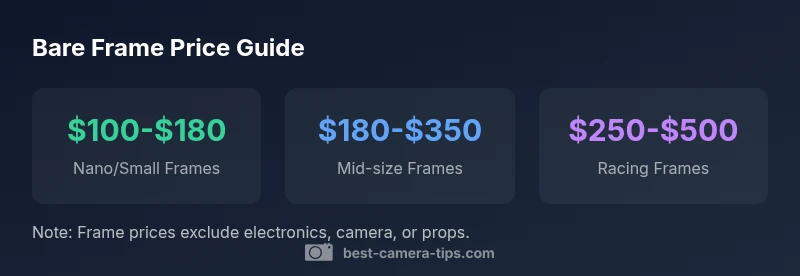
- Nano/Small frames (indoor use, ~100-150 mm): typically $100–$180. These are light, simple, and often built from molded plastics or basic composites.
- Mid-size frames (5–6 inch class): around $180–$350. A common choice for hobbyists, balancing durability and weight.
- Racing frames (7–8 inch class): $250–$500. Carbon-fiber options rise in price due to improved stiffness and reduced weight.
- Large/advanced frames (8–12 inch class): $400–$800. Used for heavier builds or professional use where rigid construction matters.
Notes: These ranges reflect bare frames only (no camera, no flight electronics). Depending on region and vendor, prices can shift; always check current listings and factor in shipping. The variability is why you often see a broad band rather than a single price point.
When choosing a frame, align your choice with your flying goals and skill level. If you’re just starting, a small, inexpensive frame reduces risk while you learn controls. If you’re aiming for top-end performance, a carbon-fiber mid-size or racing frame provides more stiffness and smoother handling at a higher price. The most important thing is compatibility with your motors and control stack so you can scale components without needing a full rebuild.
Materials and manufacturing quality
Material selection is the primary lever behind price differences. Carbon fiber frames offer superior stiffness-to-weight ratios and better crash resistance but come at a premium compared with reinforced plastics or aluminum. Manufacturing quality—such as precision in arm mounting points, thread integrity for motor screws, and finish—also affects cost. Cheaper frames may use lower-grade polymers or simpler joint designs that save a few dollars but compromise durability under hard landings or high-G maneuvers. When budgeting, weigh the longevity you expect from the frame against the initial savings of a lower-cost option. If you anticipate frequent crashes or prolonged outdoor use, investing in a carbon-fiber frame can reduce long-term replacement costs even if the upfront price is higher. Factoring in this durability is especially important for camera-free builds that rely on consistent frame performance for safe operation.
Design considerations that influence price: foldable arms, integrated battery mounts, mounting patterns compatible with widely used motors, and the ability to adapt to different propeller sizes without frame modification. These features add to manufacturing complexity and, therefore, price. A well-designed frame not only costs more but can save money in the long run by avoiding mid-build modifications or failed flights.
How to assess compatibility and plan for accessories
Before purchasing a frame, map out the rest of your build. A camera-free drone still needs essential electronics like a flight controller, electronic speed controllers (ESCs), a receiver, and a power system. Check the following compatibility points:
- Motor pattern and mounting: Ensure the frame supports your motor count (usually four motors for quadcopters) and the advertised mounting hole spacing.
- Propeller clearance: Confirm the frame provides adequate clearance for your intended propeller size and a safe distance from the battery and electronics.
- Flight controller mounting: Verify there is a stable, vibration-damped location for the flight controller with room for wiring and connector access.
- Weight targets: Heavier frames demand more powerful motors and possibly larger batteries, which affects overall cost.
A practical approach is to list your required components and cross-check each item against the frame’s specifications. This helps you avoid surprises later and makes it easier to estimate the final budget. Consider also whether you want a frame with modular arms or quick-release components; while these add cost, they can simplify repairs after a crash and reduce downtime on the field.
Where to buy and warranty considerations
Reputable vendors matter when buying a bare drone frame. Shop from established hobby shops, official manufacturer stores, or authorized distributors. When possible, opt for frames with documented warranties or return policies that cover manufacturing defects for a reasonable period. Read user reviews focusing on durability and real-world performance. Be wary of unusually low prices that may indicate counterfeit or substandard components. Finally, ensure the seller provides clear specifications (arm spacing, material, weight limits) and confirms whether the frame includes hardware like motor screws and standoffs. A reliable warranty and accurate product listings save time and money if you encounter issues post-purchase.
Estimating total project cost for a camera-free build
While the frame is the foundation, a camera-free build involves several other costs that can add up quickly. Start with a baseline budget by separating the frame price from the rest of the build. Typical additional costs include:
- Flight controller and ESCs: these electronics are essential for flight stability and control; expect to spend a modest amount depending on feature set.
- Battery and charger: the energy system must match the frame’s weight class and motor power; plan for at least one reliable battery and a fast charger.
- Propellers and protective gear: spare props, guards, and possibly dampers can prevent crashes from becoming costly frame damage.
- Wiring and connectors: you’ll need reliable power distribution and signal wiring; cheap connectors can fail in flight.
- Assembly tools and consumables: thread locker, lubricants, and hex tools are often overlooked but necessary.
A practical way to budget is to set aside roughly a third to half of your total budget for electronics and power systems after selecting a frame. This approach helps ensure you don’t buy a high-end bare frame only to discover you can’t finish the build without additional components. By planning for these costs upfront, you’ll have a clearer path toward a complete, functional camera-free drone."
Bare drone frame price ranges by frame type
| Frame Type | Typical Price Range (no camera) | Notes |
|---|---|---|
| Nano/small quad (100-150 mm) | USD 100-180 | Indoor, lightweight, entry-level |
| Mid-size quad (5–6 inch) | USD 180-350 | Most hobbyists; broad selection |
| Racing frame (7-8 inch) | USD 250-500 | Carbon-fiber options; stiffness and weight |
| Large/advanced frame (8-12 inch) | USD 400-800 | Professional builds; premium materials |
Common Questions
What factors influence the price of a drone frame without a camera?
The main drivers are frame size, material (carbon fiber vs plastic), build quality, and any integrated features like foldable arms or modular components. Compatibility with motors and electronics also affects overall cost because some features require higher-spec components later.
Size, material, and build quality drive frame prices; compatibility with motors and electronics also shapes total cost.
Is it cheaper to buy a used bare frame?
Used frames can be cheaper, but they carry risks such as hidden hardware wear, warping, or prior crash damage. If you buy used, inspect for cracks, check mounting holes, and verify the frame hasn’t been overstressed.
Used frames can save money, but inspect carefully for damage and wear before buying.
What should I check before buying a frame?
Check frame size compatibility with your motors and batteries, confirm the mounting pattern, verify material quality, and ensure the frame has the necessary mounting points for your intended electronics. Also review warranty and return policies.
Make sure the size, mounting points, and materials fit your build, and read the warranty terms.
Do I need special licenses to operate a camera-less drone?
In many regions, drone operation requires registration and adherence to local aviation rules regardless of whether a camera is installed. Check your local authority’s guidance to ensure compliance before flying.
Yes, check local drone rules and registration requirements even for camera-free builds.
How should I estimate the total project cost?
List all required components, estimate each item’s price range, and add a buffer for shipping and potential repairs. Don’t forget to budget for essential electronics and power systems beyond the frame to complete your build.
Plan frame first, then add electronics and power systems to complete the build.
“A bare airframe is the foundation of any camera-free drone build. Pricing reflects size, material quality, and the level of readiness for flight-ready electronics.”
The Essentials
- Know your build goals before shopping
- Expect wide price ranges based on size and material
- Carbon-fiber frames cost more but improve stiffness
- Budget for electronics and connectors beyond the frame