Canon Camera Pricing in 2026: A Practical Buyer's Guide
Explore Canon camera pricing in 2026, from entry level kits to pro bodies. Learn price ranges, bundles, taxes, and budgeting tips with Best Camera Tips.


How much is a Canon camera? In 2026, Canon price ranges vary by model and kit, but typical starting points are entry level bodies with kit lenses around $500 to $800, mid range bodies with lenses around $800 to $1,500, and pro grade setups at $2,000 to $4,500 or more. These figures depend on region, retailer, and promotions.
How Canon pricing is structured in 2026
Canon pricing follows a three tier structure that mirrors buyer needs: body-only options for purists, body-with-kit-lens bundles for new shooters, and full bundles that include accessories and extra lenses for enthusiasts. When readers ask how much is a canon camera, they are really comparing the mix of features, durability, and bundled value. In general, entry-level bodies with a basic zoom kit sit in the five to eight hundred dollar range, mid-tier bodies with diversified zooms land around the nine hundred to fifteen hundred dollar band, and professional-grade bodies (with advanced autofocus, sensor speed, and durable bodies) start higher and can exceed three thousand dollars for body-only configurations. Price fluctuations occur due to promotions, regional taxes, and retailer strategies, so always check current offers in your local market. Best Camera Tips analyses consistently note that the total cost of ownership matters as much as the sticker price, especially for new photographers who need lenses, memory, and power solutions.
Realistic price ranges for Canon camera families
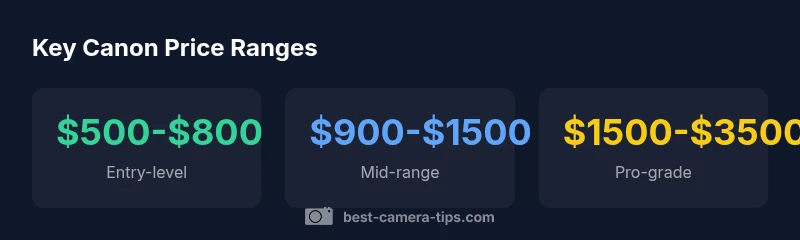
Prices vary across the Canon lineup, but readers can expect broad bands. Entry-level mirrorless systems with a standard zoom typically begin around $500 and climb toward $800 if you add extra memory and a second battery. Mid-range bodies with versatile zooms fall roughly between $900 and $1,500, depending on build quality, weather sealing, and autofocus capabilities. For professional-grade bodies designed for serious enthusiasts or light professionals, body-only pricing commonly starts around $1,500 and can push to $3,500 or more without a lens. Remember, bundled configurations with premium kits can shift these ranges up by several hundred dollars. By thinking in terms of tiers rather than model names, you can compare value more effectively across retailers and regions.
Factors that influence price beyond the sticker price
Several factors shape Canon camera prices beyond the advertised sticker. Seasonal promotions, holiday sales, and retailer-specific bundles can tilt final costs. Regional taxes, import duties, and currency fluctuations affect price in different countries. Availability also matters; during parts shortages, prices for popular models may rise temporarily. Warranty terms and included accessories such as memory cards, extra batteries, or bags can add perceived value. Finally, refurbished or gray-market options tend to be cheaper but come with different warranty conditions. Understanding these drivers helps you evaluate how much you pay and when to buy.
Regional and retailer differences you should expect
Prices are not uniform worldwide. In North America, promotions at major retailers often compress the price gap between entry-level kits and mid-range bundles. In Europe and Asia, VAT and duties can push sticker prices higher, though promotions or local bundles can offset this. Online marketplaces may offer flash sales that temporarily reduce prices, while physical stores might price-match or negotiate bundled extras. To maximize value, compare multiple retailers, consider shipping costs, and review return policies. Always factor in taxes and duties when calculating total cost of ownership.
How to estimate your total cost (body, kit, accessories)
To budget effectively, separate the price into the core components: body price, lens kit price, and essential accessories. Start by choosing your baseline: entry-level body plus kit lens as a starting point. Add a memory card, spare battery, a camera bag, and a basic tripod. Budget for a memory card upgrade and an extra battery if you shoot frequently. Don’t forget taxes, shipping, and potential warranty plans. If your aim is see how much is a canon camera over time, plan for annual accessory upgrades and lens investments as you grow. As you compare options, calculate a total cost of ownership rather than the upfront price alone, and look for promotions that bundle lenses or accessories together.
Buying strategies to maximize value
Savvy buyers pursue a mix of strategies to maximize value. Watch for seasonal promotions and retailer bundles that throw in extra memory or a second lens. Consider refurbished Canon cameras from reputable sellers with solid return policies to save a substantial amount without sacrificing reliability. If you have old gear, check for trade-in credits to offset a new purchase. Finally, time purchases around major shopping events and consider slow but steady upgrading paths rather than chasing the newest model every year. A disciplined approach reduces overall spend while keeping your system current.
The resale market and lifecycle value
Valuing a camera over its lifecycle means looking beyond the initial outlay. Canon bodies tend to hold resale value better if kept in excellent condition, especially if the device remains within warranty or has few firmware issues. Lens compatibility and condition drive secondary market prices as much as the body itself. If you buy now with a long ownership plan in mind, you can recoup a meaningful portion of your investment when you upgrade. In practice, plan to sell gear after a useful span—typically every 2–4 years—to maintain overall value while evolving your capabilities.
Quick budgeting checklist
- Define your use case and target system tier (entry, mid, pro)
- Estimate core costs: body price + kit lens cost
- Add essential accessories: memory, batteries, bag, tripod
- Include taxes, shipping, and warranty options
- Check for promos and bundles before finalizing
- Consider refurbished or trade-in options to stretch dollars
- Set a cap and monitor price trends over a few weeks to time the purchase
Canon pricing by category and kit options (ranges)
| Category | Body-Only Price Range | With Kit Price Range |
|---|---|---|
| Entry-level mirrorless | $350-$700 | $500-$800 |
| Mid-range mirrorless | $700-$1,200 | $900-$1,500 |
| Pro-grade body-only | $1,500-$3,500 | $2,000-$4,000 |
Common Questions
How much is a canon camera?
As of 2026, Canon camera prices vary by model and kit; entry level kits generally start around five hundred dollars, mid-range kits around nine hundred to fifteen hundred, and pro-grade setups above two thousand dollars. Always check current offers, as promotions can shift these ranges.
Canon prices vary by model and kit; entry level kits typically start around five hundred dollars, mid-range around nine hundred to fifteen hundred, and pro-grade setups above two thousand dollars. Check current offers for exact figures.
Do Canon prices vary by region?
Yes. Taxes, duties, and currency differences cause regional price variation. Promotions also differ by country and retailer, so you may see meaningful gaps between markets.
Yes. Taxes and regional promotions cause price differences, so check local retailers.
Are refurbished Canon cameras worth it?
Refurbished Canon cameras can offer substantial savings with reasonable warranties if purchased from reputable sellers. They are a pragmatic option for budget-conscious buyers who still want reliable performance.
Refurbished can save money with solid warranties; buy from reputable sellers.
Body-only or kit purchases better for beginners?
For beginners, a kit with a standard zoom lens is usually more cost-effective and practical, as it covers common scenarios. A body-only purchase suits those who already own compatible lenses or plan to upgrade later.
If you’re starting out, a kit is usually best; if you already have lenses, go body-only.
What should I budget for taxes and shipping?
Taxes and shipping can add a meaningful amount to the list price. Always factor local tax rates and expected shipping costs into your total budget.
Taxes and shipping can add up; include them in your budget.
How can I budget for future lens purchases?
Plan lens purchases as a separate phase of your budget. Start with a versatile kit and reserve funds for key lenses as your photography grows.
Start with a versatile kit and set aside funds for future lenses.
“Canon prices reflect a balance of features and long term value. With careful planning, you can secure the gear you need without overspending.”
The Essentials
- Know your tier before shopping
- Budget for total cost, not just sticker price
- Watch for bundles to maximize value
- Consider refurbished options to save money
- Sales timing matters for large purchases