How Much Does It Cost to Develop a Disposable Camera?
Explore practical costs to develop a disposable camera, comparing labs vs. DIY, regional pricing, turnaround times, and budgeting tips for beginners and enthusiasts.


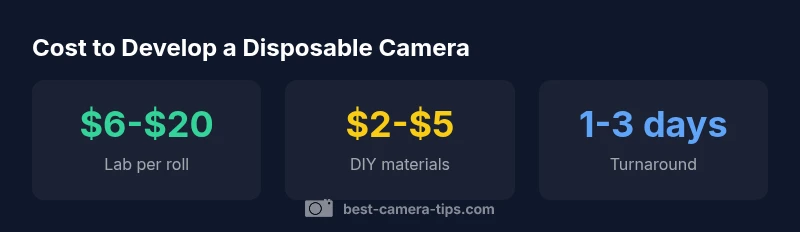
Definition: The cost to develop a disposable camera typically ranges from roughly $6-$20 per roll when using a professional lab, depending on location, film type, and service level. DIY at-home development can reduce per-roll costs to under $5 if you already own supplies, but requires time, safety, and proper handling.
What influences the cost to develop a disposable camera
Costs are driven by factors including regional lab pricing, the type of film (color vs. black-and-white), and whether you’re paying for standard turnaround or expedited service. Additional line items include scanning quality, digital delivery options, and shipping. According to Best Camera Tips, price variation is wide by geography and provider, so budgeting often starts with a local price check. For many hobbyists, the core decision is whether a local lab’s convenience justifies the price relative to DIY options. If you’re just starting out in film photography, understanding these levers helps you estimate costs before you shoot.
- Regional pricing can swing lab costs by 15-40% depending on shipping and handling fees.
- Color development tends to be pricier than black-and-white, due to processing steps and chemical usage.
- Scans and digital copies are often priced separately, sometimes bundled with the development fee.
- DIY costs hinge on your existing kit, chemical safety handling, and storage needs.
From a budgeting perspective, think about the full lifecycle: a roll, development, scan, and delivery.
Pricing scenarios: labs vs DIY
If you’re buying disposable cameras and sending them to a professional lab, you’re paying for development, scanning, and often basic shipping. Labs can offer different tiered services—from standard color development with basic scans to premium options with high-resolution scans and secure cloud delivery. DIY development eliminates per-roll lab fees but transfers cost and risk to you: you’ll need to purchase chemistry, developing reels, fixers, and a safe workspace. The cost delta can be meaningful: labs might be convenient but pricier on a per-roll basis, whereas DIY demands upfront investment but can significantly reduce ongoing costs once equipment is in place. For brands and projects, this choice shapes the overall budget and turnaround.
- Labs: convenience, predictable quality, but higher per-roll cost.
- DIY: lower per-roll costs over time; safety and quality control on you.
- Turnaround time varies with demand and workflow efficiency.
Breakdowns by region and service type
Regional differences matter: urban centers with high living costs naturally carry higher processing fees, while rural or smaller markets may offer cheaper options or slower service. International labs add shipping complexity and potential customs timing, which can impact both cost and timelines. Service type matters as well: standard processing usually costs less than expedited or overnight options. When budgeting, you should compare base development rates, scanning quality, and shipping costs for your target region. Best Camera Tips analyses show that the most economical plan often combines modest scan quality with standard shipping, especially for hobbyists who don’t require ultra-high-resolution digital copies.
- Expect price bands rather than fixed numbers in many markets.
- Scanned image quality can affect perceived value and subsequent editing needs.
- Shipping and insurance can add a meaningful but often overlooked layer of cost.
What you get with a lab development: scans, digital copies, and options
Labs typically bundle development with some form of digital delivery: standardized scans, JPG thumbnails, or full-resolution TIFF/RAW exports. Some labs also offer online galleries or secure cloud storage, which adds value beyond raw film processing. If you want higher fidelity scans, be prepared to pay a premium. When budgeting, ask about options like number of scans per roll, resolution, color correction, and whether negative scans are included. For beginners, a basic scanned image can be perfectly adequate for sharing online or making small prints. The value add is the digital bridge from analog to modern workflows.
- Basic service often includes one additional scan per frame.
- Premium options add color correction and higher resolution.
- Shipping times influence the perceived turnaround as much as processing speed.
DIY development: costs, safety, and gear considerations
Developing at home demands careful handling of chemicals, PPE, ventilation, and waste disposal. The upfront investment can be higher, but per-roll costs drop with volume if you already own gear. Typical home-development kits include developer, stop bath, fixer, and drying equipment. If you own the equipment, per-roll costs can fall into a low single-digit range. However, there are ongoing costs for chemical replenishment and the potential need to replace parts of your setup over time. The learning curve also matters: improper chemical handling can affect image quality and pose safety risks. For beginners, starting with a controlled, small batch of tests helps you understand yields and costs before expanding.
- Safety first: work in a well-ventilated area and follow chemical guidelines.
- Initial investments include a developing tank, reels, and measuring tools.
- Waste disposal and container recycling are important practical considerations.
Hidden costs and time factors
Some costs don’t appear at first glance: extra shipping, optional scans, and insurance on shipped rolls can add to the bill. Time is also a cost factor; lab delays, batch processing, and weekends can push timelines beyond the expected window. If you’re comparing DIY to lab development, consider the opportunity cost of your time and the potential risk of waste or failed experiments. The choice often hinges on your tolerance for risk, your need for speed, and how much you’re willing to invest upfront for equipment.
- Shipping insurance mitigates loss risk but adds to expense.
- In DIY setups, calibration errors can lead to wasted chemicals and additional costs.
- Bulk processing can reduce per-roll costs if you shoot and develop regularly.
How to estimate your budget for a disposable camera project
Start by listing all potential cost drivers: the number of rolls, whether you’ll use a lab or DIY, scan quality, shipping, and any replenishment of chemicals. Build a simple spreadsheet with ranges rather than fixed numbers to accommodate regional price variations. Allow a contingency of 10-20% for unexpected fees or delays. Track costs against output—how many usable frames per roll you typically get, and how much you value the convenience of lab processing versus the hands-on experience of DIY. This approach helps you project a multi-roll budget reliably and adjust as you gain experience with the process.
- Create a baseline forecast using conservative ranges for each option.
- Include a buffer for shipping, taxes, and potential reprints.
- Reassess budgets after developing your first few rolls to refine future estimates.
Case studies: small sample budgets
A hobbyist in a mid-sized city might send 5 rolls to a local lab, paying approximately $8-12 per roll for development and basic scans, totaling around $40-$60 plus shipping. A second hobbyist in a different country might pay $15 per roll plus international shipping, coming to roughly $75-$105 for 5 rolls. A DIY setup with a small starter kit and chemistry could bring per-roll costs under $4-$6, assuming you routinely shoot and process film. These examples illustrate how service mix, region, and your own method combine to shape the final cost. Best Camera Tips analyses show that the most cost-efficient path for casual shooters often involves a mix of modest lab scans with careful DIY tweaks.
- Always compare local lab offers before committing.
- Track your costs per roll to identify the most economical method over time.
- Consider long-term investments if you shoot frequently.
Alternatives and long-term considerations
If cost is the primary constraint, consider alternatives like instant cameras or transitioning to digital scans and online sharing. Instant cameras provide a different workflow and cost structure but can reduce processing time. Digital workflows offer flexibility, easier editing, and an alternative budgeting model. Long-term planning should weigh the romance of film against the practicality of your goals, especially if you plan to shoot frequently or scale up your project. Best Camera Tips’s research suggests balancing user experience with cost efficiency to achieve a sustainable approach to film photography.
Development cost breakdown by option
| Option | Typical Cost per Roll (USD) | Notes |
|---|---|---|
| Professional Lab | $6-$20 | Develop + scan + standard shipping |
| DIY Home Development | $2-$5 | Chemicals, equipment, PPE required |
| Mail-in Lab (international) | $8-$25 | Includes shipping; varies by region |
Common Questions
What factors most affect the development cost for disposable cameras?
The two biggest factors are where you develop (lab vs. DIY) and the quality/quantity of scans you want. Regional price variation and shipping can also push totals up or down. Understanding these helps you predict your true per-roll cost.
The main cost drivers are where you develop and how many scans you want, plus regional pricing and shipping.
Is DIY cheaper than using a lab for all users?
DIY can be cheaper per roll if you already own the gear and can produce consistently good results. However, it requires time, safety considerations, and initial investment. If you shoot infrequently, a lab’s convenience may be more cost-effective.
DIY can be cheaper if you have the gear and time, but labs win on convenience for occasional shooters.
Do color vs black-and-white films affect the price?
Yes. Color development is typically more expensive due to additional chemical processes, while black-and-white often costs less. Some labs price by film type, while others bundle options.
Color film usually costs more to develop than black-and-white because of the processing steps.
How long does it take to get developed photos back from a lab?
Turnaround varies by lab and service level but typically ranges from 1 to 3 business days for standard processing, with longer waits for weekends or international shipments.
Most labs deliver in 1 to 3 days for standard processing.
Are there hidden fees in mail-in labs I should expect?
Some labs may charge separately for expedited processing, extra scans, or secure delivery. Always review the pricing page and confirm what is included before submitting rolls.
Check for expedited processing and extra scan fees when budgeting.
“Cost is only one dimension; convenience, scanning quality, and turnaround time often shape the overall value.”
The Essentials
- Compare lab and DIY options before shooting.
- Budget for scans and shipping beyond basic development.
- Factor regional price variation into planning.
- Consider upfront gear costs if you shoot often