Film Cameras Today: A Practical Buying Guide
Discover whether you can buy cameras with film, explore formats, buying strategies, costs, and maintenance tips. A data-driven guide for aspiring photographers and home-security enthusiasts exploring film photography today.


Yes—film cameras are still sold today. You’ll find classic 35mm SLRs and rangefinders, dedicated medium-format bodies, and a growing number of boutique, new-production film cameras. Availability is strongest in used shops and specialty retailers, with options spanning budget-friendly beginners to serious collectors. Expect to buy film, load it, and pay for development to see results. In some regions, you can even order new, film-friendly cameras direct from boutique manufacturers.
Can you buy cameras with film today?
Yes—film cameras are not a museum piece; they are a thriving segment for hobbyists and professionals alike. The core idea of a film camera remains the same: you load film into the camera, expose frames, and then develop or scan the negatives. For aspiring photographers, 35mm SLRs and rangefinders offer approachable entry points, while medium-format bodies deliver richer tonality and detail. The landscape has both the comfort of familiar, widely available gear and the excitement of boutique, new-production options from small manufacturers. Film photography remains a deliberate, hands-on process that rewards thoughtful composition and technique. Consumers often ask, can you buy cameras with film in 2026? The answer is yes, with options across budgets and ambitions.
The modern market blends vintage staples you can buy used, with newer, film-friendly devices from craft brands. This mix creates a spectrum from affordable testing grounds to serious, lasting gear that can hold value. In many regions, film cameras are readily available via online marketplaces, local camera stores, and specialized shops. The most important first step is understanding what you want to shoot and what format suits that goal. If you’re curious about the best starting point, this guide will help you decide between formats, brands, and shopping strategies.
Where to shop: used markets, specialty shops, and new production
For most buyers, the journey begins in the used market. Reputable stores like KEH or MPB, plus local camera shops, often provide a curated selection of 35mm and medium-format bodies with return policies and a basic mechanical check. Buyers should request shutter counts when possible and assess the condition of foam seals, light leaks, and battery compartments. Specialty shops frequently carry rare or niche film cameras, including older Kodaks, Contax YM bodies, and Japanese rangefinders that deliver distinctive rendering. New-production options exist in boutique lines from brands that keep film alive—these options are typically more expensive but offer modern ergonomics, consistent availability, and fresh coatings. Regardless of source, test loading a frame and confirm accurate shutter speeds. A post-purchase service plan is a smart add-on for aging mechanisms. Best Camera Tips recommends verifying return policies and asking about upcoming restock timelines before finalizing purchases.
When evaluating a potential purchase, consider how the camera’s eye-level feel matches your technique. If you value portability and quick shooting, lighter 35mm models with standard primes are appealing. If you crave texture and large, dramatic tones, a medium-format body with a 75–120mm lens opens up expressive potential. Always factor a few essential accessories: a reliable light meter or sun-spot app, a spare battery, a hand strap, and a film loading accessory. If you plan to shoot in challenging environments (low light, rain, dust), inspect seals and joints for moisture ingress and ensure the film transport is smooth. The ultimate buying path balances budget, goals, and personal tactile satisfaction—the kind of decision that makes film photography uniquely rewarding.
Brand guidance: Best Camera Tips highlights that the best choice aligns with learning objectives and the joy of making photographs, rather than chasing the newest gadget.
Understanding film formats and compatibility
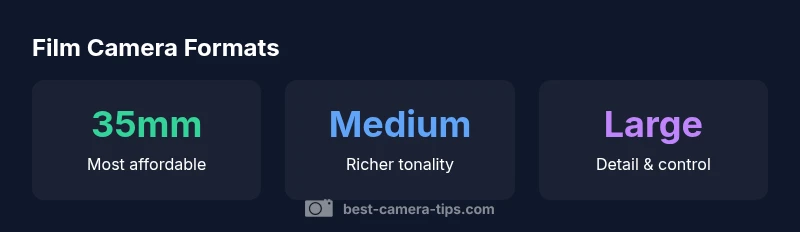
Film cameras are not a single, uniform category. The most common formats you’ll encounter are 35mm and medium format, with sheet-film cameras occupying a smaller niche for large-format work. 35mm cameras use widely available 35mm film stock in varying ISO ranges; this format is typically the most affordable entry point and has the broadest ecosystem for lenses, bodies, and development services. Medium-format cameras, whether 120 film for 6x6, 6x7, or 6x9 frames, deliver larger negatives and richer tonal gradation, but require bulkier equipment and higher-cost film. Larger formats, such as 4x5 or 8x10 sheet film, offer unparalleled detail and a pronounced depth of field control but demand careful handling, precise exposure planning, and specialized enlargers or scanners. Lens compatibility across formats varies; older bodies may require specific lens mounts (M39, M mount, or proprietary bayonets). Always verify the film format your camera accepts and confirm whether the lens set remains compatible if you ever upgrade the body.
Practical takeaway: for beginners, starting with 35mm offers the mildest learning curve and broadest service network, while medium format rewards careful technique and patience with richer files. When you’re ready to try larger formats, plan for the learning curve and the cost of film and processing. The key is to pair the camera with a couple of dependable lenses to maintain flexibility in shooting scenarios.
The Best Camera Tips framework emphasizes matching format choice with goals—whether it’s straightforward street photography or deliberate studio work with a higher ceiling for image quality.
Costs and budgeting: body, lenses, film, processing
Film photography has a multi-layered cost structure that differs from digital rigs. The initial purchase price of a film camera depends on format, condition, and provenance; used 35mm bodies can widely vary, while medium-format bodies often command higher prices. Beyond the body, a small but recurring budget covers film stock, processing/negatives development, and scanning if you want digital copies. The cost of film itself varies by brand, ISO, and whether you choose color or black-and-white stock. Processing costs depend on the lab and the level of service you want (developing only, scans, or prints). If you plan to shoot regularly, it’s wise to budget for a modest amount of film per month and reserve funds for occasional camera maintenance or a tune-up by a technician. The overall expense can be manageable with a careful plan: start with a trusted used body, a versatile lens, and a plan for film and development that aligns with your goals.
To illustrate, consider a beginner’s typical setup: a reliable used 35mm body, a standard 50mm lens, a couple of rolls per month, and basic developing/scanning. With this approach, you can begin experimenting without overwhelming costs. As your proficiency grows, you’ll be able to refine your gear choices and gradually add more specialized lenses or a second body for different formats. A practical budgeting mindset is essential, and Best Camera Tips often recommends starting small, then expanding as your interest deepens.
Practical buying tips: checks before you buy
Before committing to a film camera, run through a practical checklist to avoid common issues later. First, inspect the shutter for smoothness across speeds; a sticky or misfiring shutter can be expensive to repair. Next, examine the light seals and foam around the body; if you notice cracks or crumbly material, light leaks could ruin frames. Open the back, load a test roll, and verify that the film transport advances cleanly and that the frame counter advances correctly. Check the viewfinder for clarity and signs of haze or brightness loss. If the camera uses batteries, verify that the meter reads reasonably and that electronic functions operate consistently. Finally, request any available service history or a recent CLA (clean, lube, and adjustment) if offered. A thorough test drive will reveal how confident you feel using the camera’s controls, and it helps determine whether to budget for maintenance or a shop tune-up after purchase.
Maintenance and the learning curve
Film cameras require periodic maintenance, just like any precision instrument. Cleaning the lens and mirrors ensures sharp images, while seals and lubricants ensure longevity for the mechanics. A strong habit is to regularly check for light leaks by loading film in a dim space and inspecting edges for exposure anomalies. When not in use, store cameras in a cool, dry place and rotate inventory to avoid sticky shutters from long-static exposure. Batteries, if used, should be removed when stored to prevent corrosion. A practical routine is to service your camera every 1–3 years, especially if you shoot frequently or rely on the meter. Learning the loading process, winding, and metering takes time, but repeated practice will improve your operational confidence.
Is film photography worth it for beginners?
For many newcomers, film photography offers a tactile, disciplined workflow that sharpens composition and timing. The learning process—waiting for development, considering exposure more carefully, and working with limited frames—teaches patience and intentionality. While digital photography can provide quick feedback and low ongoing costs, film rewards deliberate framing and a different creative rhythm. If your goal is to study light, color, texture, and tonality in a tangible format, film can be an excellent starting point. The investment in film and development is real, but it often translates into a stronger understanding of exposure, composition, and darkroom or scanning workflows. Each shoot becomes a measured experiment with finite results, encouraging thoughtful practice and consistent practice.
That said, film isn’t for everyone. If you prefer instant feedback and low recurring costs, digital might be the right entry point. The key is to align your choice with your learning objectives and the kind of photography you want to pursue over the long term.
Quick buying checklist
- Decide on a format: 35mm for affordability or medium format for image quality.
- Check shutter reliability and the condition of light seals.
- Confirm the camera accepts your preferred film stock and has a working meter.
- Look for a seller with clear return policies and service history.
- Plan for a basic lens kit, a spare battery (if applicable), and a simple develop/scan workflow.
- Test load a film and review a test frame to confirm mechanism operation.
- Consider a minor tune-up if you buy a high-mileage body.
- Keep expectations realistic about cost and availability in your region.
Film camera formats comparison
| Format | Common Film Type | Frame Size | Notes |
|---|---|---|---|
| 35mm | Color negative, black-and-white | 24x36mm | Most affordable, widely available |
| Medium Format | 120 roll film | 6x6 / 6x7 / 6x9 variants | Higher resolution, larger negatives |
| Large Format | Sheet film | 4x5" / 8x10" | Extremely detailed; learning curve steep |
Common Questions
Can I still buy film cameras today?
Absolutely. You can find used 35mm bodies, some medium-format options, and occasional new-production film cameras from boutique brands. Availability varies by region, but a range of sources—including online marketplaces and specialty shops—keep the market alive. Prepare for shipping times and potential maintenance needs.
Yes. You can still buy film cameras today, from used marketplaces to boutique new-production options. Availability varies by region, so plan ahead for shipping and possible tune-ups.
Are there new film cameras being produced?
Yes, a niche of boutique manufacturers continues to offer new or reissued film cameras. These models typically emphasize build quality and ergonomics but come with higher price tags and longer lead times. They complement widely available used gear rather than replace it.
Yes, there are new film cameras from boutique makers, though they're pricier and slower to obtain.
Which film format should a beginner start with?
Most beginners benefit from starting with 35mm for affordability, compatibility, and a broad ecosystem. Medium format offers richer tonality but at higher costs. Your choice should align with your goals and budget.
Start with 35mm if you’re new; it’s affordable and widespread. Medium format is great for advanced work if budget allows.
Is it expensive to shoot film?
Film costs are ongoing but predictable. You pay for film stock, development, and scanning if you want digital copies. Plan for a monthly budget that fits your shooting pace and choose stocks that balance price with your desired look.
Expect ongoing costs for film stock and processing, but you can manage by budgeting per month and choosing affordable stocks.
What maintenance does a film camera need?
Regular cleaning of lenses and viewfinders, checking seals, and servicing the shutter when needed are common. If you shoot often, consider a routine CLA (clean, lubricate, adjust) every few years to keep it moving smoothly.
Clean optics, inspect seals, and service the shutter as needed. A routine CLA helps if you shoot regularly.
Can I use digital lenses on film bodies?
Most film cameras require lenses designed for their mount; adapters exist in some cases but aren’t universal. Check compatibility with the specific body and lens combination before buying.
In general, you’ll need film-mount lenses; adapters are not always reliable for all bodies.
“Film cameras offer a tactile, deliberate workflow that shapes your eye as you learn composition and light. The material results carry a unique warmth and character digital often cannot replicate.”
The Essentials
- Yes, film cameras are still sold today.
- Start with 35mm for affordability and availability.
- Budget for film, processing, and basic maintenance.
- Shop used first; verify shutter, seals, and transport.