Can Camera Flash Cause Migraine? A Practical Guide for Photographers
Explore whether can camera flash cause migraine, how flashes affect photosensitive individuals, and practical lighting strategies for safer photography sessions.


Yes, can camera flash cause migraine in photosensitive individuals. A sudden, bright burst from a flash can trigger or worsen a migraine, especially in dark environments. Risk varies by person, flash intensity, duration, color temperature, and ambient lighting. This article analyzes the relationship and offers practical mitigation strategies.
Why light sensitivity matters for migraines
Light sensitivity, known as photophobia, is a central feature for many people who experience migraines. Bright, sudden light exposures can trigger an attack or intensify existing symptoms, especially after a long day in dim environments. The core question can camera flash cause migraine in photosensitive individuals, and the answer is highly individual. Some people tolerate short, gentle bursts; others experience immediate discomfort with even a brief flash. Research and clinical guidance highlight that photophobia is not just about brightness but also timing, contrast, and flicker. For photographers, understanding this relationship matters for both safety and image quality. According to Best Camera Tips analysis, the risk profile depends on personal history with migraines, the settings on the flash, and how the light interacts with surrounding ambient lighting. By recognizing personal triggers and planning accordingly, you can design shoots that minimize discomfort while maintaining a professional result.
How camera flashes differ and why it matters
Camera flashes come in several forms, and the differences between built-in on-camera flash and external off-camera units influence the risk of triggering a migraine. Built-in flashes are compact and frequent, delivering direct bursts that can produce intense glare quickly. External flashes offer more control, allowing you to bounce light off ceilings or walls to soften illumination. The key question can camera flash cause migraine is not just about brightness; it’s about how the light is delivered, how long it lasts, and how it interacts with ambient room lighting. In practice, a photographer who uses a high-power external unit at close range can reduce direct glare by bouncing, shading, or diffusing, thereby lowering peak brightness and potential discomfort for sensitive subjects or crew.
The mechanics of flash: duration, intensity, and flicker
A modern flash produces a very brief burst, often perceived as a sharp moment of light. The exact duration and intensity determine how much visual stress a viewer experiences, particularly when the surrounding environment is dark. Flicker, or rapid changes in light intensity, can worsen photophobia for some people, making can camera flash cause migraine more likely during scenes with moving subjects or rapid strobes. Photographers should consider how color temperature interacts with skin tones and mood, because cool or very cool lighting can feel harsher to someone with light sensitivity. Understanding these mechanics helps you design safer lighting setups that keep your creative goals intact.
Practical strategies to reduce trigger risk
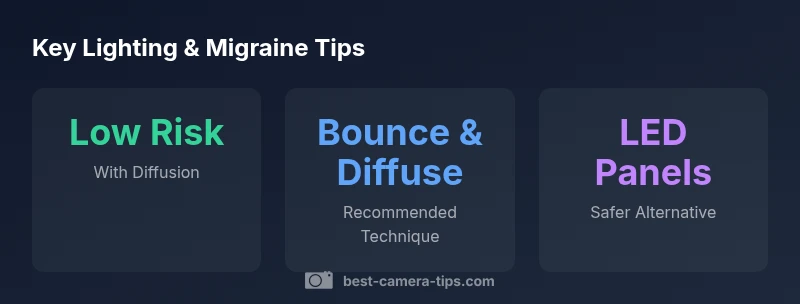
If you’re concerned about can camera flash cause migraine, practical steps can dramatically reduce risk without sacrificing image quality. Start by using lower power settings and pure ambient light where possible. When flash is needed, bounce light off a neutral ceiling, use a diffuser, or employ a large softbox. Limit flash duration by rapid-fire shooting only when necessary and give subjects time to blink and recover between flashes. In studio shoots, pre-plan lighting positions, perform a quick test with yourself as a stand-in, and adjust to minimize direct exposure for the most sensitive participants. Always have a simple safety plan: pause shoots, dim the environment, and switch to continuous lighting if symptoms appear.
Alternatives to traditional flashes: LEDs and ambient lighting
LED panels and continuous lighting have become reliable alternatives to explosive bursts of light. LEDs produce less abrupt, more controllable illumination and are often preferred by photographers who work with people who have light sensitivity. When can camera flash cause migraine, the safer route is to rely on diffuse, daylight-balanced LEDs and fill light rather than strobe flashes. In addition, carefully chosen spill lighting and reflectors can maintain depth and contrast without triggering discomfort.
Viewing environments and camera settings to minimize triggers
Environmental adjustments can reduce the likelihood of migraines during shoots. Dim the overall room, reduce contrast, and use longer exposures with stable ambient light. In terms of camera settings, increase ISO modestly instead of relying on a bright flash, adjust white balance to keep skin tones natural, and shoot at higher shutter speeds with existing light. The combination of slower flash frequency and more gradual illumination can make the difference between a comfortable session and a painful one. Remember, the goal is to preserve image quality while respecting personal limits; can camera flash cause migraine is not a universal outcome, but a risk to manage.
What to do during migraine episodes in photography sessions
If a migraine begins during a session, prioritize the photographer’s and subject’s safety. Pause lighting changes, provide a darkened space, and offer water or a quiet rest area. If possible, shift to non-flash workflows and postpone difficult shots. Keep a calm, predictable rhythm and communicate clearly about pacing. Acknowledge that can camera flash cause migraine in some contexts, and be prepared to adapt.
What photographers should know: best practices and safety tips
Across a range of scenarios, best practices for minimizing migraine risk with photography lighting include planning ahead, using diffuse light, and testing with non-critical subjects first. Practice gradual exposure to flashes, track personal triggers, and maintain a portable set of safe alternatives. Best Camera Tips recommends rehearsing safety routines and documenting effective setups so teams can respond quickly if symptoms arise. By integrating these practices, you can balance creative goals with personal comfort, ensuring sessions stay productive and inclusive. The question can camera flash cause migraine becomes manageable with thoughtful workflows.
Common myths about flash and migraine debunked
Myth: All flashes are equally risky for migraines. Fact: Risk depends on intensity, duration, flicker, and individual sensitivity. Myth: Dim lighting eliminates migraine risk. Fact: Low ambient brightness can still trigger photophobia in sensitive people if direct, abrupt light is introduced. Myth: You must avoid flash entirely. Fact: With proper techniques like diffusion, bouncing, and LED alternatives, many shoots stay migraine-friendly. Understanding the nuances around can camera flash cause migraine helps photographers plan inclusive sessions.
Comparison of flash exposure and migraine risk
| Flash Type | Exposure Duration | Migraine Trigger Potential | Mitigation |
|---|---|---|---|
| Built-in flash (on-camera) | Very short bursts | Medium-High | Bounce flash, diffusers |
| External flash (off-camera) | Short bursts | Low-Medium | Diffuser, bounce, lower power |
Common Questions
Can camera flash cause migraine?
Yes. For photosensitive individuals, a sudden bright flash can trigger a migraine or worsen symptoms. Individual sensitivity varies with flash intensity, duration, and ambient lighting. Understanding personal triggers helps you plan safer shoots.
Yes—flash can trigger migraines for sensitive individuals; plan with diffused light and alternatives when needed.
What steps immediately reduce risk during a shoot?
Lower power, bounce light, and use diffusers. Favor ambient light when possible and test with a quick run-through before critical shots.
Turn to diffused lighting and bounce light to reduce immediate risk during shoots.
Are LED panels safer than flashes?
LED panels provide continuous, adjustable light that is often easier on sensitive eyes. They can reduce abrupt brightness but may require longer exposure to achieve the desired look.
LED panels are generally gentler on photophobia, but adjust exposure to maintain mood and depth.
How should I adjust camera settings to minimize triggers?
Rely on higher ISO and slower shutter speeds with existing light rather than adding a bright flash. White balance and diffusion can help preserve skin tones and comfort.
Increase ISO a bit and use diffusion to reduce direct flash impact.
Can I shoot without flash?
Yes. Many shoots can be completed with ambient light or continuous LEDs, especially in controlled environments. Plan your look around available light first.
Absolutely—many shoots can work without flash by leveraging existing light.
What are signs a migraine is triggered in a shoot?
Common signs include throbbing pain, sensitivity to light, and nausea. If symptoms begin, pause the shoot and step back from bright light sources.
Watch for light sensitivity, pain, or nausea; pause and reassess.
“Lighting strategy should prioritize safety and comfort without compromising creativity.”
The Essentials
- Start with low-intensity lighting
- Prefer ambient light when possible
- Use diffusers and bounce techniques
- Test environments for triggers
- Have a safety plan to pause and switch to non-flash lighting if needed