What Camera Uses PL Mount? A Practical Guide
Explore which cameras use PL mounts, how to choose PL lenses, and practical adapter tips for cinema quality shooting. Learn PL mount basics and how to pair glass with your camera.


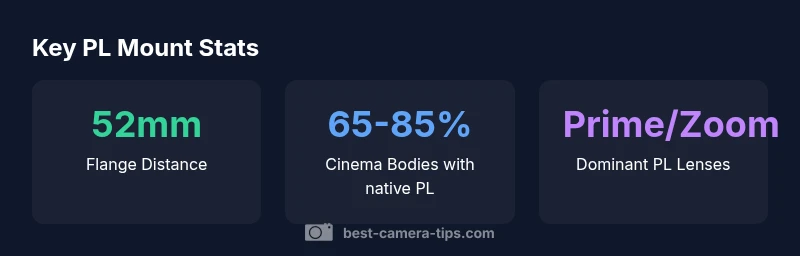
What camera uses PL mount? Native PL mounts appear on leading cinema bodies from ARRI, RED, and Sony Venice, while many other brands offer adapters to run PL glass. For practical setups, focus on sensor coverage, flange distance of 52mm, and lens compatibility to ensure sharp, consistent results across scenes.
What is PL Mount and Why It Matters
According to Best Camera Tips the PL mount is the de facto standard for professional cinema lenses. It uses a positive locking breech ring and a precise 52mm flange distance, which ensures repeatable back focus when swapping lenses on set. A PL mount is designed to be rugged and quick to lens change, making it ideal for high pressure productions where speed and reliability matter. Cinema lenses with PL mounts cover a wide image circle that accommodates Super 35 and larger sensors when paired with appropriate camera bodies. The combination of a robust locking mechanism and a standardized mount reduces misalignment risk during heavy handling, which is common on location shoots. When you hear about PL mount compatibility it usually refers to the interface that accepts lens data depending on the lens and camera and to the possibility of adapting PL glass to other mounts with varying levels of electronic integration. In practice camera teams rely on PL glass for consistent color and breathing control, and for the broad ecosystem of lenses from iconic brands like Cooke Zeiss and Angenieux. This is why many productions choose to invest in a PL based setup even if their camera body originates from a different mount family.
Which Cameras Use PL Mount Today
If your goal is to use PL lenses with your camera the simplest path is to pick a body that ships with a native PL mount. ARRI's cinema cameras like Alexa and LF plus the newer Alexa 65 are widely used with native PL. RED cinema bodies also provide native PL support making lens swapping quick and secure. Sony Venice is another popular platform that ships with a PL mount and aligns with the cinema glass ecosystem. In other brands the PL mount appears on select models or via official adapters from camera makers or third party suppliers. Some cameras offer modular mounts that can be swapped to PL or other interfaces to suit production needs. When choosing a camera for PL glass consider the image circle which dictates sensor size plus optical coverage and breathing characteristics. Super 35 remains the most common factor in PL lens sets but there are lenses built for larger image circles. Finally many productions use adapters to run PL glass on non native bodies but this can affect back focus reliability and metadata transmission if the adapter is not fully compatible.
Understanding PL Mount Compatibility and Adapters
PL mounts use a fixed flange distance of 52 mm, which demands careful back focus calibration when matching lenses to bodies. Compatibility often means either using a camera with a native PL mount or employing a PL lens via an adapter on a different mount. There are two broad adapter categories: non electronic and electronic. Non electronic adapters preserve optical behavior but do not pass lens metadata or control signals. Electronic adapters attempt to maintain electronic communication for focus, iris, and metadata, but results vary by lens and camera. When selecting an adapter, verify back focus tolerance, infinity focus lock, and whether the adapter supports data transmission. The vast PL ecosystem includes classic Cooke, Zeiss, Angenieux, and Schneider lenses, all designed for robust locking engagement. If you plan to shoot with PL glass on a camera with a non native mount, audit the adapter fit with your lens set and camera body to avoid drift and miscommunication between the lens and body.
How to Choose a PL Lens for Your Camera
Start by confirming lens coverage for your sensor size. Most PL lenses are designed for Super 35, with some offering larger image circles suitable for full frame cinema bodies. Check the T stop or f stop rating and whether the glass breathing aligns with your production style. Consider the weight and balance of the lens set for handheld or gimbal work. Mount compatibility is essential; ensure proper lens mount alignment and locking detent. Look for a modern PL lens with consistent color rendering across focal lengths and a reliable focus and iris throw. Budget for care and maintenance, as PL glass is a long term investment. Finally evaluate whether you need motion control options and compatibility with your camera software for metadata and lens data management.
Practical Setups: Studio, Documentary, and Cinema
For studio shoots with controlled lighting a PL mount lens set from a reputable cine brands ensures reliable aperture control and repeatable focus with a stable optical image. In documentary work a mix of compact PL primes and zooms can balance portability and speed without sacrificing image quality. For cinema productions the PL glass ecosystem shines with high quality cine primes, zooms, and specialty lenses that maintain consistent color and breathing. When selecting a rig keep an eye on the synchronization between camera bodies, lens metadata, and lens control systems to make on set changes seamless. The ability to quickly swap to a different focal length without reconfiguring the mount is a major efficiency gain on feature projects.
Maintenance and Handling Tips for PL Mount Systems
Keep PL lenses clean and dry between shoots. Use a micro fiber cloth, lens-cleaning solution, and a gentle touch to avoid coating damage. Ensure the locking ring seats flush against the camera body when mounting lenses. Store lenses with protective caps and use dust covers for both the lens and mount. Inspect the breech lock mechanism for wear and lubricate per the manufacturer recommended service intervals. When transporting PL lenses, use padded cases and balance weights to protect delicate coatings and prevent impact damage. Periodic checks of the mount alignment and back focus calibration are essential to maintain optical precision over time.
Common Pitfalls and Troubleshooting PL Mount Lenses
Back focus drift is a common issue when switching between lenses with different distances. If infinity focus is inconsistent, recheck flange distance and re calibrate the focus marks. Misalignment between the lens and the camera mount can cause mechanical binding or miscommunication of focus data. If electronic PL adapters fail to relay metadata, verify compatibility lists and firmware versions. Humidity and dew can cause minor surface fog on the front elements, so use lens caps and climate controlled storage. If you notice breathing or color shifts when swapping lenses, ensure the lenses are properly matched to the camera period and cross check with a known reference lens.
Quick Reference: PL Mount Facts
PL mounts offer robust locking and precise alignment for cinema grade glass. Use native PL bodies when possible to minimize compatibility issues. If adapters are required, test back focus and data transfer before critical shoots. Maintain the mount by cleaning and inspecting the locking ring regularly to avoid on set failures. This knowledge helps on set with large lens catalogs and ensures you maximize the potential of cinema workflows.
Key PL mount specs and practical notes
| Aspect | PL Mount Details | Notes |
|---|---|---|
| Flange Distance | 52mm | Standard for PL mount; precise back focus essential |
| Lens Coverage | Typically Super 35 | Check for full frame cinema options |
| Adapters | Widely available | Be mindful of electronic data pass-through |
Common Questions
What is PL mount and why is it used in cinema?
PL mount is a standardized lens mount designed for professional cinema glass. It provides a robust lock and a fixed flange distance to ensure repeatable focus when swapping lenses on set.
PL mount is the cinema standard for reliable lens changes and precise focus across lenses.
Can I use PL lenses on a camera with a non PL mount?
Yes you can using a PL mount adapter. The results depend on the adapter quality and how well it preserves back focus and electronic data.
You can use PL glass with adapters on non PL bodies, but test for back focus and metadata.
Do PL lenses cover full frame sensors?
Many PL lenses are designed for Super 35, while some offer larger image circles. Always verify lens coverage for your sensor size to avoid vignetting.
Check lens coverage to avoid vignetting on larger sensors.
Are electronic lens data transmitted with PL adapters?
Some electronic adapters support metadata transfer, but compatibility varies by lens and camera. Always verify metadata performance before a shoot.
Metadata transfer with PL adapters depends on the specific gear, test first.
What should I consider when buying PL lenses?
Consider image circle, glass quality, breathing, weight, and compatibility with your camera body or adapter. Prioritize lenses with consistent color and robust build.
Look for image circle, color consistency, and build quality when buying PL lenses.
Is PL mount compatible with older cameras?
Older cameras without a PL mount require adapters. Always test for back focus and control compatibility before production.
Older cameras can use PL glass via adapters, but test thoroughly.
“PL mount systems deliver reliable lens changes and consistent back focus, making them indispensable in professional cinema workflows.”
The Essentials
- PL mount remains the cinema standard for interchangeable lenses
- Always verify flange distance and sensor coverage
- Use native PL bodies when possible to avoid adapter quirks
- Test back focus thoroughly after any lens swap
- Keep mounts clean and lubricated per manufacturer guidelines