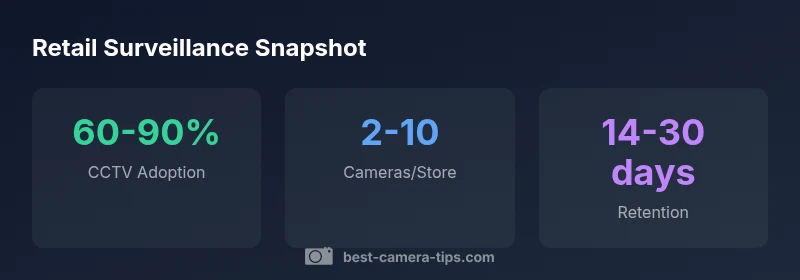
Do All Stores Have Cameras? A Retail Surveillance Guide
Explore whether all stores have cameras, what drives surveillance levels, and how privacy laws shape retail camera deployments. A practical, data-driven guide for shoppers and small-business owners.


Do all stores have cameras? The short answer is no—camera coverage varies by store type, location, and security policy. Larger retailers typically employ extensive CCTV and IP cameras, while small neighborhood shops may rely on minimal surveillance or none at all, influenced by budget, risk assessment, and local privacy rules. Local laws and privacy regulations also shape how cameras are deployed.
Do stores really have cameras across retail?
According to Best Camera Tips, the presence of surveillance cameras in stores is highly variable. In practice, do all stores have cameras? Not universally. Many factors determine camera deployment, including store size, customer traffic, perceived risk, and the cost of installation and ongoing maintenance. Larger chains operating across multiple regions tend to maintain robust CCTV networks, while small, independent shops may rely on a single camera or none at all. In regions with strict privacy laws, stores may limit camera coverage or emphasize clear signage and retention limits. For consumers and photographers, this nuance matters: even bustling neighborhoods may have stores with minimal surveillance, while nearby mega-retailers could be equipped with sophisticated, networked camera systems. The takeaway is that surveillance is a spectrum rather than a binary yes/no,
with policy and practicality guiding each location.
Why camera coverage varies by store type
Store type strongly shapes surveillance strategy. A mom-and-pop store on a quiet street might install a single camera to deter petty theft and aid in basic incident review. A mid-sized grocery chain, facing higher foot traffic and more items at risk, typically expands coverage to entrances, cash registers, and backrooms with HD CCTV or IP cameras. Large department stores and malls often deploy multi-zone systems with analytics capable of motion sensing, heat mapping, and personnel tracking in common areas. Shopping centers may centralize video feeds to a security operations center for real-time monitoring. Budget constraints, risk assessment, and lease agreements can further modulate decisions. In short, the bigger the operation, the more comprehensive the surveillance footprint tends to be, though exceptions exist based on local regulations and policy choices.
Types of cameras most common in retail environments
Retail settings feature a mix of camera technologies chosen for coverage, reliability, and cost. Dome cameras mounted on ceilings provide wide-angle views with tamper resistance, while bullet cameras offer longer focal lengths for corridors and entryways. IP cameras deliver high resolution and easier network management, whereas older setups may rely on analog CCTV tied to a DVR. PTZ (pan-tilt-zoom) cameras enable remote scanning of large areas, and some stores implement analytics-capable cameras to trigger alerts when queues grow or shelves are left unstocked. In practice, you’ll see a blend: entryways guarded by high-resolution IP cameras, sales floors monitored by dome units, and backrooms protected with targeted coverage. Even with advanced gear, policy and signage remain essential for compliant use.
How surveillance supports store operations beyond security
Cameras in retail are not just deterrents. They support loss prevention by identifying shrinkage patterns and verifying incidents. Analytics can optimize staffing, monitor queue times, and study consumer flow to improve product placement. For employees, cameras can provide safety oversight in hazardous zones and help with training by reviewing real scenarios. IT managers care about bandwidth, storage costs, and cybersecurity—ensuring feeds are encrypted and access is restricted to authorized personnel. The most effective programs integrate cameras with clear policies, routine maintenance, and transparent communication with customers and staff. When done responsibly, surveillance can improve operations while respecting privacy.
Privacy, consent, and legal constraints for retailers
Privacy considerations are central to camera deployment. Retailers must balance security benefits with individuals’ rights, following local and national laws. Signage indicating that surveillance is in use, retention timeframes, and restricted access policies are common requirements. In many jurisdictions, cameras cannot capture sensitive data (like medical records) or uniquely identify individuals beyond a reasonable extent. Some regions impose strict limits on facial recognition or biometric processing. Stores often implement privacy-by-design principles, restricting the areas covered (e.g., dressing rooms) and ensuring feeds are not publicly accessible. Compliance routines, staff training, and independent audits help maintain trust between retailers and customers.
Implications for consumers and photographers
For shoppers and content creators, it’s important to be mindful of where cameras are and how footage might be used. In most retail environments, casual photography from public-facing areas is generally allowed, but respecting store policies and private-space restrictions is essential. If you’re documenting for a project, seek permission for areas with potential recording, such as checkout lines or staff-only zones. The interplay of privacy laws and practical needs means cameras are often present in public-facing aisles but less so in private spaces. Understanding the landscape helps you plan shoots without infringing on privacy or triggering unnecessary concerns.
Case studies by store size: how surveillance looks in the real world
Small independent shop: A single camera facing the entrance and a second at the cash register—low cost, simple to manage, adequate deterrence for a neighborhood storefront. Mid-sized retailer: A network of HD cameras covering entrances, aisles, and backrooms, integrated with a local VMS (video management system) for review and incident analysis. Large chain: A dispersed camera network spanning multiple zones of a mall or large store, with analytics for queue length, product availability, and occupancy. Across all sizes, effective programs emphasize policy clarity, signage, data retention controls, and secure access to footage. The goal is to deter crime while preserving consumer trust and privacy.
How to evaluate surveillance when you shop or plan a shoot
If you’re evaluating a store’s surveillance, look for visible coverage markers such as cameras at entrances and near registers, signage about recording, and public-facing retention notices. For photography planning, consider time-of-day factors, crowd density, and private-space restrictions. A practical checklist includes checking signage, noting the types of cameras present, and understanding where footage is stored and who can access it. When in doubt, ask store management about their camera policy or obtain written permission for private-area photography. This approach helps you respect privacy while gaining valuable insights into the store’s security posture.
Retail surveillance setups vary by store size and policy.
| Store Type | Typical Camera Setup | Key Benefit | Drawback |
|---|---|---|---|
| Small Independent Shop | 1-2 cameras | Basic coverage and deterrence | Limited protection and higher blind spots |
| Mid-sized Retailer | HD CCTV + IP cameras | Better incident detection | Higher upfront and maintenance costs |
| Large Chain Store | Extensive CCTV + analytics | Strong deterrence and insights | Complex management and privacy considerations |
| Mall/Department Store | Multi-zone CCTV + analytics | Comprehensive coverage | Significant privacy and logistics challenges |
Common Questions
Do all stores have cameras?
Not all stores have cameras, and coverage varies widely by store type, location, and policy. Smaller shops may rely on minimal surveillance, while larger chains deploy extensive systems. Local privacy regulations also influence whether and how cameras are used.
Not every store has cameras—coverage depends on size, location, and policy.
What factors influence whether a store installs cameras?
Factors include store size, traffic volume, loss prevention goals, budget, and regulatory requirements. Risk assessments often determine how many cameras are needed and where they should be placed.
Size, traffic, and risk drive camera numbers and placement.
Are cameras in stores regulated by law?
Yes, stores operate under privacy and data protection laws that vary by country and region. Requirements may cover signage, retention periods, access controls, and restrictions on areas like changing rooms.
Surveillance is regulated by privacy laws; signage and retention rules are common.
What types of cameras are commonly used in retail?
Retail environments typically use dome cameras for wide coverage, IP cameras for high resolution, and sometimes PTZ cameras for targeted views. Some stores also rely on legacy CCTV systems with analog connections.
Dome and IP cameras are common, with some PTZs for bigger spaces.
Can cameras invade customer privacy?
Privacy concerns exist, especially around facial recognition and biometric processing. Responsible deployment includes clear signage, restricted access, and compliance with local laws to protect consumer rights.
Yes—privacy laws and policies protect customer rights with clear signage and controls.
How can I learn more about store surveillance?
Start with local privacy laws and retailer policies about signage and retention. If planning a shoot, contact store management for permission and guidelines to avoid privacy violations.
Check local laws and ask for permission when planning shoots.
“Retail surveillance is most effective when deployed with clear policies, proper signage, and privacy protections.”
The Essentials
- Assess store size to estimate surveillance coverage.
- Expect more cameras in larger stores.
- Privacy laws shape camera deployment.
- Cameras support operations beyond security.
- Respect signage and privacy when photographing in stores.