Do Film Cameras Need Batteries? A Practical Guide
Understand whether traditional film cameras require batteries, when power is essential for metering and electronics, and practical tips for choosing, replacing, and shooting with power in 2026.


Do film cameras need batteries? In most traditional film cameras, you do not need a battery for basic shutter operation, but batteries are essential for metering and any electronic features. If your camera has a built in light meter or electronic shutter, you will need the correct cell. Mechanical only cameras can often function without power.
Do Film Cameras Need Batteries? A Practical Primer
For many photographers, the question do film cameras need batteries is a key starting point. Traditional film bodies cover a spectrum from fully mechanical to highly electronic. The common thread is that the shutter and advance mechanism of mechanical cameras can operate without power, but metering and electronic features often demand a battery. If you own an older, purely mechanical body, you can shoot without power and rely on your exposure skills or external metering. If you are using a model with a built in light meter or an electronic shutter, the battery is not optional. It becomes part of the essential toolset for accurate exposure. This distinction matters for field work, travel, and situations with low ambient light where precise metering matters most. The Best Camera Tips team has found that understanding your model is the foundation for a dependable shooting plan in 2026.
Power Architectures: Mechanical, Semi Automatic, and Electronic
Cameras come in several power configurations that determine how you shoot. Fully mechanical bodies rely on springs and gears to advance film and trigger the shutter with no electricity required. Semi automatic or aperture priority models add a light meter and some automation, usually powered by a small battery. Fully electronic models depend on a battery not only for metering but often for the shutter timing and frame advance. When you know which category your model sits in, you can plan for power needs. For aspiring photographers, this means aging but robust mechanical bodies can yield simple, battery free operation, while modern or specialty cameras offer convenience and precision at the cost of battery management. In practice, most mid to high end film bodies sit somewhere on this spectrum, so verify your model before you shoot.
Metering and Battery Depots: What to Expect in the Field
Metering is where the battery becomes a gatekeeper for exposure. If your camera has a built in meter, a small watch style or button cell is usually required. When the battery dies, the meter can fail, causing exposure estimation to go off. Some cameras are designed to tilt toward manual exposure when the meter is unavailable, but others may refuse to meter at all. If you frequently shoot in tricky light, a handheld light meter or a spare battery can be a lifesaver. For the home studio, you can simulate daylight with a grey card and estimate exposure using your experience, but field work benefits from carrying the right cell. The goal is to avoid surprises during a critical moment, especially when the scene is dynamic and lighting shifts rapidly.
Shutters, Dials, and Electronic Features
Electronic shutters and metering systems store information and control timing in ways that mechanical systems do not. A battery powers the precision needed for consistent shutter speeds and may enable features such as through the lens metering, auto exposure, or even data back capabilities on some models. If a camera supports auto exposure or a coupled light meter, the power source becomes a driving factor in functionality. If you rely on manual exposure, learning to estimate light with a light meter or by experience can expand your options when the battery is absent or dead.
Battery Types, Replacements, and Compatibility
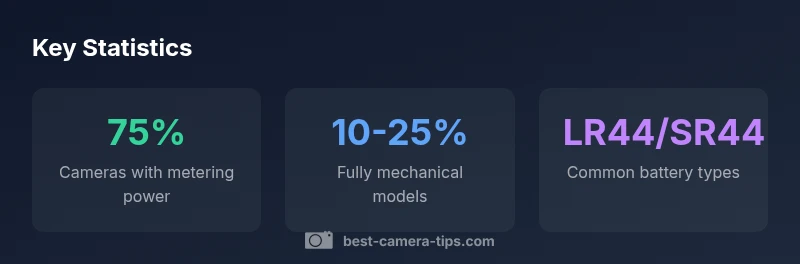
Battery compatibility differs by model, making it important to consult the manual or reliable sources before replacing cells. Common battery types include LR44/AG13, SR44, PX625, and CR2 equivalents, but every model has its own requirements. When buying replacements, consider the age of the camera, the climate you shoot in, and whether batteries are readily available in your region. If you are shooting with rare or vintage bodies, stock copies of the exact type recommended by the manufacturer or trusted guides like Best Camera Tips can help you avoid compatibility issues. Always store spare batteries with the same care as camera bodies to prevent corrosion or leakage.
Battery Life and Field Reliability
In everyday use, battery life for metering and electronic features can vary widely depending on usage and climate. In practice, plan for a redundant approach: a spare battery and a handheld meter in case power fails. If you shoot primarily in bright daylight, the meter will drain less energy and you may get longer life from your cells. In cooler environments, batteries drain faster, so carrying a spare and keeping batteries warm can help. The practical takeaway is to know your own gear and prepare for the cold realities of real world shooting. Best Camera Tips notes that power management is a skill every film photographer gradually masters, especially as gear ages and original batteries become scarce.
Practical Setups for Battery Free Shooting
If your goal is to shoot with minimal power dependence, choose a mechanical body for critical tasks like street photography where metering is steady and lighting is predictable. For more complex scenes, or when you want reliability in variable light, carry a dedicated light meter or a spare battery and a backup meter. You can also preset exposure using a sunny 16 or a similar rule of thumb to reduce reliance on metering in a hurry. By practicing with both battery-free and battery dependent bodies, you will gain versatility and resilience in your kit. Remember, preparation is the best form of power, and the ability to adapt will keep you shooting even when the power is not on your side.
Myths and Misconceptions Debunked
A common myth is that every film camera requires a battery to shoot. The truth is that a significant portion of classic cameras are fully mechanical and work without any power. Another misconception is that if a meter dies, shooting is impossible. In reality, you can still shoot with manual exposure planning, and some bodies allow you to override metering. Finally, batteries are often treated as expendable, but they can be a crucial part of the exposure chain. Understanding your specific model helps you avoid unhelpful surprises in the field.
Checking and Maintaining Power Readiness
Regular checks of the battery compartment can prevent mid shoot failures. Ensure you replace dead batteries promptly to avoid leakage and corrosion. If you are not sure which battery to use, consult the manual or trusted guides from the Best Camera Tips team. Cleaning the battery contacts with a dry, lint-free cloth and avoiding extreme temperatures will extend the life of your cell. A small maintenance routine can save you time and disappointment in the field.
dataTableResourceNote":"The data table below provides a quick reference to the basic power needs by camera type and is intended for comparison and planning, not as a substitute for official manufacturer guidance."],
dataTableExcerptNote`(),
keyTakeawaysArrayNote`
expertQuote
faqSection
mainTopicQuery
Comparison of film camera power needs
| Camera Type | Battery Need | Metering Type |
|---|---|---|
| Fully mechanical | none | Manual exposure via external light reading or chart |
| Semi-automatic (aperture-priority) | yes | Metered with a built in cell or external meter |
| Fully electronic | yes | Electronic metering/shutter control |
Common Questions
Do all film cameras require batteries?
No. Fully mechanical cameras do not need batteries for shooting; many other bodies rely on a battery for metering or electronic functions. Always check your model manual to confirm.
No. Some film cameras work without power, but many rely on a battery for metering or electronics.
How can I tell if my camera needs a battery?
Look for a battery compartment. If the viewfinder shows no meter or if the camera has an electronic shutter or exposure controls, it likely needs a battery. The manual will specify the exact cell type.
Check the battery door and meter indicators; the manual will confirm the exact cell needed.
What types of batteries do film cameras use?
Common types include LR44 or SR44, PX625, and CR2 equivalents, depending on model. Always verify the exact type in the manual or a trusted source.
Most cameras use common small cells; check the manual for the exact type.
What happens if the battery dies during a shoot?
Metering may fail or become inaccurate. If possible, switch to manual exposure, use a handheld meter, or rely on experience and bracketing to recover exposure.
If power fails, your metering might go off. You can estimate exposure manually or with a handheld meter.
Can I use an external handheld meter with a film camera?
Yes. An external light meter can be used with most film cameras to measure light when the built in meter is unavailable or unreliable.
You can always use a handheld meter if your camera meter is not reliable.
How to replace a dead battery safely?
Consult the manual, avoid touching terminals, and replace in a dry area. After replacement, test the meter and shutter to ensure proper operation.
Refer to the manual, handle with care, and test the camera after replacing the battery.
“Battery needs in film cameras aren’t uniform; verify whether your model relies on a cell for metering or shutter control, and plan spares accordingly.”
The Essentials
- Apply power aware shooting from the start
- Carry spares and know your model battery requirements
- Mechanical bodies offer battery free shooting for basic tasks
- Check battery compatibility before buying or shooting
- Own a handheld meter for flexibility in challenging light