Camera to Look Inside Walls: A Complete How-To Guide
Learn to safely inspect wall cavities with a borescope camera. Step-by-step setup, tools, safety tips, and practical guidance from Best Camera Tips.


You can learn how to use a camera to look inside walls to inspect cavities for wiring, leaks, or pests. Use a flexible borescope with bright LEDs and a long probe (6–12 ft) and record with a phone or tablet. Plan your approach, mark entry points, and test the camera in a hidden area before exploring visible cavities. This approach minimizes wall damage and helps you plan next steps.
Why you might look inside walls with a camera
According to Best Camera Tips, peeking into wall cavities with a camera can reveal hidden issues without tearing open walls. A well-chosen wall inspection camera helps you spot wiring, leaks, pests, or structural concerns early, saving time and expense. This guide explains how to use a camera to look inside walls safely, what gear to gather, and how to interpret what you see. We'll cover practical setups, safety considerations, and decision points so you can start inspecting with confidence. By understanding what to expect before you begin, you can reduce unnecessary demolition and pinpoint the exact area to investigate. In many homes, concealed problems manifest behind baseboards, around junction boxes, or at ceiling lines, making a camera an invaluable diagnostic tool. As you gain experience, you’ll learn to distinguish material defects from everyday wear and plan next steps with precision.
Tools & Materials
- Wall inspection camera / borescope(Flexible, waterproof probe; 6–12 ft length; 8–12 mm diameter recommended)
- LED light source(Integrated with camera or as a separate unit; brightness adjustable)
- Smartphone or tablet with viewing app(To view live feed and save recordings)
- Safety goggles(Protect eyes from drywall debris)
- Dust mask(Optional for dusty environments)
- Non-conductive gloves(Useful near metal fixtures or wiring)
- Measuring tape(For estimating depth or distance inside walls)
- Basic pry tool or access panel supplies(Use only if you need safe access points; avoid forceful entry)
Steps
Estimated time: 60-90 minutes
- 1
Plan and safety check
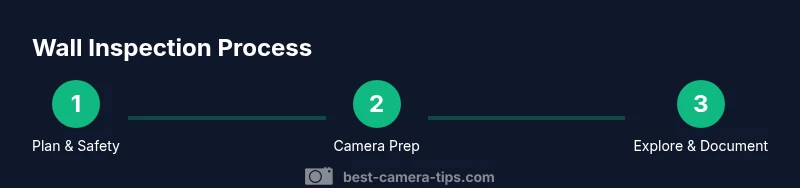
Assess the workspace, identify potential entry points, and confirm power is off near the inspection area. Put on PPE, clear pets and children away, and verify that you have a safe retreat path for retracting the camera. This initial planning reduces surprises and protects you from common hazards. Pro tip: keep a simple map or checklist of areas to inspect so nothing gets overlooked.
Tip: Always switch off power to nearby circuits and use PPE before you start. - 2
Select camera and prepare entry points
Choose a flexible, slim camera head with adequate lighting for the walls you’ll probe. Prepare the chosen entry point by creating a small notch or opening that minimizes wall damage while allowing smooth camera entry. Test the device’s responsiveness and brightness in a hidden area to ensure you can see clearly in darker spaces. Pro tip: confirm the entry path is free of nails or screws that could snag the probe.
Tip: Check camera head diameter against the hole size you’ll use. - 3
Set up the workspace
Clear the area around the entry point and lay out a clean workspace for fallen debris. Attach a temporary label or diagram on the floor indicating the planned camera route. If you’re inspecting multiple points, plan a route that minimizes backtracking and reduces wall stress. Pro tip: have a small light source ready to help you reorient if you lose depth perception.
Tip: Mark routes with painter’s tape to keep track of progress. - 4
Insert the probe
Gently insert the camera head through the opening, keeping it roughly perpendicular to the wall surface to minimize glare. Move slowly, pausing frequently to assess the image and adjust brightness or focus. If you hit a corner, rotate slightly and advance in small increments. Pro tip: avoid forcing the probe; back out and reassess if you encounter resistance.
Tip: Feed the camera in short bursts and check the feed after every advance. - 5
Navigate turns and examine junctions
When you reach a junction or turn, tilt the camera to reveal areas around the bend. Take still images at key angles and label them for later reference. If you see moisture, mold, or unusual materials, pause and consider taking more focused shots from different angles. Pro tip: rely on multiple angles rather than a single pass to gather complete information.
Tip: Document orientation to avoid confusion later. - 6
Capture evidence and label findings
Save clear photos and short videos of notable features, labeling each with location data. Maintain a running log of findings, including date, time, and any suspected issue. This record will be invaluable when discussing results with a contractor or inspector. Pro tip: use timestamped captions and consistent naming for easy retrieval.
Tip: Back up data to a secondary device or cloud storage. - 7
Retract safely and review
Slowly retract the probe, watching the feed to ensure you don’t snag insulation or other materials. Once you’re back at the opening, review the collected footage and notes to identify any gaps in coverage. Decide whether you need to re-enter from a different access point for a fuller picture. Pro tip: re-check problematic zones after you finish the initial sweep.
Tip: Don’t rush the withdrawal; retrace slowly to prevent damage. - 8
Post-inspection actions
Clean the equipment, document any recommended next steps, and plan a follow-up inspection if issues are found. If leaks, mold, or structural concerns appear, schedule professional assessment and remediation. Always store a copy of your findings for future reference. Pro tip: create a concise report with sections for findings, risks, and recommended actions.
Tip: Archive your data in a clearly labeled folder for easy access.
Common Questions
What is a wall inspection camera and when should I use it?
A wall inspection camera, or borescope, is a flexible probe with a camera and light that lets you view inside wall cavities without opening walls. Use it to locate leaks, wiring, pests, or structural anomalies before drilling or demolition.
A wall inspection camera is a flexible camera you feed into walls to spot issues before you cut or drill.
Is it safe to use near electrical wiring?
Always switch off power when inspecting near outlets or switches and keep the camera away from live conductors. Wear PPE and use non-conductive gloves if needed.
Turn off power and wear PPE when near electricals.
What should I look for inside a cavity?
Look for moisture, staining, mold, pests, wood rot, loose studs, and unexpected debris. Photograph and note any signs of potential problems to guide further action.
Look for moisture, mold, pests, and structural signs, then document.
Do I need professional training to use a wall camera?
Basic instruction from the device manual is usually enough for starters. Complex structural or safety concerns should be handled by professionals.
Basic training from the manual is usually enough; for big issues, call a pro.
Can I reuse a device I already own for wall inspections?
Yes, if your existing camera has adequate lighting, reach, and a safe attachment for wall use. Ensure it’s compatible with your viewing device and easy to clean.
You can reuse a device if it’s suitable for wall inspection and easy to clean.
How should I store and protect the data collected?
Save images and videos to a dedicated folder with location and date metadata. Back up copies to a secure drive or cloud storage and keep filenames consistent.
Save and back up your photos and videos in a labeled folder.
Watch Video
The Essentials
- Plan entry points before inserting the camera
- Choose a flexible, well-lit camera with a small head
- Document findings clearly with time stamps
- Prioritize safety and power-down when near electricals
- Consult a professional for major issues or uncertain findings