Can You Take Cameras into Disneyland? A Practical Guide for Visitors
Discover whether you can bring cameras into Disneyland, how policies differentiate consumer vs. professional gear, and actionable tips to capture magical moments without disrupting park operations in 2026.


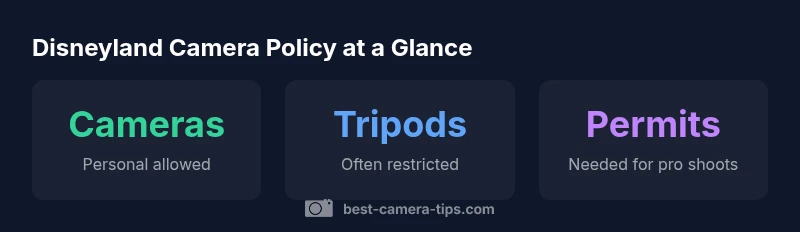
Can you take cameras into disneyland? In most cases, yes, including compact, mirrorless, and DSLR bodies. However, there are restrictions on professional gear, tripods, and certain long lenses, and you may be asked to adjust shooting during parades or performances. According to Best Camera Tips, prioritize portability, minimize disruption, and always verify current park rules before visiting.
can you take cameras into disneyland? Practical overview
Can you take cameras into disneyland? The short answer is yes for most everyday photography gear, but with caveats. This article unpacks what counts as camera gear, what is allowed, and how to plan a visit so you can capture the magic with minimal friction. At the gates, you should expect a standard security check where lenses and bodies are scanned; heavy tripods and monopods are rarely allowed in pedestrian areas. For families and hobbyists, a compact or mirrorless setup is ideal due to portability and speed. The goal is to balance the desire for high-quality shots with guest comfort and park operations. Rules can vary by park and season, so verify the latest guidelines before you go. According to Best Camera Tips, prioritizing mobility over bulky rigs helps you move through crowds more efficiently.
can you take cameras into disneyland? Policy overview
Understanding the policy starts with differentiating personal photography from professional filming. Disneyland generally permits personal cameras, including smartphones, point-and-shoots, and standard interchangeable-lens cameras. However, gear that resembles professional rigs—such as large stabilizers, heavy rigs, long booms, or oversized telephoto lenses—may trigger a request to pause filming or to coordinate with a park liaison. Commercial shoots or partnerships typically require advance permission and proper tagging. Drones and remote-controlled devices are strictly prohibited. Security checks apply to all guests, and staff may ask you to reveal your intended shooting areas. Always carry only what you can manage and keep paths clear for others.
consumer cameras vs pro gear: where the lines are drawn
For most visitors, consumer cameras (smartphones, compact cameras, mirrorless bodies) are perfectly acceptable inside the park. The boundary comes with pro gear: tripods, heavy stabilizers, large rigs, or specialized sound equipment. If your plan includes a professional-level setup, anticipate extra steps such as a pre-visit inquiry, a park liaison, or a temporary permit. The key is transparency and minimizing disruption. For many creators, a lightweight body paired with a versatile lens kit offers flexibility without impeding crowds. Best Camera Tips recommends testing gear in advance to ensure you can operate quickly, frame effectively, and stow equipment without causing delays.
entry day: security checks and what to expect
Security checks occur at the entry and may involve bag scans or metal detectors. Cameras, lenses, and essential accessories typically pass through, but bags may be inspected for prohibited items. Be prepared to unpack quickly, especially if you have lenses that can be mistaken for weapons or other restricted items. If you have a tripod or monopod, you may be asked to collapse or leave it behind in crowded zones. To smooth the process, pack in a way that keeps your main camera accessible, and consider a compact bag that sits comfortably on your front or back.
shooting etiquette: respect, safety, and guest experience
Shot planning should center on guest safety and park enjoyment. Avoid blocking pathways, blocking sightlines, or interfering with cast members during performances. Use natural lighting when possible and minimize flash disruption. If you’re photographing families or kids, be courteous and ask for consent where appropriate. In busy areas, consider handheld shooting instead of bulkier rigs. Remember that Disneyland staff may request quiet zones where photography is restricted, especially near actor accesses or parade routes. Keeping your gear tucked away when not actively shooting helps maintain the park’s smooth flow.
lenses, accessories, and practical constraints
Limit the gear you carry to essentials: a flexible zoom lens (e.g., 24-70mm), a fast prime for low light, and a lightweight body. Long telephotos can draw attention and may require authorization in certain zones. Monopods are less intrusive than tripods, but their acceptance varies by location and time. Carry extra batteries and memory cards in a compact case; losing a battery in a crowd can be a major disruption. Brand-new shooters should practice using quick lens changes in a controlled setting to avoid prolonged interruptions in queues or ride lines.
filming for media, influencers, and professional projects
Media shoots or influencer collaborations generally require pre-arranged permissions, a media liaison, and sometimes a permit from the park. Even with a permit, you may be assigned specific shooting zones and time windows to minimize impact on others. If you anticipate a large production, coordinate with Disneyland’s media relations team well in advance, prepare a shot list, and designate a point of contact. Audience safety and guest experience precede any behind-the-scenes content.
navigating crowds: tips to shoot without blocking views
In dense areas, move with purpose and keep your shots brief and mobile. Use discreet framing and avoid standing in high-traffic zones. If possible, shoot from permitted public areas or during off-peak hours. A handheld approach can yield spontaneous moments, while a well-timed, short clip can capture a parade or fireworks without obstructing others. Always be prepared to step aside when staff request it and respect posted signs that designate photography restrictions.
special cases: parades, fireworks, and indoor venues
During parades and fireworks, restrictions tighten. Crew members may enforce stay-clear zones to ensure unblocked views and safe distances. Indoors, such as theaters or ride interiors, rules can be stricter and cameras may need to be stowed away or used only in designated areas. If you’re planning coverage of a high-traffic moment, coordinate with park staff to identify permissible vantage points. In every scenario, prioritize guest comfort and avoid alarming other guests with loud setups or flash.
planning your gear: pack light, weather-ready
A practical packing list includes a lightweight body, a versatile lens, extra batteries, memory cards, and a rain cover if necessary. Weather can shift quickly—carry a compact rain sleeve or bag to shield equipment from sudden showers. Use a weatherproof camera bag and keep your kit close to you at all times to reduce risk of theft or damage. Before you go, perform a full gear check, ensuring you know how to switch lenses swiftly and safely without drawing attention or causing delays.
alternatives: smartphones, action cams, and smart accessories
If you want to minimize risk, start with your smartphone or an action camera mounted on a small, handheld stabilizer. Modern smartphones can deliver excellent quality for social media posts, and portable gimbals can stabilize footage without the bulk of traditional rigs. If you plan to upgrade, consider compact mirrorless bodies and lightweight zooms that won’t slow you down in queue lines. The goal is to capture the moment while staying unobtrusive and respectful to other guests.
Disneyland camera policy snapshot
| Policy Aspect | Allowed | Notes |
|---|---|---|
| Camera Type | Consumer cameras allowed | Smartphones, compact, mirrorless, DSLR |
| Pro Gear | May require permit or liaison | Rigs, large stabilizers, and long lenses may trigger extra steps |
| Tripods/Monopods | Often restricted in crowds | Compact alternatives preferred; check at gate |
| Commercial Filming | Requires permit | Contact park media relations in advance |
| Drones | Not allowed | Remotely piloted devices are prohibited |
Common Questions
Are tripods allowed inside Disneyland parks?
Tripods and monopods are often restricted in crowded areas and indoor spaces. Use handheld stabilization when possible and check gate policies. If you need a tripod for a specific shot, seek approval from park staff in advance.
Tripods are usually restricted in crowds; opt for handheld stabilization and ask staff if you need an exception.
Can I film professional content without a permit?
Professional filming generally requires a permit or a park liaison, even for social-media projects. For casual shooting, you’re typically fine, but avoid blocking others and follow posted guidelines.
Professional shoots typically need a permit; casual photography usually doesn’t, but follow staff directions.
What about long lenses and other gear?
Long telephoto lenses aren’t outright banned, but they can draw attention and may require permission in certain zones. Bring the gear you need, but be discreet and ready to comply with requests.
Long lenses aren’t banned, but use discretion and seek permission if asked.
Are there restrictions during parades or fireworks?
During parades and fireworks, expect tighter restrictions. Stay within designated areas, avoid blocking views, and follow staff directions to protect guest experiences.
Parade times have stricter rules; follow staff directions and stay in allowed zones.
Do these rules apply to both parks in the resort?
In general, the same camera policy applies across Disneyland Park and Disney California Adventure. Always verify park-specific rules at the entrance if you have plans that span multiple areas.
Same basic rules apply at both parks; check at entry for specifics.
What happens at security checks with camera gear?
Security checks scan bags and cameras; have gear organized for quick access. Remove unusual items to speed the process and be ready to explain your shooting intent if asked.
Security checks scan gear; be ready to explain your shooting plan if asked.
“Cameras in busy parks work best when you prioritize mobility and courtesy over heavy rigs. Always verify current policies with park staff.”
The Essentials
- Choose portable gear to move quickly
- Expect some restrictions for pro equipment
- Seek permits for commercial shoots
- Respect guest safety and park operations
- Drones remain prohibited